
For coffee exporters, the value of a shipment is decided twice. The first time is at the farm and the dry mill, where quality is created. The second time is in the weeks or months that follow, when the coffee waits in warehouses, travels inland, crosses the ocean in a container, and sits at the destination before it reaches the roaster. During this period, quality can only be protected or lost. It cannot be improved.
Green coffee is a natural product that reacts to its environment every single day. It absorbs moisture when the air is humid, releases moisture when the air is dry, takes in odors from its surroundings, and provides food for insects if they can reach it. Most quality claims between exporters and importers are not caused by bad coffee. They are caused by good coffee that was stored or shipped in the wrong way.
This guide explains, step by step, how professional exporters store green coffee beans so that the coffee arrives at the destination with the same flavor, aroma, and moisture it had at the mill. The practices below apply whether you ship one container per year or one hundred.
At current market prices, a single 60 kg bag of green coffee represents significant value, and a full container represents a major business asset. Losing even a small percentage of quality to mold, insect damage, or moisture change can cost far more than the total packaging budget for the shipment. Storage is therefore not a cost center. It is the cheapest insurance policy an exporter can buy.
Buyers in Europe, North America, and East Asia are also becoming stricter. More purchase contracts now specify moisture limits, packaging types, and in many cases hermetic protection. Exporters who build a professional storage routine find it easier to meet these requirements, defend themselves in quality disputes, and build long term trust with importers.
Before choosing solutions, it helps to understand exactly what attacks stored green coffee. There are five main enemies, and they often work together.
|
Enemy |
What It Does to Green Coffee |
Where It Strikes |
|
Moisture |
Triggers mold growth, musty flavors, and weight change |
Humid warehouses and containers |
|
Oxygen |
Oxidizes the coffee and slowly fades aroma and freshness |
Long storage in breathable bags |
|
Insects |
Weevils and borers damage beans and cause buyer claims |
Warehouses and long transit |
|
Odors and dust |
Coffee absorbs surrounding smells and contamination |
Mixed cargo storage spaces |
|
Temperature swings |
Create condensation that wets the beans |
Ocean transit and day night cycles |
A traditional jute sack alone offers almost no defense against any of these five enemies. Jute is excellent for handling and stacking, but it breathes freely, absorbs moisture, and lets insects and odors pass through. This is why the packaging decision in Step 2 matters so much.
No packaging can rescue coffee that was packed in poor condition. Before any bag is filled, confirm the following points. Moisture content should be between 10 and 12 percent, with the safest zone for export around 10.5 to 11.5 percent. Measure it with a calibrated moisture meter on representative samples from the lot, not just from the top of one bag. Coffee packed above 12 percent carries a serious mold risk, while coffee dried far below 10 percent loses weight, cup quality, and money. Water activity is the second measurement that professional exporters track. For stable storage, water activity should stay below 0.60 aw. Two lots with the same moisture percentage can behave differently in storage, and water activity explains why. Finally, never pack coffee that is still warm from drying or milling. Warm beans placed inside a sealed environment create condensation from the inside. Allow the coffee to cool to ambient temperature and rest before packing so that moisture equalizes across the lot.
Packaging is the single most important storage decision an exporter makes. The three main options below cover almost every export situation.
|
Packaging Option |
Best For |
Protection Level |
|
Jute sack alone |
Short local transport only |
Minimal: breathable, no barrier |
|
Hermetic jute liner inside jute sack |
Standard and specialty export shipments |
High: blocks moisture, oxygen, insects, and odors |
|
Hermetic vacuum bag |
Micro lots, competition and sample coffee |
Highest: air removed, sealed barrier |
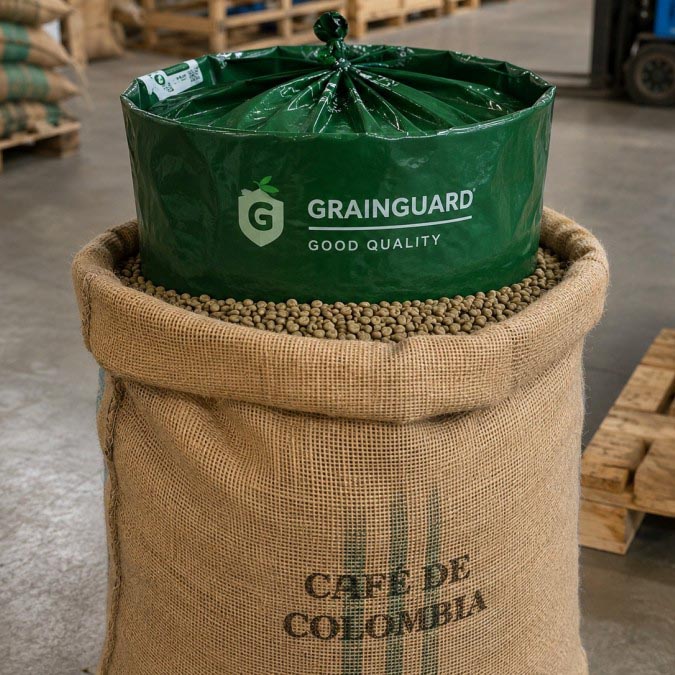
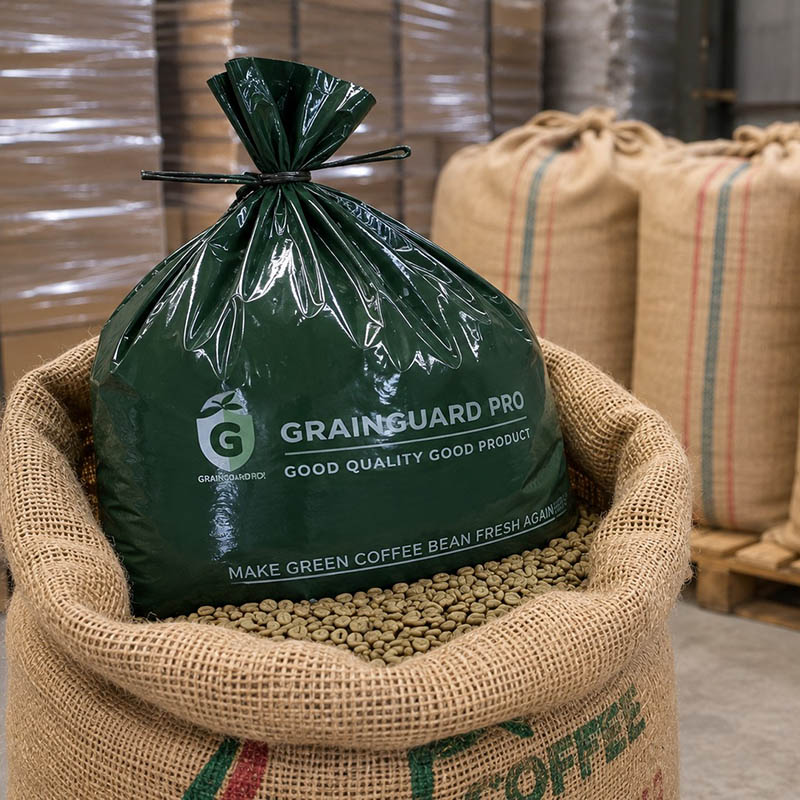
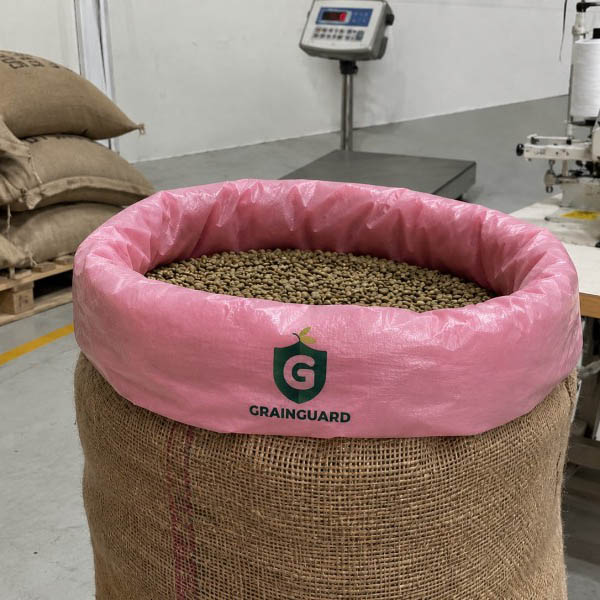
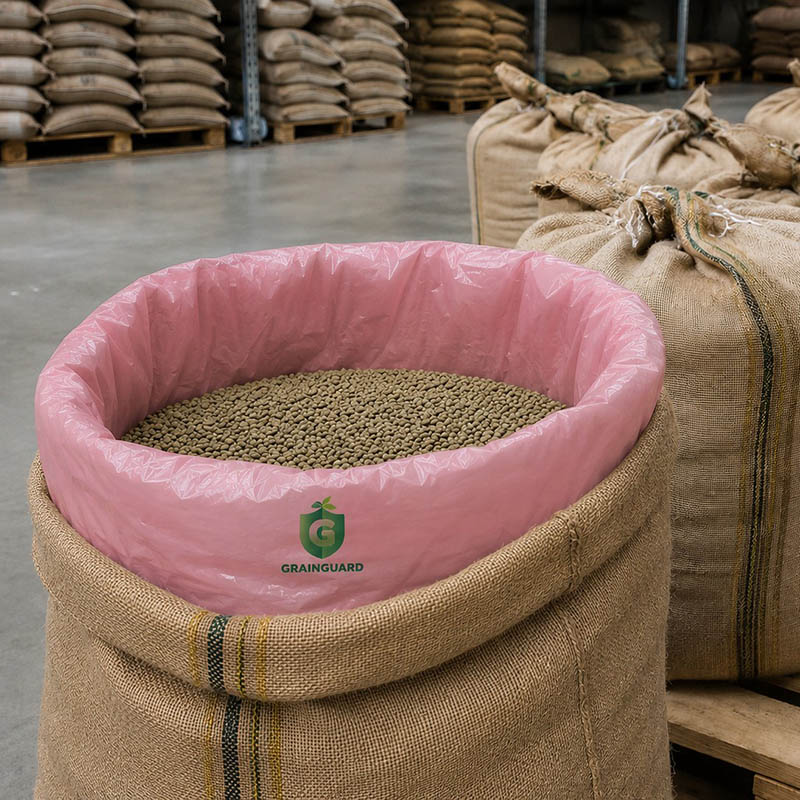
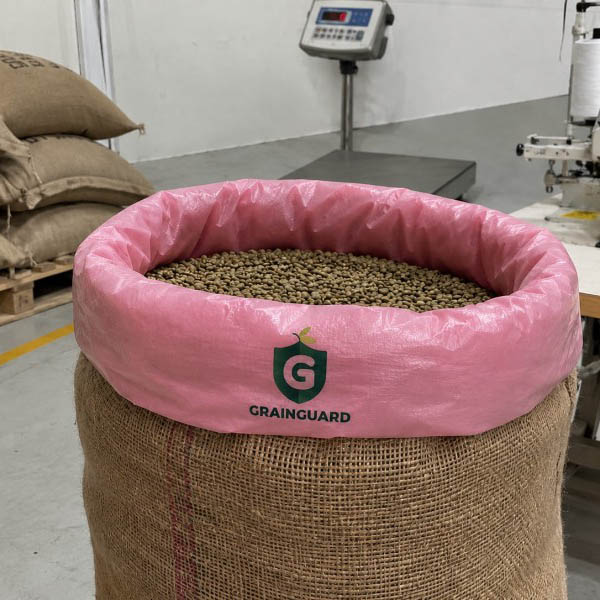
For most commercial and specialty shipments, a hermetic jute liner is the practical standard. The liner is placed inside the traditional jute sack, filled with coffee, twisted closed, and sealed with a cable tie or by heat sealing. The jute sack keeps its familiar handling and stacking behavior, while the liner creates an independent barrier against moisture, oxygen, insects, dust, and odors.
GrainGuard produces three grades of hermetic jute liners for this purpose. The Basic liner uses multilayer PE film and suits standard commercial shipments. The Pro liner uses PE and PA layers for higher strength and barrier performance. The Premium liner uses PE, PA, and EVOH layers for the highest oxygen barrier, designed for high value lots and long storage periods. Sizes cover the standard 60 to 70 kg coffee sacks as well as smaller 25 to 35 kg formats.
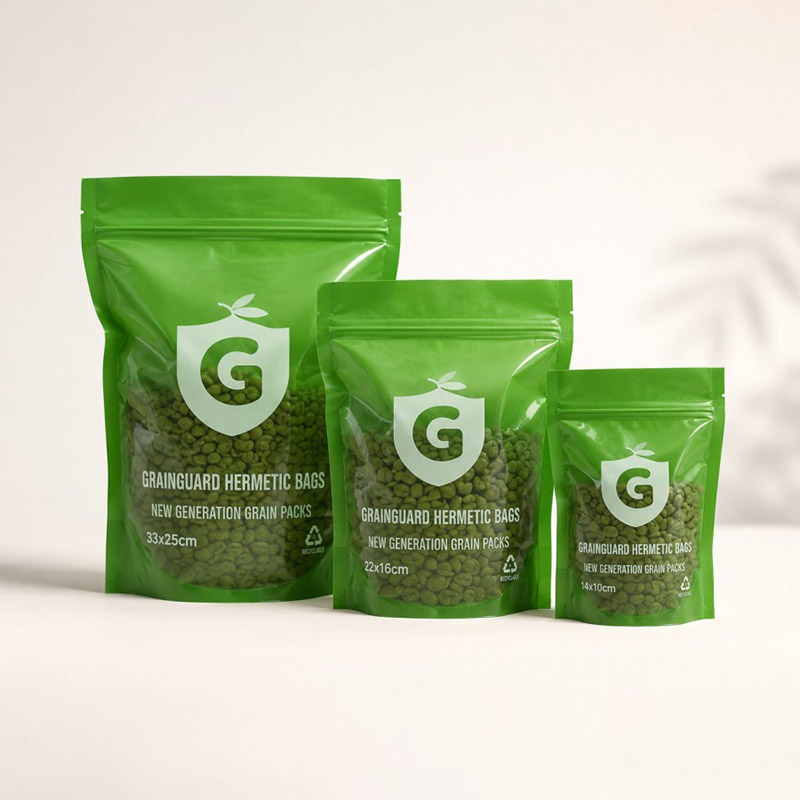
For micro lots, competition coffees, and samples that must arrive in perfect condition, hermetic vacuum bags remove the air around the coffee entirely and offer the strongest possible protection in a compact format. Hermetic sample bags keep pre shipment and arrival samples stable so that both sides of a contract can cup the same coffee.
Even the best packaging performs better in a well-managed warehouse. The following rules prevent most storage damage.
• Stack bags on pallets, at least 15 cm off the floor, and keep stacks away from walls so air can circulate and cleaning stays possible.
• Keep the warehouse dry and ventilated. Fix roof leaks immediately and avoid storing coffee in buildings with damp floors.
• Keep relative humidity below about 65 percent where possible, and avoid large day to night temperature swings that encourage condensation.
• Never store coffee near fertilizer, fuel, chemicals, or strong-smelling goods. Coffee absorbs surrounding odors quickly.
• Apply first in, first out rotation so older lots ship first, and label every stack with lot number, moisture reading, and packing date.
• Run a regular pest control program. Coffee sealed in hermetic liners needs far less fumigation, which reduces chemical cost and supports organic requirements.
The most dangerous part of the journey is often the ocean leg. A container crossing climate zones heats up during the day and cools at night. Moisture inside the container then condenses on the ceiling and walls and drips onto the cargo, a phenomenon known as container rain. Coffee near the top and corners of the container is hit first.
Before loading, inspect the container carefully. It should be clean, dry, free of holes, and free of any previous cargo smell. Reject containers that fail this check, because no liner can fully correct a bad container.
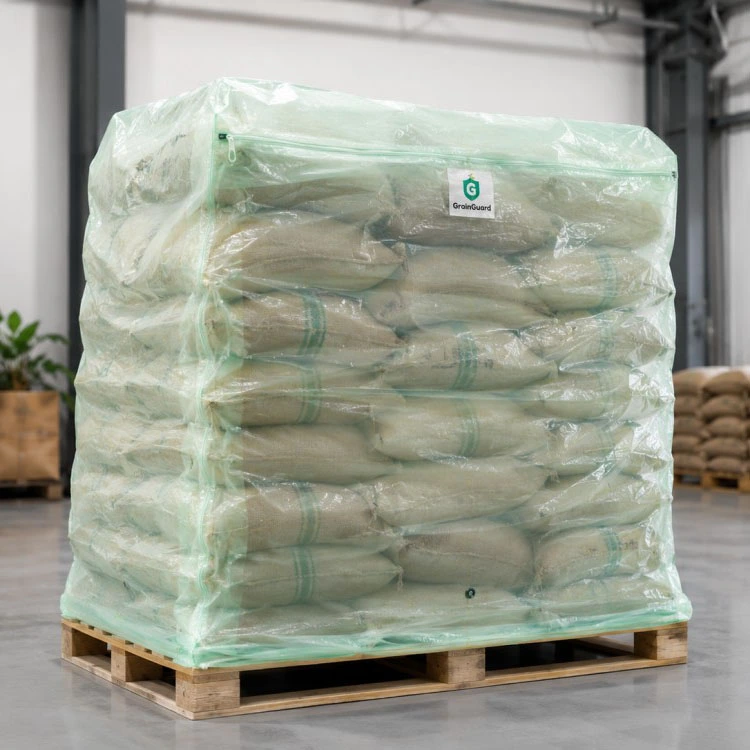
For bagged or palletized coffee, a hermetic container liner creates a protective envelope inside the 20 ft or 40 ft container, blocking humid air, reducing condensation effects, and stopping insect cross infestation during transit. Where the route involves strong heat or large temperature swings, a container thermal liner adds insulation with reflective aluminum foil layers that stabilize the inner temperature and keep cargo dry. Desiccants can be added as a final layer of security, and the container should be closed promptly after loading.
Professional exporters treat documentation as part of storage. Take representative samples from every lot at packing time, seal them in airtight sample bags, and file them with the lot records. Record moisture content and water activity at packing, and ask the buyer to record them again at arrival. Photograph liners being sealed and containers being loaded.
This routine takes minutes, but it decides disputes. When both sides hold sealed samples of the same coffee and matching moisture records, quality discussions stay factual instead of emotional. Hermetic sample bags with a zipper and heat welding zone keep retained samples stable for months, which means the coffee you cup at origin and the coffee your buyer cups at destination tell the same story.
1. Packing coffee above 12 percent moisture to save drying time, then losing far more to mold and claims.
2. Relying on a jute sack alone for long ocean transit, even for high value specialty lots.
3. Stacking bags directly on concrete floors where ground moisture migrates upward.
4. Loading into a wet, damaged, or smelly container because it is the only one available.
5. Storing coffee in the same space as fertilizer, fuel, or chemicals.
6. Opening sealed hermetic liners repeatedly for inspection before shipment, which resets the protective atmosphere each time.
GrainGuard is the hermetic packaging brand of SYON Packaging Technology (Qingdao) Co., Ltd., a professional manufacturer of hermetic jute liners, vacuum bags, sample bags, container liners, thermal liners, FIBC pouches, and storage cocoons for green coffee, cocoa, cashew, grains, and other dry agricultural commodities. Working directly with the factory means consistent film quality, custom sizes and printing, OEM service, and practical support for exporters, cooperatives, traders, and roasters worldwide.
If you are reviewing your storage and shipping routine for the coming season, the GrainGuard team can help you match the right liner grade and format to your coffee, your route, and your buyer requirements. Visit www.grainguardbags.com or contact the team on WhatsApp at +86 13864240136 to request specifications, prices, or samples.
Copyright © 2026 SYON Packaging Technology(Qingdao)Co., Ltd. All rights reserved.