
Manufacturing scale, agricultural trade and rising demand for measurable barrier performance are reshaping how international buyers source bulk packaging
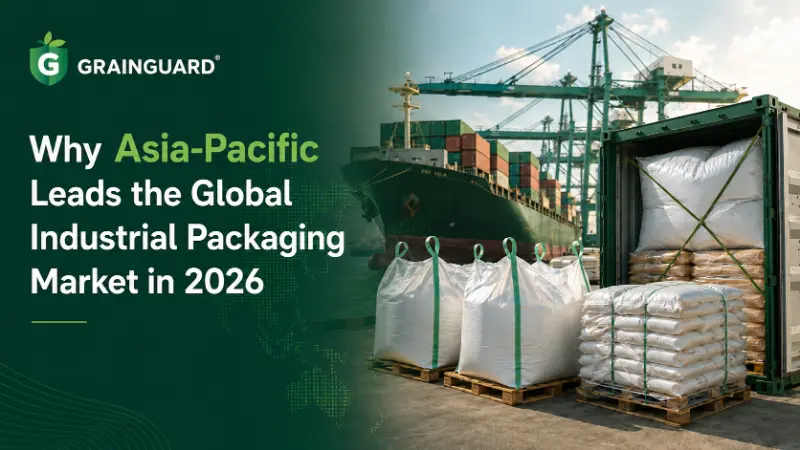
Market estimates differ on the exact percentage, but they point in the same direction: Asia-Pacific is the world's largest regional industrial packaging market. Recent industry studies place its share at roughly 40% to 46%, depending on the year, market definition and forecasting method.
The significance of that range is clear. A large part of global demand for bulk bags, liners, drums, intermediate bulk containers and other transport packaging is now concentrated in a region that also sits at the center of world manufacturing and merchandise trade. This position is not explained by low production costs alone. It reflects a dense manufacturing base, large agricultural and industrial supply chains, expanding ports and logistics networks, and a packaging sector capable of serving both domestic and export customers.
For buyers of grain, green coffee, cocoa, seed and other dry-commodity packaging, understanding these forces is increasingly important. Asia-Pacific is not simply a place where packaging is produced; it is one of the main regions where packaging specifications, production capacity and procurement expectations are being tested at scale.
Industrial packaging demand generally follows manufacturing output. Every food-processing plant, feed mill, resin producer, fertilizer facility and agricultural exporter needs packaging that can move goods safely from production through warehousing, inland transport, ports and final delivery. The wider manufacturing data helps explain Asia-Pacific's packaging position. UNIDO reported that Asia and Oceania contributed 57.2% of global manufacturing value added in 2024 and 47.2% of worldwide manufactured-goods exports.
This concentration creates continuous demand for transport packaging and encourages suppliers of films, woven fabrics, coatings, closures and finished packaging systems to locate near major customers and logistics hubs. The result is a reinforcing industrial network. Packaging producers gain access to raw materials, conversion equipment, skilled labor and high-volume customers. Buyers gain access to broader supplier choice, scalable production and shorter links between manufacturing and export ports.
This does not make every supplier equal, but it helps explain why the region can serve orders ranging from standard woven sacks to high-barrier liners and customized scale systems.
The industrial packaging market is broader than agriculture, but dry agricultural commodities create some of its most demanding applications. Grain, green coffee, cocoa, pulses, seeds, spices and animal-feed ingredients may travel for weeks and remain in storage for months. They are exposed to repeated handling, variable temperatures, humid air, container condensation, dust, odors and possible insect activity.
These cargoes therefore need more than a bag that can carry weight. They need a packaging system designed around two different functions.
|
OUTER PACKAGE Provides mechanical strength and handling compatibility through filling, lifting, stacking and transport. |
INNER BARRIER Controls exposure to moisture vapor, oxygen, odors, dust and external contamination according to the cargo risk. |
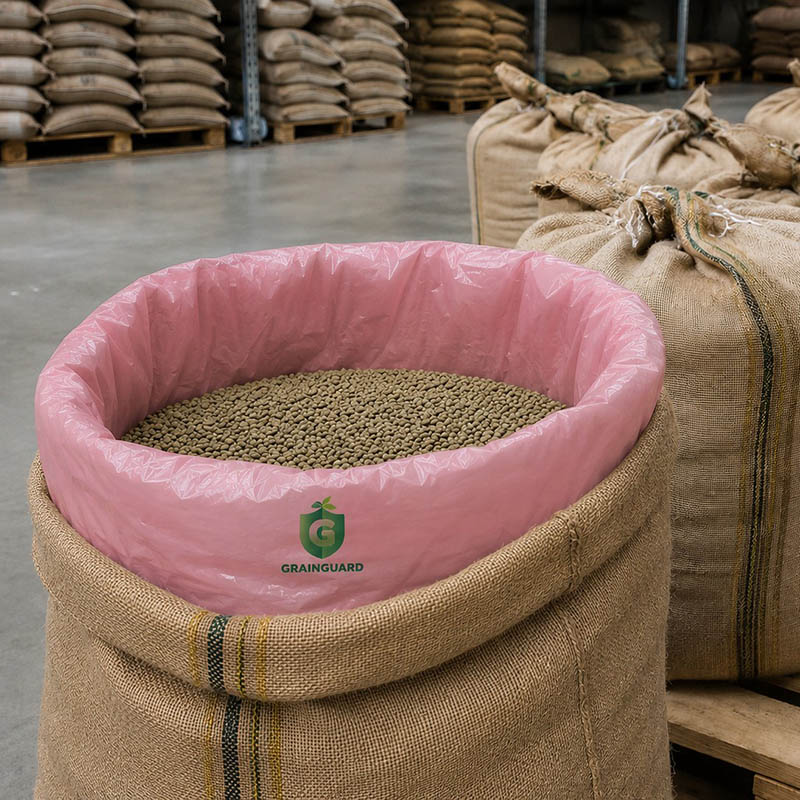
This distinction matters because stronger material is not automatically better barrier material. A woven bag may perform well during handling while still allowing moisture and air to pass through. Conversely, a thin barrier film may protect the commodity atmosphere but require an outer bag or container to carry mechanical loads. Good packaging design combines the two functions rather than asking one layer to perform every task.
For many dry commodities, quality loss develops gradually. A shipment can leave origin in acceptable condition and arrive with changes caused by moisture migration, oxygen exposure, temperature cycling or poor closure. The resulting problem may not be dramatic enough to look like package failure, but it can still lead to caking, odor absorption, color changes, reduced cup quality, mold risk, infestation or a commercial claim. That is why professional buyers increasingly ask for measurable information instead of broad promises such as "moisture proof" or "airtight."
Depending on the application, useful specifications may include film structure, thickness, sealing method, oxygen transmission rate (OTR), water-vapor transmission rate (WVTR), food-contact documentation and closure instructions. OTR and WVTR values should never be considered in isolation. Laboratory results can help compare materials, but real-world performance also depends on seals, punctures, folds, closure quality and how the package is handled.
A high-performance film with a damaged seal will not deliver the expected protection. The complete packaging system must therefore be evaluated, not only the material data sheet.
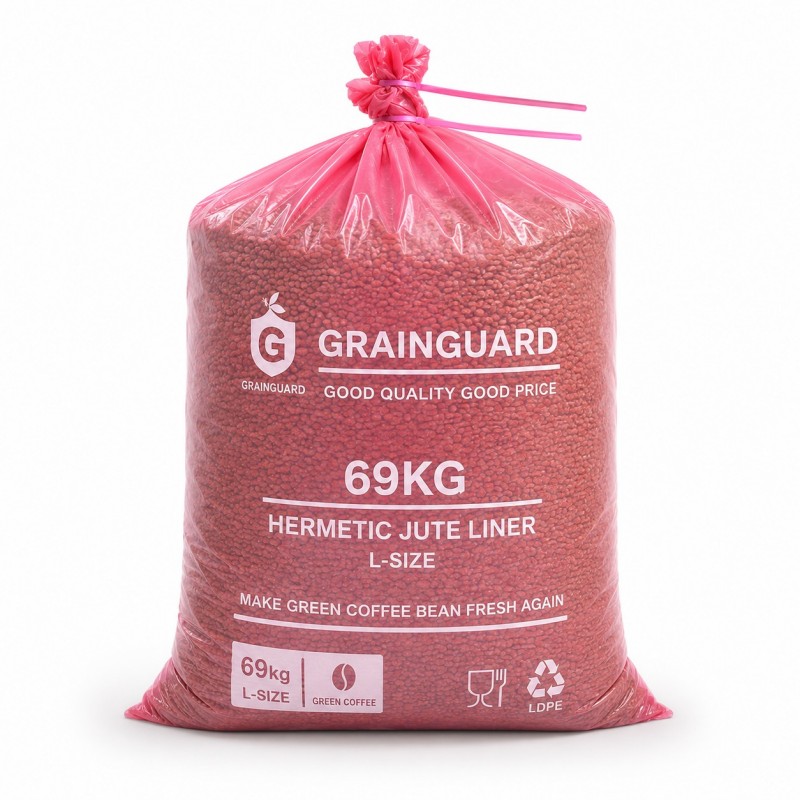
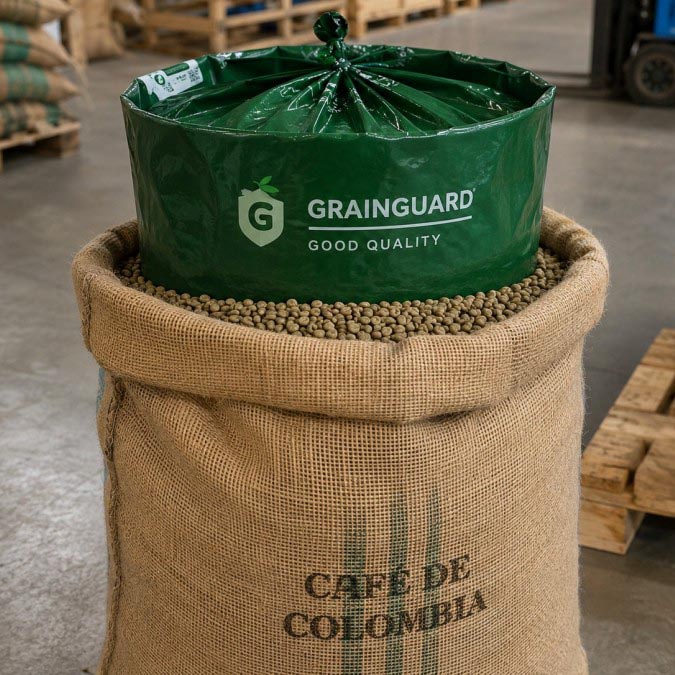
Hermetic packaging is increasingly used when commodities need protection during extended storage or long-distance transport. Its basic principle is straightforward: a properly sealed, low-permeability enclosure limits gas exchange between the stored commodity and the external environment. Inside the enclosure, respiration by insects and biological material can reduce oxygen and increase carbon dioxide over time. Under suitable conditions and with sufficient gas tightness, this atmosphere can suppress insect development and reduce the need for routine chemical treatment. Hermetic systems can also help limit the entry of humid air and external contaminants.
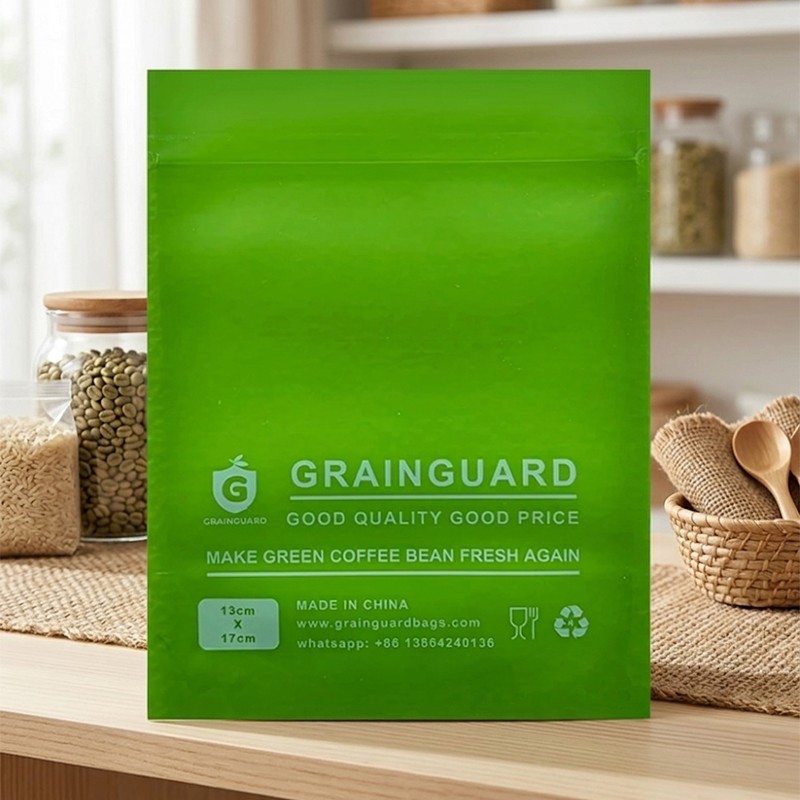
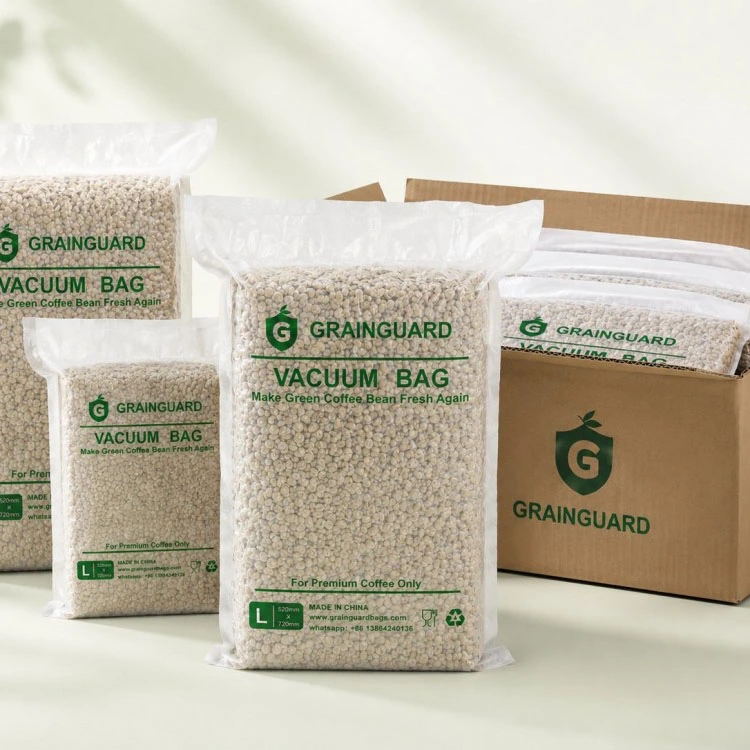
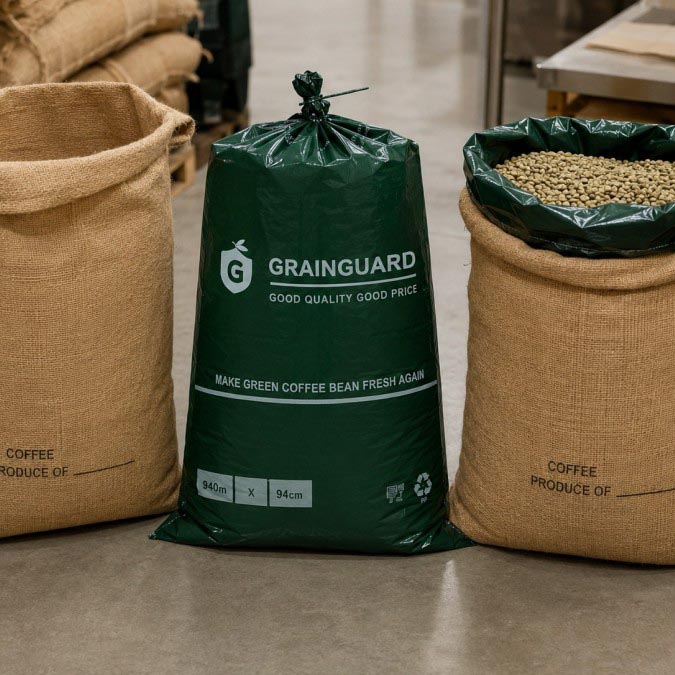
However, hermetic packaging does not "remove the atmosphere," and it does not correct cargo that was packed in poor condition. Commodity moisture, temperature, infestation level, package integrity and storage duration all influence the outcome. FAO guidance warns that grain placed into sealed storage with excessive moisture can still develop mold and become unsafe. In practical terms, hermetic packaging protects properly dried and prepared commodities; it is not a substitute for correct post-harvest handling. This more precise understanding is important for buyers. The most suitable system may be a small sample bag, a liner inside a jute sack, an FIBC liner, a storage cocoon or a full container liner. The choice depends on cargo value, filling weight, transport route, storage period, handling method and required barrier performance.
China is a major contributor to Asia-Pacific's industrial packaging capacity because it combines a large manufacturing economy with extensive polymer-processing, weaving, coating, printing and fabrication capabilities. Its domestic market supports production scale, while established export routes connect packaging manufacturers with buyers across agricultural, food, chemical and general industrial sectors.
Coastal manufacturing provinces add another advantage: proximity to ports. Shandong is a useful example. Its industrial base, agricultural processing activity and access to Qingdao's logistics network create a practical environment for packaging production and export. Suppliers in the region can source materials, convert films and woven fabrics, assemble finished products and move orders toward international shipping routes without relying on a highly fragmented supply chain.
For overseas buyers, this concentration can support competitive lead times and seasonal production capacity. It also makes supplier qualification essential. Large manufacturing clusters contain companies with very different levels of equipment, documentation, quality control and technical experience. Location alone is not evidence of capability.
The first step is to define the cargo and its risks. Buyers should provide the commodity, filling weight, package format, expected storage period, shipping route, temperature and humidity exposure, closure method and any food-contact or traceability requirements.
A supplier cannot recommend an appropriate structure from bag dimensions alone. Sampling and trial orders remain especially important for customized or high-barrier packaging. Buyers should evaluate fit, filling speed, closure reliability, puncture resistance and performance under actual handling conditions. Retained samples from production lots can also help investigate any later quality issue. Finally, procurement planning should account for seasonal demand and concentration risk.
Agricultural shipping seasons can create sudden pressure on film supply, printing schedules and factory capacity. Forecasts, agreed reorder points and at least one qualified backup source reduce the chance that packaging becomes the factor delaying a shipment.
Asia-Pacific's industrial packaging position is built on manufacturing scale, but future leadership will depend increasingly on performance. Buyers are asking for more traceability, more reliable test data, cleaner production, better closure design, faster customization and packaging structures that use material efficiently without weakening cargo protection.
For dry agricultural commodities, this shift is particularly visible. The market is moving away from choosing packaging by unit price alone and toward evaluating the total cost of storage and transport risk. A lower-cost package is not economical when it contributes to quality loss, rejected cargo, rework or customer claims.
The most useful conclusion is therefore not that buyers should source from Asia-Pacific simply because the region is large. It is that the region offers a deep and increasingly capable supply base, provided procurement teams apply clear specifications and disciplined qualification. Market leadership creates opportunity; technical evaluation turns that opportunity into dependable packaging performance.
Copyright © 2026 SYON Packaging Technology(Qingdao)Co., Ltd. All rights reserved.