
A practical quality-control guide for buyers of hermetic liners, bulk bags and dry-commodity packaging.
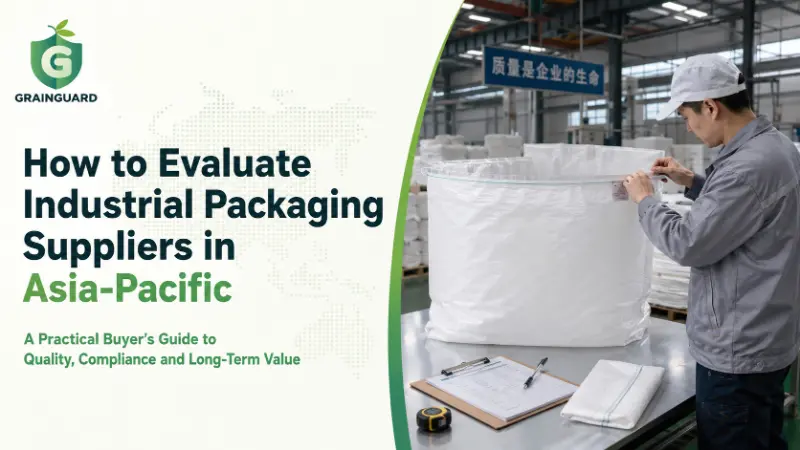
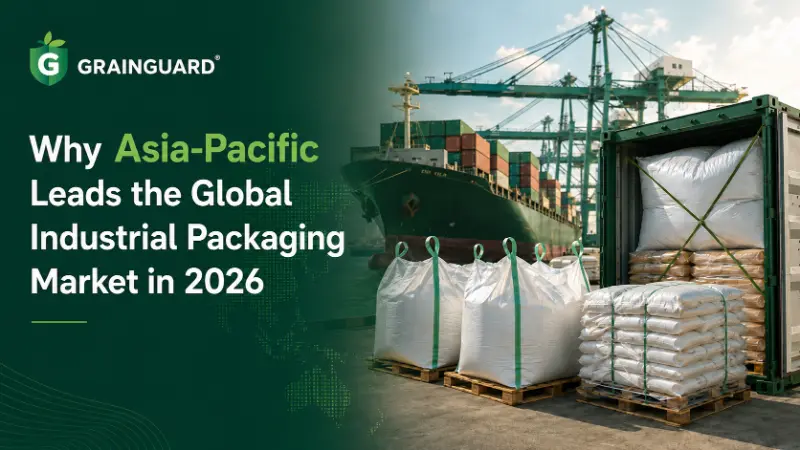
Asia-Pacific offers one of the world's deepest industrial packaging supply bases. Recent market studies agree that it is the leading region, although estimates differ by methodology: one 2026 study places its share at 45.7%, while another reports 42.32% for 2025.
For international buyers, the practical conclusion is not that every supplier in the region is equally capable. It is that the region offers substantial capacity, technical variety and competitive choice provided buyers qualify suppliers carefully. This distinction matters for green coffee, cocoa, grain, seeds, pulses, spices and other dry commodities. Their packaging may need to carry weight, fit existing handling systems, limit moisture and oxygen exposure, support long storage periods and remain reliable through road, sea and warehouse handling.
A quotation alone cannot show whether a supplier can consistently meet those requirements. A structured evaluation process can.
A reliable supplier evaluation starts with a clear application brief. Buyers should define the commodity, filling weight, package format, storage period, transport route, climate exposure, handling method and required shelf or quality objective.
The same liner should not be assumed suitable for a 30 kg jute sack, a one-tonne FIBC and a full shipping container. Commodity condition is equally important. Hermetic and high-barrier packaging can help maintain a properly prepared product, but it cannot reverse excessive moisture, contamination or damage that already exists before filling.
FAO guidance emphasizes that high grain moisture encourages fungal and insect problems, while airtight storage works best when the crop is clean and adequately dried.
|
CARGO INFORMATION Commodity, moisture condition, filling weight, value, sensitivity and intended storage time. |
SUPPLY-CHAIN CONDITIONS Outer package, loading method, route, container type, expected climate and closure equipment. |
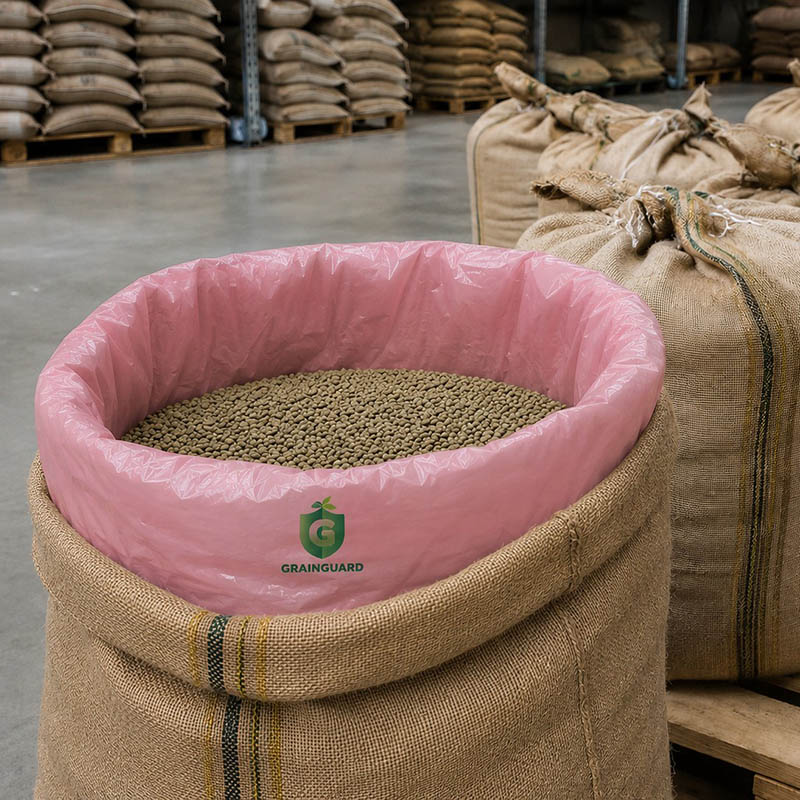
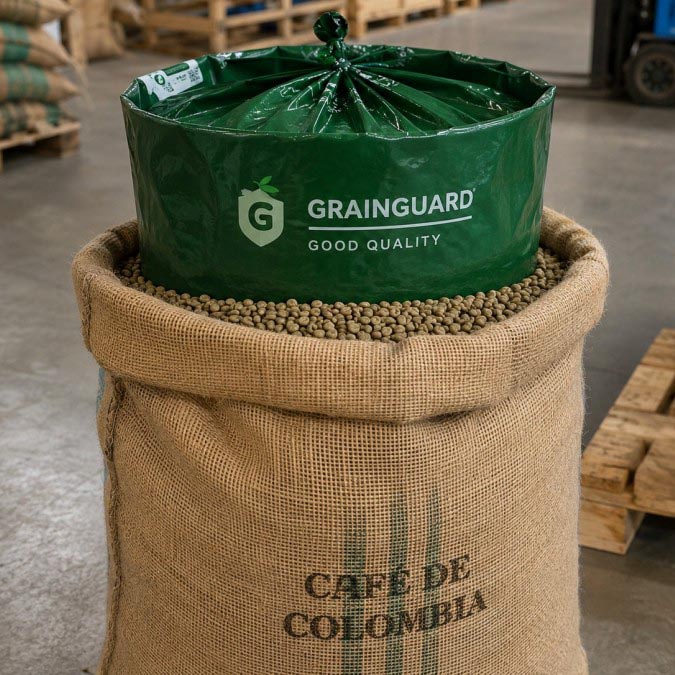
Industrial packaging normally performs at least two different jobs. The outer bag, FIBC or container system carries mechanical loads during filling, lifting, stacking and transport. The inner liner or barrier layer manages exposure to oxygen, moisture vapor, odors, dust and outside contamination. Good design combines these functions instead of assuming that one material can do everything.
Thickness alone is not a reliable quality measure. A thicker single-layer film may resist puncture but provide weaker oxygen protection than a thinner engineered multilayer structure. Buyers should therefore evaluate material composition, tensile and tear behavior, puncture resistance, seam or seal strength, dimensional consistency and compatibility with the outer package.
Many field problems are caused by fit or closure rather than material selection. A liner that is too short may leave insufficient sealing allowance. One that is too wide may fold excessively, slow filling or create stress points. Buyers should provide accurate outer-bag or container dimensions and confirm how the liner will sit during filling and transport. Closure instructions should be specific.
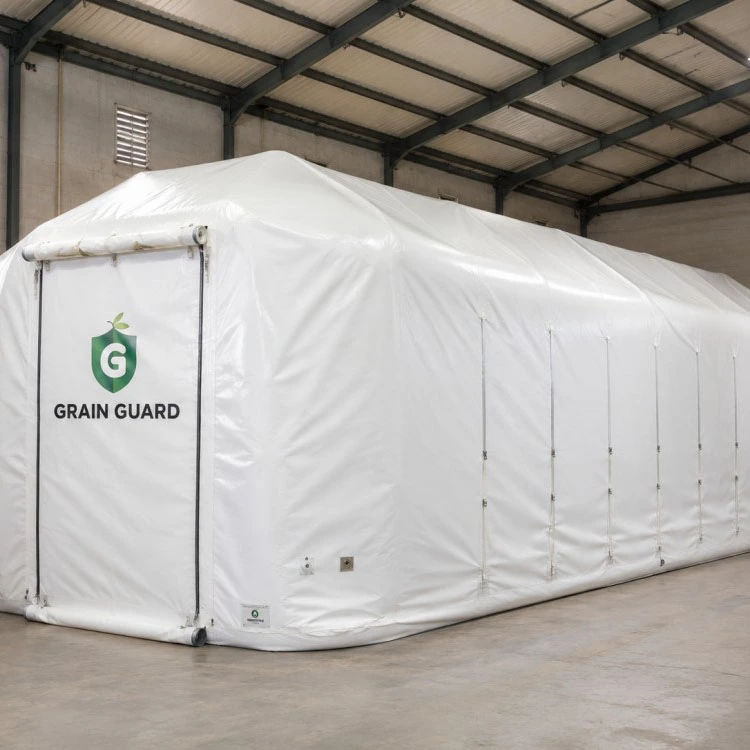
Depending on the format, the system may use a cable tie, twist-and-tie method, heat seal, zipper, vacuum port or a combination of methods. The supplier should explain the required equipment, sealing temperature or procedure, operator training needs and how closure integrity can be checked before shipment. For container-scale systems, request installation drawings or a trial installation. Fixing points, floor coverage, door-area closure, loading access and final sealing should all be reviewed before the product is approved. A well-designed liner that cannot be installed consistently is not a reliable commercial solution.
Supplier qualification should move beyond company profiles and sales presentations. Buyers should ask how raw materials are identified, how film or fabric specifications are controlled, where dimensions are checked, how seals are inspected and what happens when a batch falls outside tolerance.
A practical quality-control review normally includes incoming-material verification, in-process inspection, finished-product checks, batch identification and retained samples. For customized products, artwork control, printing approval and packaging labels should also be documented. The purpose is not to create paperwork for its own sake; it is to make the finished product traceable when a question arises months later.
Factory audits can be valuable, but they should focus on evidence. Clean floors and modern equipment are positive signs, yet they do not replace production records, calibrated testing, defect handling and lot traceability. A remote video review can support an early screening, while higher-risk or high-volume programs may justify an on-site audit.
Samples help confirm material feel and basic dimensions, but a commercial trial provides more useful evidence. Buyers should test the liner with the actual outer package, cargo and filling method whenever possible.
The trial should evaluate fit, filling speed, closure reliability, puncture risk, handling behavior and any effect on routine warehouse operations. For barrier-sensitive cargo, the trial plan may also include storage observations, seal checks and retained control samples. Hermetic systems rely on package integrity and suitable commodity condition. Research on small-scale hermetic systems continues to show that mold can still develop when grain is stored too wet, reinforcing the need to test the complete process rather than relying on the word "hermetic" alone.
The first commercial order should be treated as a controlled validation batch. Record the production lot, inspection results, loading date, closure method and transport conditions. These records provide a baseline for future orders and make supplier discussions more objective.
Copyright © 2026 SYON Packaging Technology(Qingdao)Co., Ltd. All rights reserved.