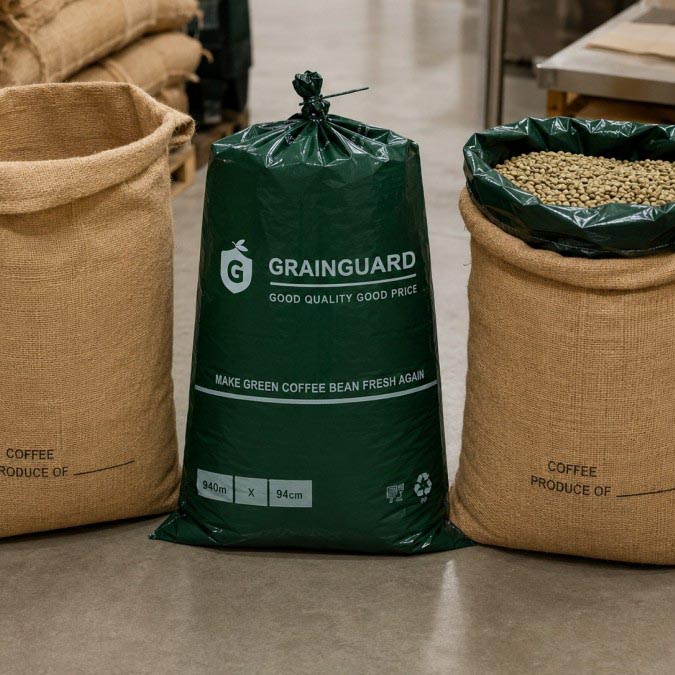

Green coffee can lose commercial and sensory value when exposed to fluctuating humidity, oxygen, condensation, odors, insects, and unsuitable storage conditions. A Coffee Storage Hermetic Jute Inner Liner creates a protective barrier inside a traditional jute sack, helping reduce unwanted moisture and gas exchange while retaining the familiar handling advantages of jute packaging. This article explains how the packaging structure works, what problems it addresses, how to use it correctly, and what coffee exporters, importers, cooperatives, traders, warehouses, and roasters should consider when selecting a hermetic inner liner.
Green coffee is an agricultural product whose value depends heavily on how well its physical and sensory characteristics are preserved after processing. Once coffee has been dried and prepared for storage or export, the packaging environment becomes an important part of quality management.
Traditional jute sacks remain widely used because they are strong, familiar within the coffee trade, easy to handle, and suitable for stacking and transportation. However, jute is a porous textile material. By itself, it does not create a sealed barrier between coffee and the surrounding environment.
This becomes particularly important when coffee moves through different climates. A shipment may travel from a relatively dry producing region into a humid port, remain inside a container, pass through changing temperatures, and finally arrive at a warehouse where storage conditions are completely different.
Moisture fluctuations can influence bean stability, while condensation and excessive humidity may create conditions associated with mold and undesirable sensory characteristics. FAO guidance also emphasizes the importance of appropriate drying and controlled warehouse conditions for minimizing storage problems.
For this reason, many coffee businesses look for a packaging structure that combines the traditional advantages of jute with an additional internal barrier.
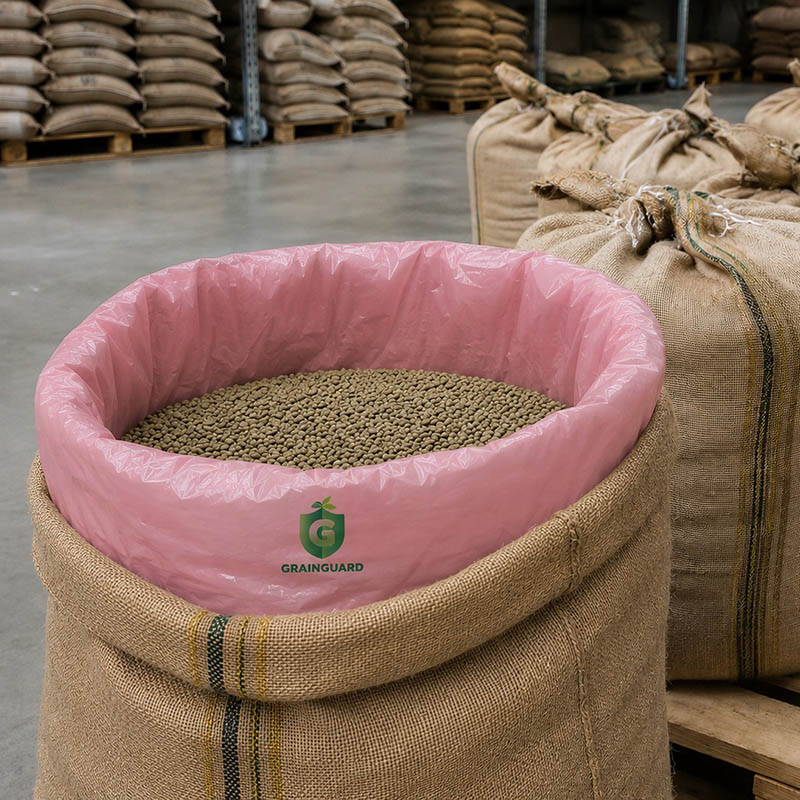
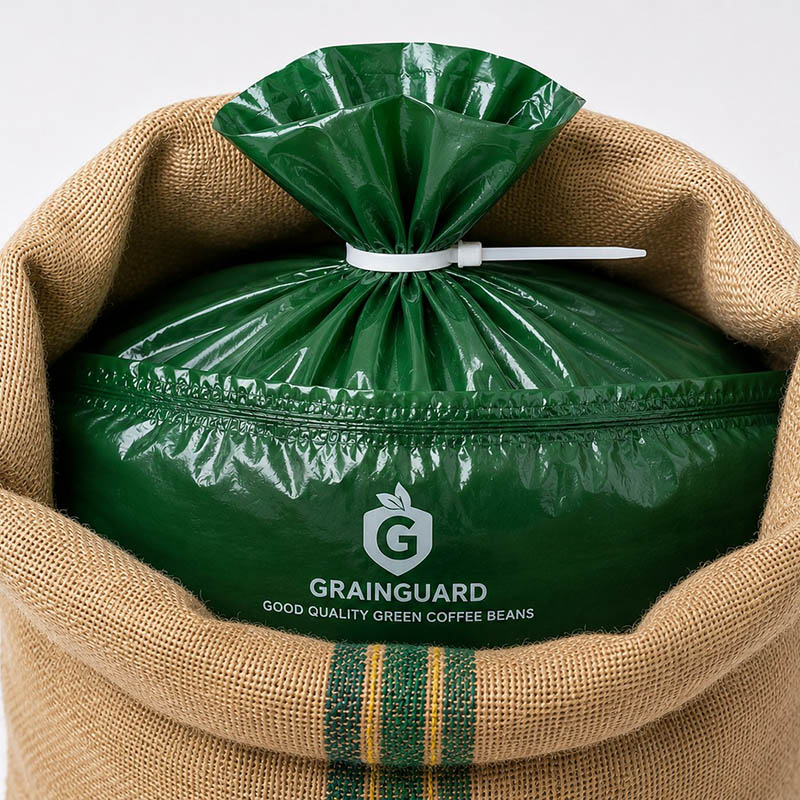
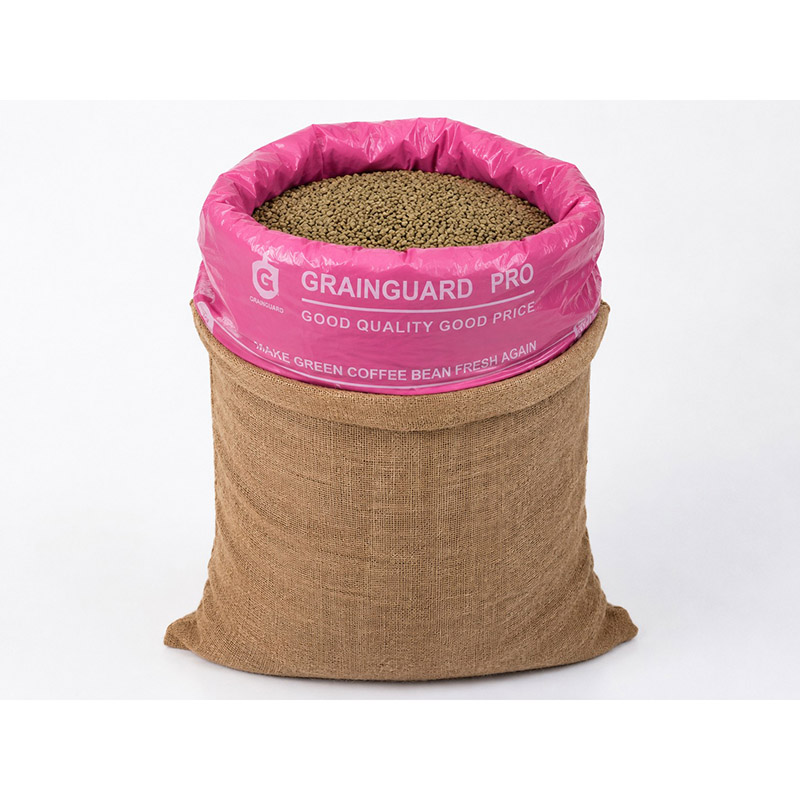
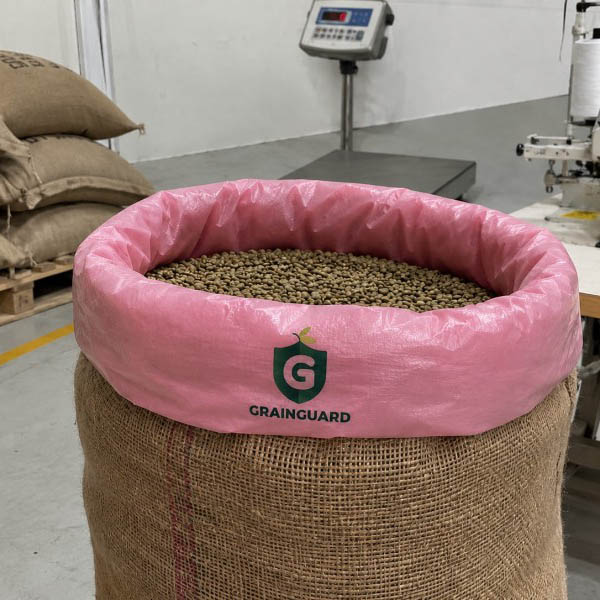
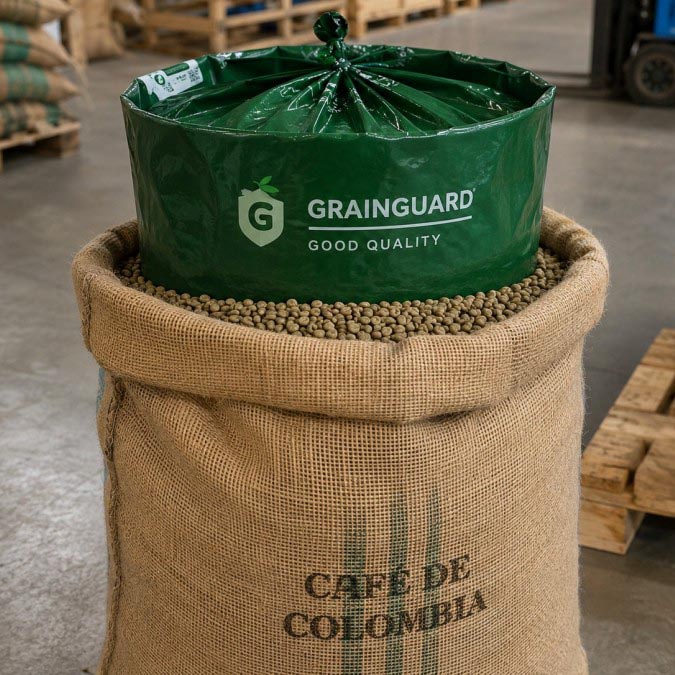
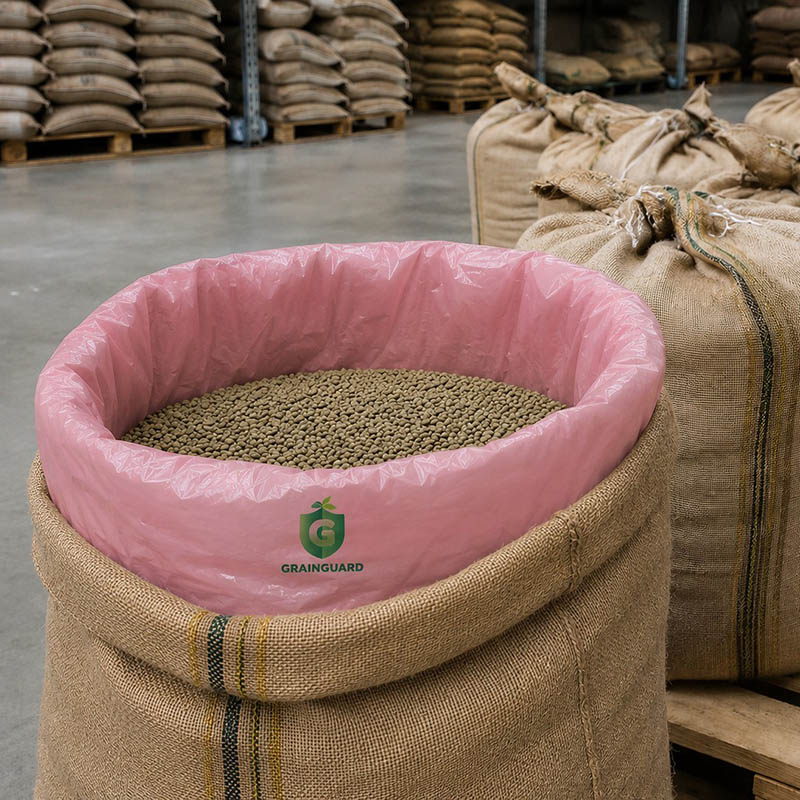
A Coffee Storage Hermetic Jute Inner Liner is a sealable inner bag designed to be placed inside an outer jute coffee sack. Instead of allowing green coffee to remain directly exposed to the surrounding air through the jute fabric, the inner liner creates a more controlled packaging environment.
The concept is simple: the jute sack provides external strength and handling support, while the hermetic liner provides an internal barrier.
This two-layer structure can be particularly useful for coffee exporters and storage operators who want to continue using conventional jute packaging without giving up the additional protection offered by a sealed inner layer.
Hermetic packaging is generally intended to reduce unwanted exchange of moisture and gases between the contents and the external environment. Research on green coffee storage has found that hermetic systems can help maintain moisture-related and sensory quality indicators under challenging storage conditions.
Core concept: The jute sack does not have to be replaced. Instead, a suitable hermetic inner liner can be added to create a more protective packaging system around the coffee.
The packaging system normally consists of two functional layers.
| Packaging Layer | Primary Function | Value for Coffee Handling |
|---|---|---|
| Outer Jute Sack | Structural support and traditional packaging format | Easy handling, stacking, identification, and transportation |
| Hermetic Inner Liner | Internal barrier around the coffee | Helps reduce moisture and gas exchange and limits environmental exposure |
When coffee is filled into the inner liner, the liner is then properly closed or sealed according to its design. The outer jute sack remains around the liner and provides the physical support needed for normal coffee logistics.
This design separates two packaging functions instead of asking one material to perform every job.
For commercial coffee operations, storage losses are not limited to visible damage. A shipment may appear acceptable externally while gradual environmental exposure affects bean condition over time.
It is important to understand that an inner liner is not a substitute for properly dried coffee, suitable warehouse conditions, hygienic handling, or correct container management. Packaging works best as part of a complete storage system.
Although different liner constructions provide different performance characteristics, a properly selected and correctly sealed inner liner can offer several practical benefits.
Moisture is one of the major concerns in green coffee storage. A porous outer sack alone cannot provide strong protection against changes in ambient humidity.
A hermetic liner adds a barrier between the beans and the surrounding atmosphere. This can help maintain a more stable internal environment when the coffee has already been properly dried before packaging.
International coffee shipments may experience significant differences in temperature and humidity. Containers can also remain in ports or transit environments for extended periods.
Hermetic inner packaging adds another protective layer without changing the familiar outer appearance of a jute coffee sack.
Green coffee can be sensitive to environmental odors. Packaging materials, warehouse chemicals, fuels, or nearby products may create unwanted exposure if coffee is not adequately isolated.
A sealed internal liner helps create a cleaner barrier between the coffee and its surroundings.
One of the practical advantages of this packaging structure is that the outer jute sack can continue to be used for handling, stacking, labeling, and transportation.
Research has demonstrated that hermetic storage can support the preservation of green coffee quality under appropriate conditions. One study examining hermetic storage reported preservation of several physical and sensory characteristics over extended storage periods.
Actual storage life will depend on initial coffee condition, moisture content, packaging integrity, warehouse environment, transportation conditions, and handling practices.
| Factor | Traditional Jute Sack | Jute Sack + Hermetic Inner Liner |
|---|---|---|
| Outer strength | Strong and familiar | Maintained through the jute outer layer |
| Moisture barrier | Limited | Additional internal barrier |
| Gas exchange | Relatively open | Reduced when properly sealed |
| Odor protection | Limited | Improved internal isolation |
| Traditional appearance | Yes | Yes |
| Suitability for long-distance shipping | Requires careful environmental management | Adds another layer of environmental protection |
A Coffee Storage Hermetic Jute Inner Liner can be integrated into several stages of the green coffee supply chain.
Not every liner is appropriate for every coffee operation. Buyers should evaluate the complete packaging system rather than focusing only on appearance or price.
| Selection Factor | Why It Matters |
|---|---|
| Material structure | Determines barrier performance, flexibility, durability, and handling characteristics. |
| Thickness | Influences puncture resistance and overall packaging durability. |
| Size | Must fit the intended jute sack and coffee load correctly. |
| Sealing method | A reliable closure is essential to the performance of a hermetic system. |
| Mechanical strength | Helps reduce leakage or failure during filling, stacking, and transportation. |
| Food-contact suitability | Important when the liner is intended for direct contact with coffee. |
| Customization | Useful for different sack dimensions, loading volumes, and operational requirements. |
Even a high-quality liner can perform poorly if it is incorrectly installed or damaged during handling. A practical operating procedure should include the following steps:
Hermetic packaging should complement, not replace, proper coffee drying and warehouse management. Maintaining suitable storage conditions remains essential.
Packaging is only one component of coffee quality preservation, but it can influence the environment surrounding the beans during storage and transport.
Green coffee storage research has shown that moisture content, water activity, color, and sensory characteristics can change under different storage conditions. One study comparing hermetic bags with traditional jute storage found that hermetic systems showed promise for maintaining moisture, water activity, and sensory scores during prolonged storage.
Another study examining hermetic packaging under commercial-scale conditions reported that green coffee stored in hermetic systems maintained important quality characteristics during the study period.
These findings support a practical principle: the earlier quality is protected from unnecessary environmental exposure, the easier it becomes to maintain consistency throughout the supply chain.
For coffee exporters, distributors, and large-scale buyers, choosing a supplier is about more than purchasing a plastic bag. The supplier should understand the relationship between the liner, outer jute sack, coffee loading process, transportation environment, and storage requirements.
SYON Packaging Technology (Qingdao) Co., Ltd. focuses on packaging solutions designed around real application requirements. For buyers of Coffee Storage Hermetic Jute Inner Liner products, practical considerations such as dimensions, material construction, sealing requirements, packaging compatibility, order quantities, and customized specifications can all influence the final solution.
A professional supplier should be able to communicate clearly about:
For B2B buyers, these details are particularly important because the liner is not an isolated product. It becomes part of a larger coffee packaging workflow.
It is a sealable inner liner placed inside a jute coffee sack. The jute provides external handling strength, while the inner liner creates a more controlled barrier around the green coffee.
Not necessarily. The two components perform different functions. A hermetic liner primarily provides internal environmental protection, while the jute sack provides structural support and the traditional packaging format used throughout the coffee supply chain.
No. Proper drying before packaging and appropriate storage conditions are still essential. A hermetic liner helps reduce environmental moisture exchange but cannot correct coffee that was packaged with unsuitable moisture conditions.
Yes. A correctly sealed liner can add a barrier against environmental moisture and gas exchange during transportation. However, container condition, temperature changes, condensation, loading practices, and warehouse conditions must also be managed.
The combination allows coffee businesses to retain the handling and appearance advantages of traditional jute packaging while adding an internal protective barrier around the coffee.
Buyers should confirm the required sack size, coffee load, liner dimensions, material construction, thickness, sealing method, intended storage environment, food-contact requirements, customization needs, and supplier quality-control capabilities.
Not automatically. Thickness is only one factor. The appropriate specification depends on the required balance of barrier performance, puncture resistance, flexibility, sealing performance, handling, and cost.
Customization may be available depending on the manufacturer. Common requirements can include dimensions, material structure, thickness, opening configuration, sealing method, printing, and packaging format.
Green coffee can travel through multiple storage and transportation environments before reaching the roaster. During this journey, unnecessary exposure to humidity, oxygen, condensation, odors, dust, and handling conditions can create avoidable quality risks.
A Coffee Storage Hermetic Jute Inner Liner offers a practical way to strengthen the traditional jute sack packaging system. Instead of replacing the familiar outer package, it adds an internal barrier designed to create a more controlled environment around the coffee.
The best results come from combining suitable packaging with properly dried coffee, hygienic handling, appropriate warehouse conditions, careful sealing, and disciplined transportation practices.
For coffee exporters, importers, cooperatives, traders, roasters, and packaging distributors seeking reliable hermetic inner liner solutions, SYON Packaging Technology (Qingdao) Co., Ltd. can help evaluate packaging requirements based on sack dimensions, loading capacity, storage conditions, transportation needs, and customized specifications.
Need a suitable Coffee Storage Hermetic Jute Inner Liner for your coffee packaging project? Contact us to discuss your requirements and develop a packaging solution suited to your application.
-
Copyright © 2026 SYON Packaging Technology(Qingdao)Co., Ltd. All rights reserved.