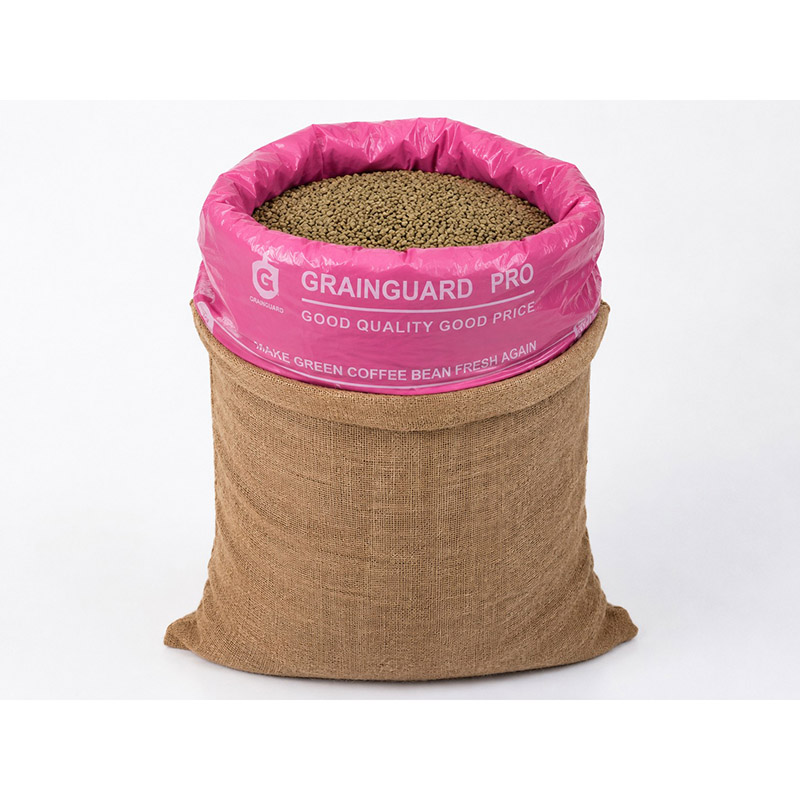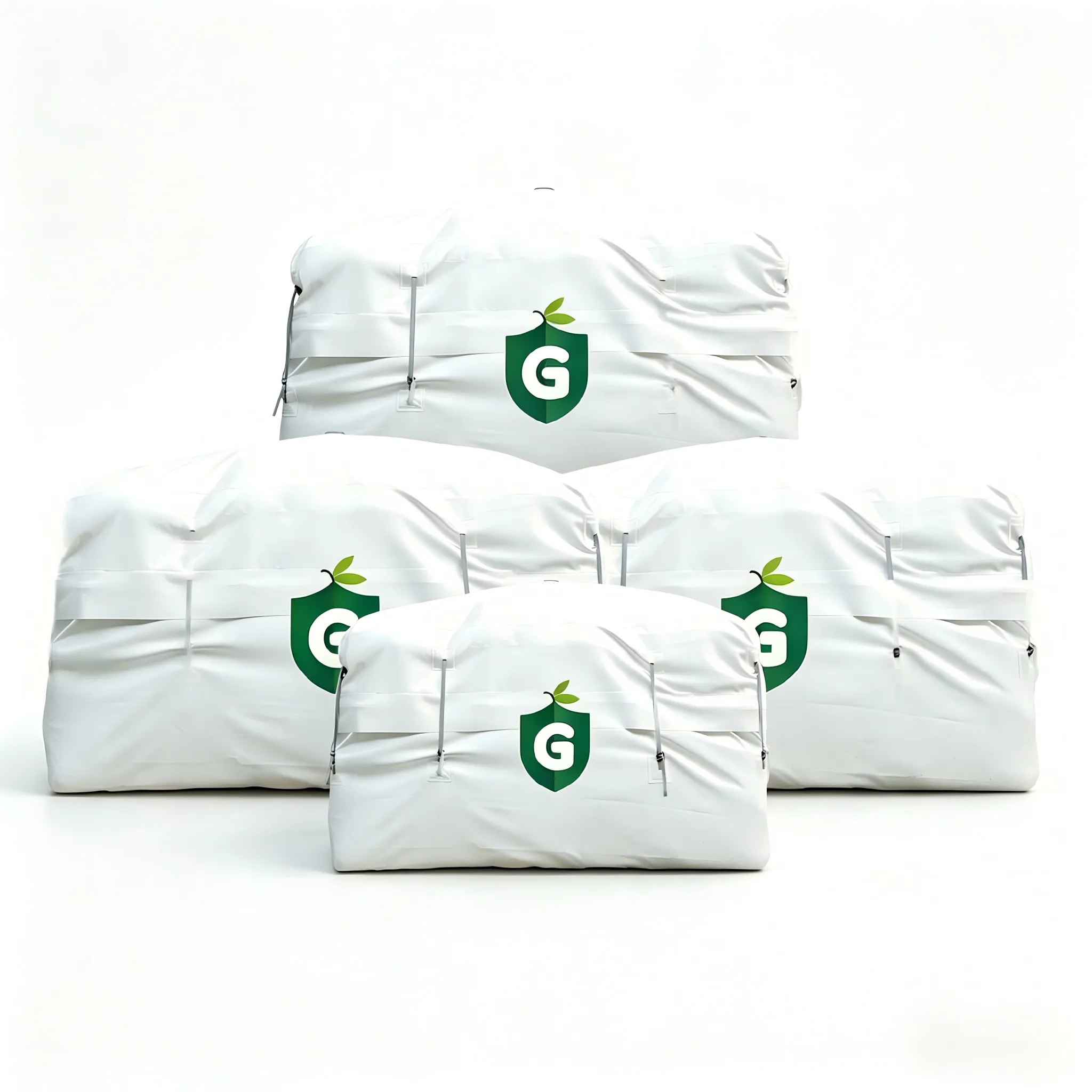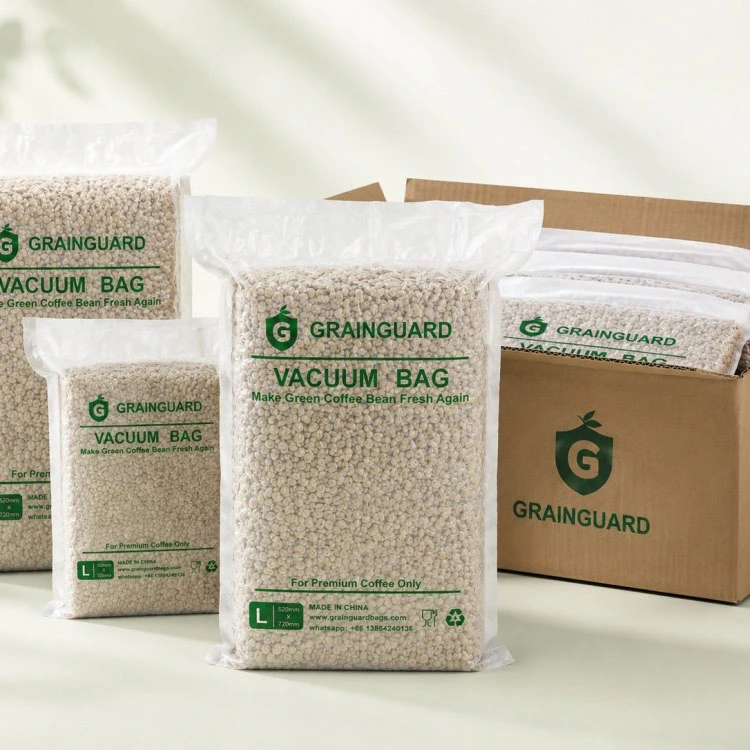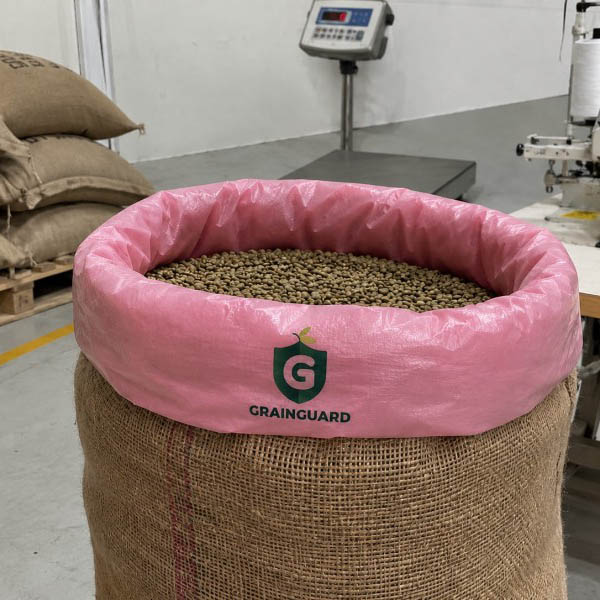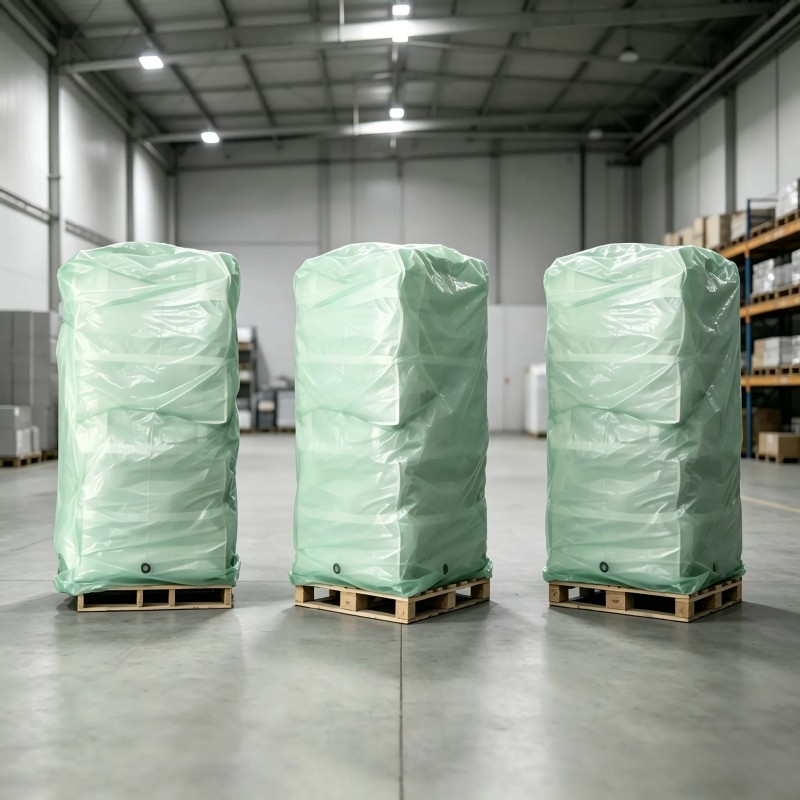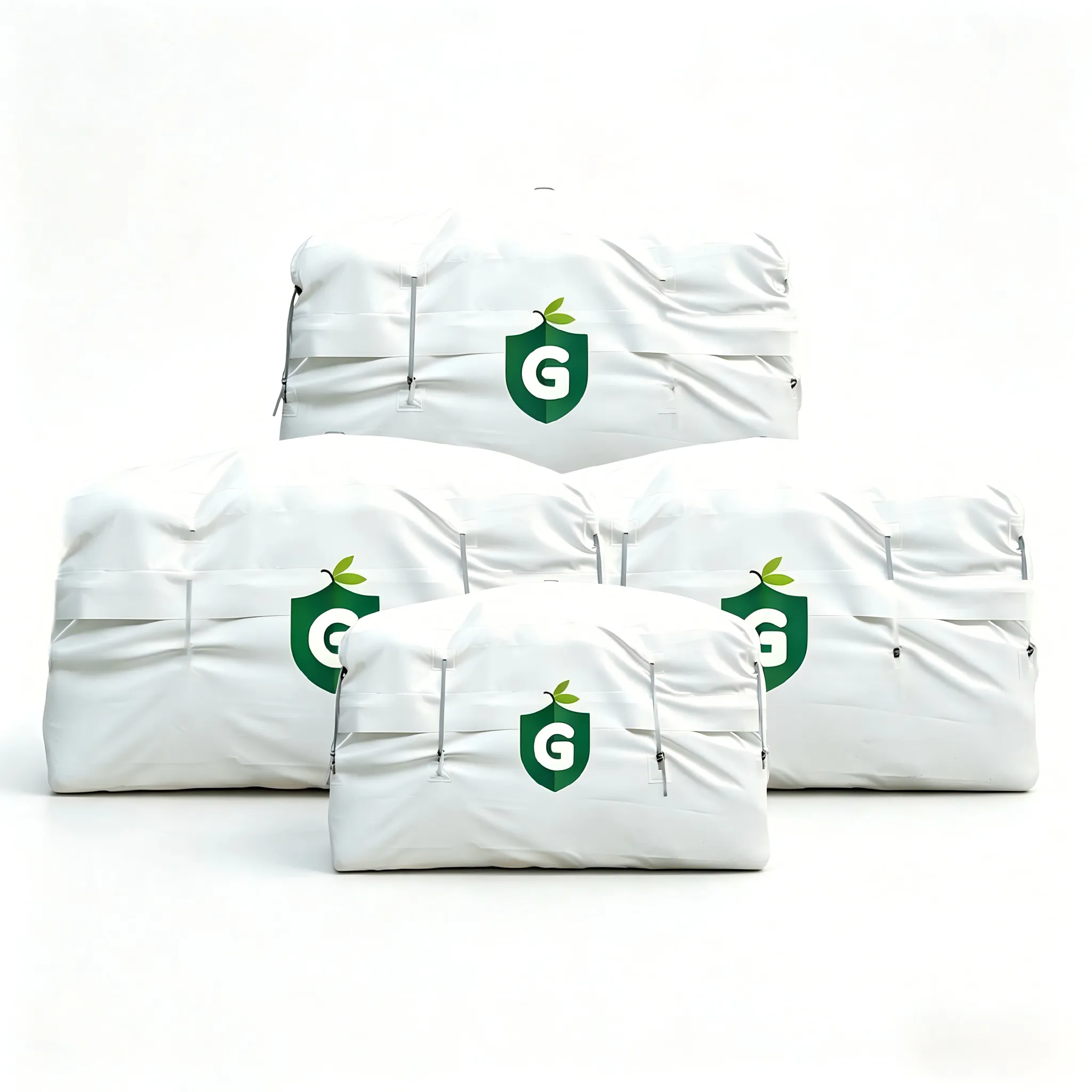

GrainGuard is a coffee bean hermetic jute liner manufacturer and wholesale supplier serving coffee exporters, cooperatives, dry mills, traders, importers, roasters, warehouse operators, and agricultural packaging distributors. Installed inside a traditional jute coffee sack before filling, the liner creates a clean, closable inner package around the beans while preserving the familiar outer sack used for sewing, stacking, palletizing, marking, and international handling.
The GrainGuard coffee bean hermetic jute liner helps reduce exposure to moisture exchange, oxygen, insects, dust, external odors, jute fibers, and handling contamination during origin storage, export preparation, warehouse holding, and long-distance transport. It is designed for green coffee and cocoa packed in conventional jute sacks and does not replace correct drying, clean storage, careful handling, or an intact heat-sealed closure.
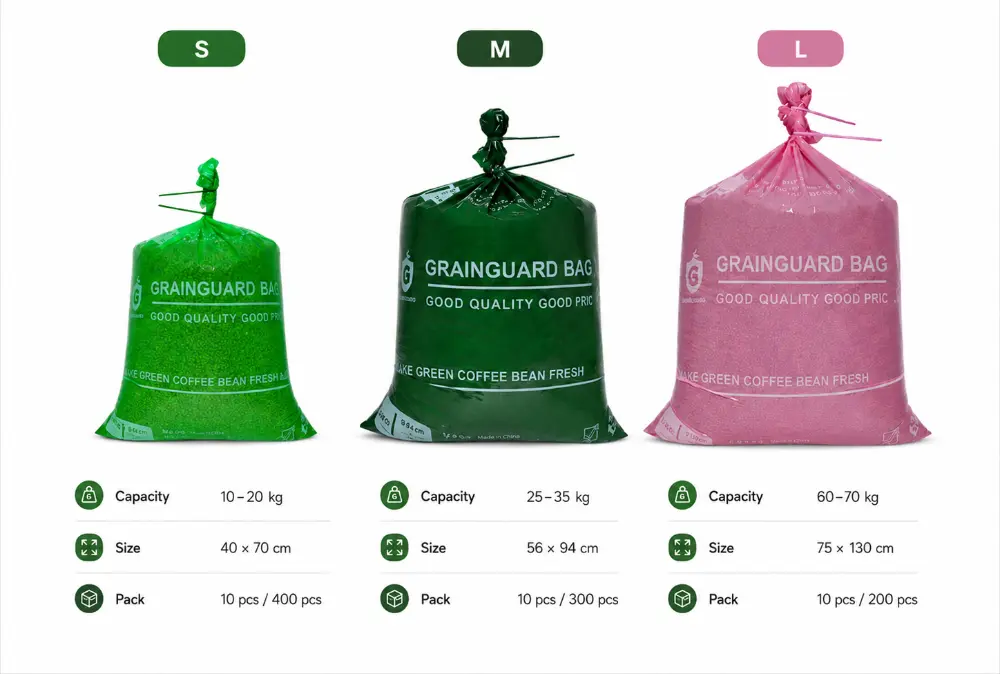
Three material grades are available. Basic uses a multilayer PE structure for routine and cost-controlled programs. Pro combines PE and PA for a stronger balanced structure suitable for longer handling and export routes. Premium uses a PE/PA/EVOH multilayer structure for higher-barrier programs, specialty coffee, and more demanding storage conditions. Standard S, M, and L sizes cover approximately 10-20 kg, 25-35 kg, and 60-70 kg filling programs.
Each liner can be supplied with cable ties and a “No Hook” handling sticker, and a continuous heat seal is recommended after filling. Factory-direct supply is available from Qingdao, China, with support for standard and custom dimensions, OEM printing, private-label artwork, customized labels, mixed-size orders, carton configuration, samples, and wholesale contract programs.
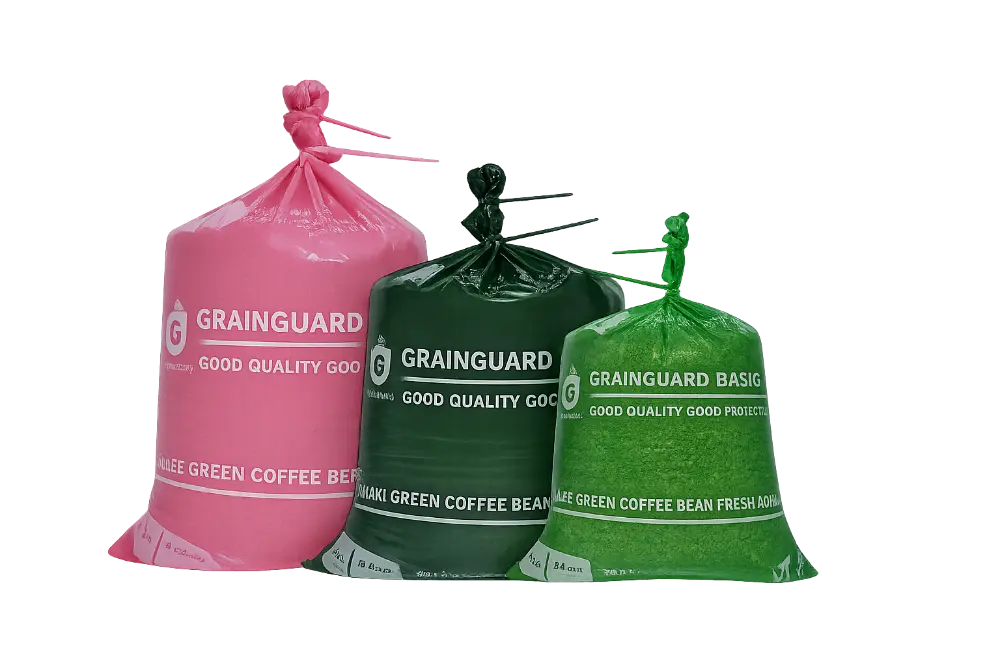
Traditional jute sacks remain widely used in the coffee trade because they are strong, sewable, stackable, and familiar to farms, exporters, logistics providers, and receiving buyers. Jute is naturally breathable, however, and does not by itself create a barrier against changes in ambient humidity, air exchange, dust, insects, fibers, or surrounding odors. A coffee bean hermetic jute liner improves this established packaging format by adding a dedicated product-contact layer inside the sack. Before filling, the liner is opened fully inside a clean, dry, undamaged jute sack. The bottom and side panels should sit evenly so that coffee beans enter the liner rather than falling between the liner and the outer sack. After the target weight is reached, sufficient upper material is reserved for closure, excess air is reduced carefully, and the opening is gathered and secured with the supplied cable tie. A continuous heat seal is then applied in the approved sealing area before the outer jute sack is sewn or closed in the buyer’s normal way.
The multilayer film slows the movement of moisture vapor and oxygen between the packed coffee and the surrounding environment. By separating the beans from direct contact with jute fibers, dirty warehouse surfaces, dust, insects, and external odors, the liner can support retention of coffee color, aroma, moisture balance, and lot identity during suitable storage and transport. Actual performance depends on the selected grade, initial coffee condition, liner fit, seal integrity, warehouse climate, transport route, and handling practices.
1. Inspect the outer jute sack and confirm that it is clean, dry, undamaged, and free from sharp seams or protrusions.
2. Insert the liner and open the bottom and side panels fully so the material fits smoothly inside the sack.
3. Fill green coffee directly into the liner and maintain enough upper material for cable tying and heat sealing.
4. Reduce excess air carefully without puncturing the film or applying unnecessary pressure to the beans.
5. Secure the gathered opening with the approved cable tie and apply a continuous heat seal.
6. Apply the “No Hook” sticker where required, close the outer sack, and protect the package from hooks, sharp edges, abrasion, and rough handling.
→ Two-layer coffee packaging system: Combines the handling strength of a traditional jute sack with a separate multilayer inner barrier for green coffee or cocoa.
→ Cleaner product-contact surface: The beans contact the liner rather than the jute material, helping reduce fibers, dust, odors, insects, and surrounding contamination.
→ Grade-based barrier selection: Basic, Pro, and Premium constructions allow buyers to match material performance to coffee value, storage duration, climate, route, and budget.
→ Three practical size options: S, M, and L formats support small specialty lots, medium-capacity sacks, and common 60-70 kg export programs.
→ Cable-tie and heat-seal closure: The gathered opening can be secured with a cable tie and continuously heat sealed for longer storage and transport.
→ Handling identification: The “No Hook” sticker provides a clear instruction to warehouse and logistics teams to avoid puncturing the barrier film.
→ Support for quality preservation: Reduced exposure to external moisture, oxygen, odors, dust, and insects can help maintain coffee aroma, color, appearance, and lot integrity.
→ Compatible with established operations: The outer jute sack can still be filled, sewn, stacked, palletized, labeled, and loaded using familiar coffee-export procedures.
Reduced reliance on chemical treatment: A correctly closed hermetic package can support storage programs seeking to reduce unnecessary pesticide or fumigation use, subject to the commodity condition and local procedures.
→ Custom B2B supply: GrainGuard supports custom dimensions, printing, private labels, labels, carton packing, samples, mixed sizes, and repeat wholesale programs.
The coffee bean hermetic jute liner is intended for green coffee and other compatible dry commodities that must remain in a traditional jute-sack format while receiving an additional internal barrier. Typical applications include:
● Origin packing: Farms, washing stations, cooperatives, and dry mills packing processed green coffee after drying, sorting, grading, or lot separation.
● Export preparation: Exporters and packing stations preparing commercial coffee, certified programs, specialty lots, or micro-lots for road, sea, rail, or intermodal shipment.
● Warehouse holding: Coffee stored while awaiting buyer approval, export documentation, financing, pallet planning, container booking, or consolidation.
● Specialty and traceable programs: Single-origin lots, certified coffee, competition coffee, and buyer-specific programs requiring cleaner separation and clearer lot identification.
● Importer and roaster storage: green coffee held before resale, blending, sample release, profile development, or roasting.
● Cocoa and similar dry commodities: Cocoa beans and comparable dry agricultural goods packed in traditional jute sacks, subject to compatibility and food-contact confirmation.
● Packaging distributor programs: Standard or private-label liner ranges supplied to regional packaging distributors, coffee associations, and export service providers.
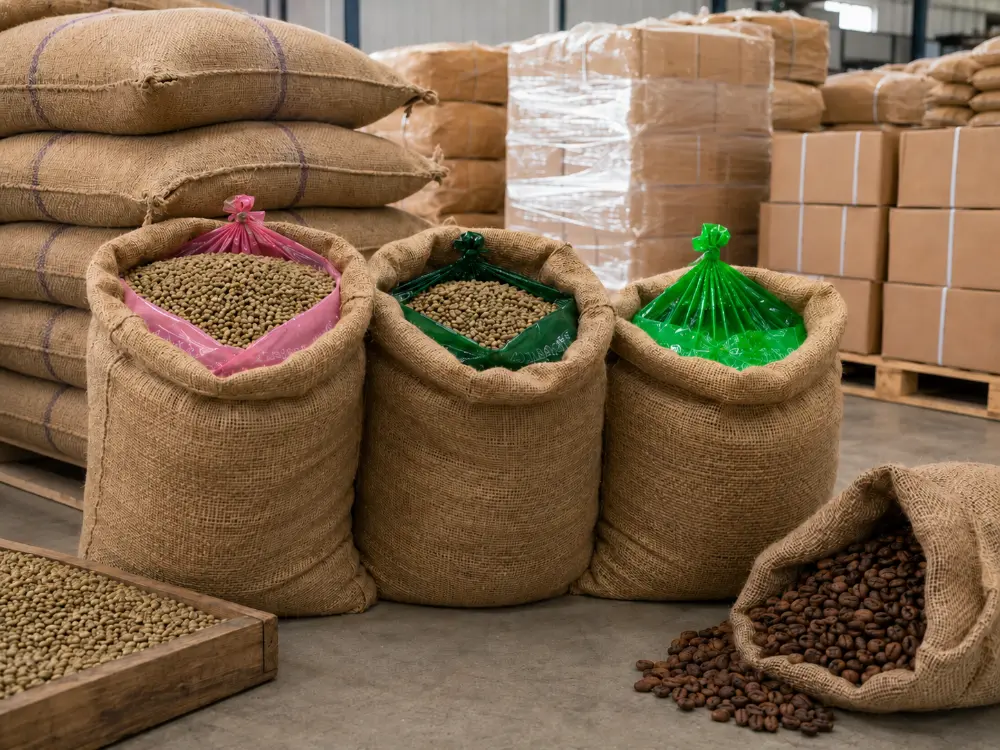
The following information summarizes the standard GrainGuard coffee bean hermetic jute liner range. Final dimensions, material declaration, closure method, artwork, packing, and commercial terms should be confirmed in the approved quotation or technical data sheet before production.
|
Item |
Specification |
|
Product name |
Coffee Bean Hermetic Jute Liner |
|
Brand |
GrainGuard |
|
Product format |
Multilayer inner liner installed inside a traditional jute coffee or cocoa sack |
|
Primary application |
Storage and transport of green coffee beans, cocoa beans, and compatible dry agricultural commodities |
|
Available grades |
Basic / Pro / Premium |
|
Material structures |
Basic: multilayer PE; Pro: multilayer PE + PA; Premium: multilayer PE + PA + EVOH |
|
Available sizes |
S / M / L / customized |
|
Reference capacity range |
Approximately 10-70 kg depending on size, commodity density, and filling method |
|
Closure accessories |
Cable tie and “No Hook” sticker |
|
Recommended closing method |
Gather and secure with cable tie, then apply a continuous heat seal |
|
Outer packaging compatibility |
Clean, dry traditional jute sacks with confirmed internal dimensions |
|
Customization |
Dimensions, printing, private label, labels, artwork, inner packs, master cartons, and mixed-size programs |
|
Supply model |
Factory-direct production, samples, wholesale supply, OEM/private label, and contract programs |
|
Place of manufacture |
Qingdao, China |
|
Grade |
Material Structure |
Recommended Positioning |
|
Basic |
Multilayer PE |
Practical, cost-controlled choice for routine commercial coffee, regular holding periods, and standard packing programs. |
|
Pro |
Multilayer PE + PA |
Balanced choice for higher-value lots, longer handling cycles, export routes, and buyers requiring a stronger structure. |
|
Premium |
Multilayer PE + PA + EVOH |
Higher-barrier choice for specialty coffee, longer storage, demanding climates, and quality-sensitive programs. |
|
Size |
Approx. Capacity |
Flat Dimensions (W × L) |
Typical Use |
|
S |
10-20 kg / 22-44 lb |
40 × 70 cm |
Small lots, micro-lots, trial packing, and separated specialty batches |
|
M |
25-35 kg / 55-77 lb |
56 × 94 cm |
Medium-capacity sacks, cooperative packing, and importer or roaster storage |
|
L |
60-70 kg / 132-154 lb |
75 × 130 cm |
Standard large export sacks, including common 60-70 kg coffee and cocoa programs |
|
Size |
Inner Pack |
Master Carton |
Inner-Pack Dimensions |
Master-Carton Dimensions |
|
S |
10 pcs |
400 pcs |
59 × 26 × 3 cm |
81 × 47 × 14 cm |
|
M |
10 pcs |
300 pcs |
59 × 26 × 3 cm |
61 × 50 × 16 cm |
|
L |
10 pcs |
200 pcs |
42 × 34 × 4 cm |
81 × 47 × 14 cm |
Reference values only: Capacity and fit vary with bean density, jute sack dimensions, filling method, sealing allowance, liner grade, and closure procedure. Packing quantities and carton dimensions may be adjusted for artwork, order volume, destination requirements, mixed-size programs, and loading plans.
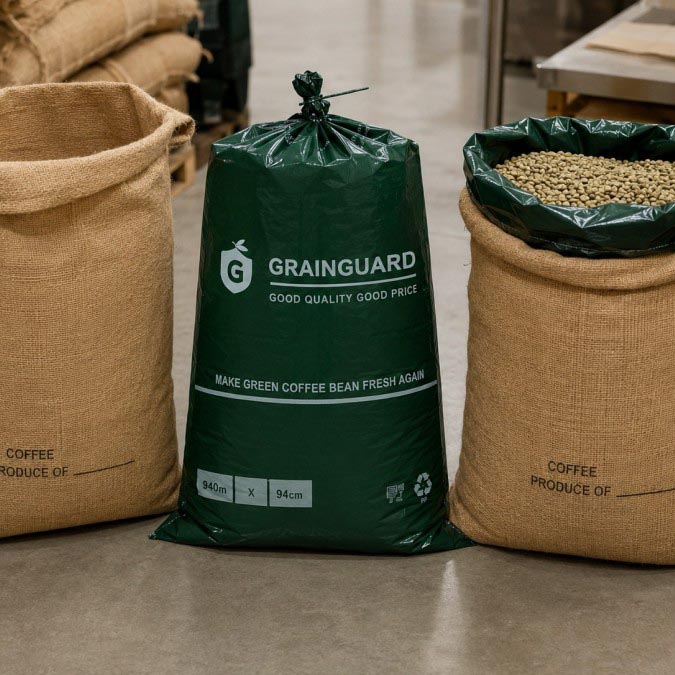
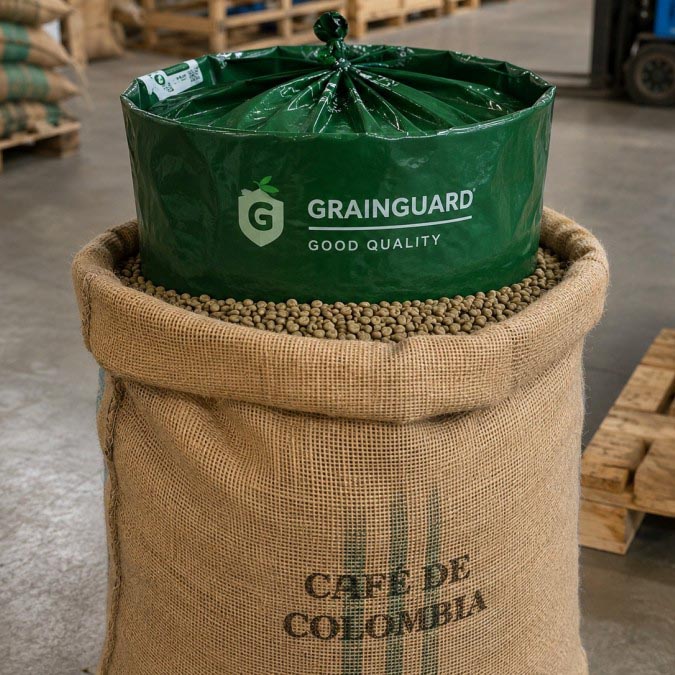
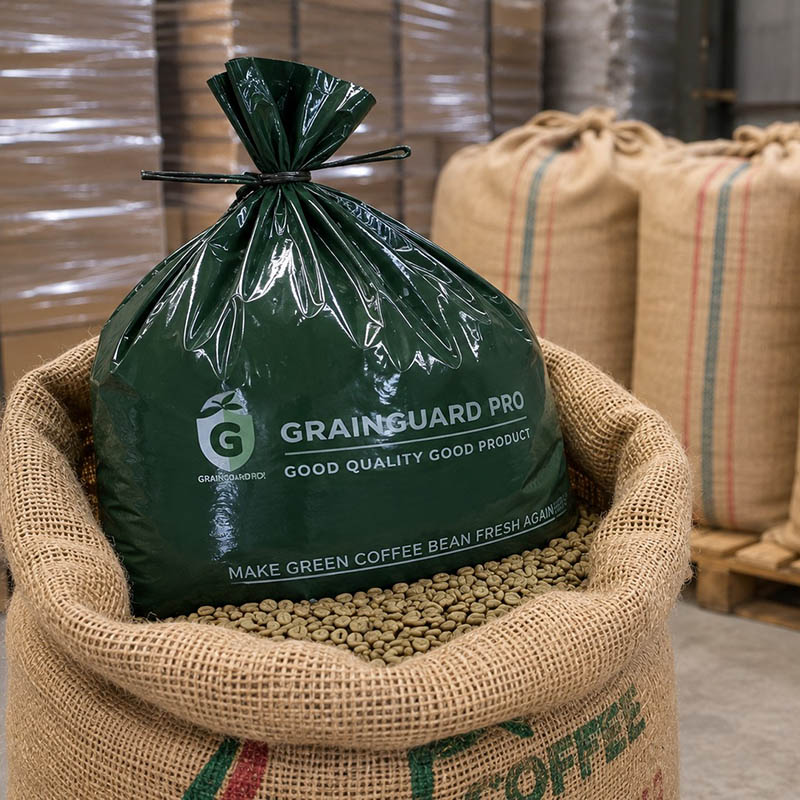
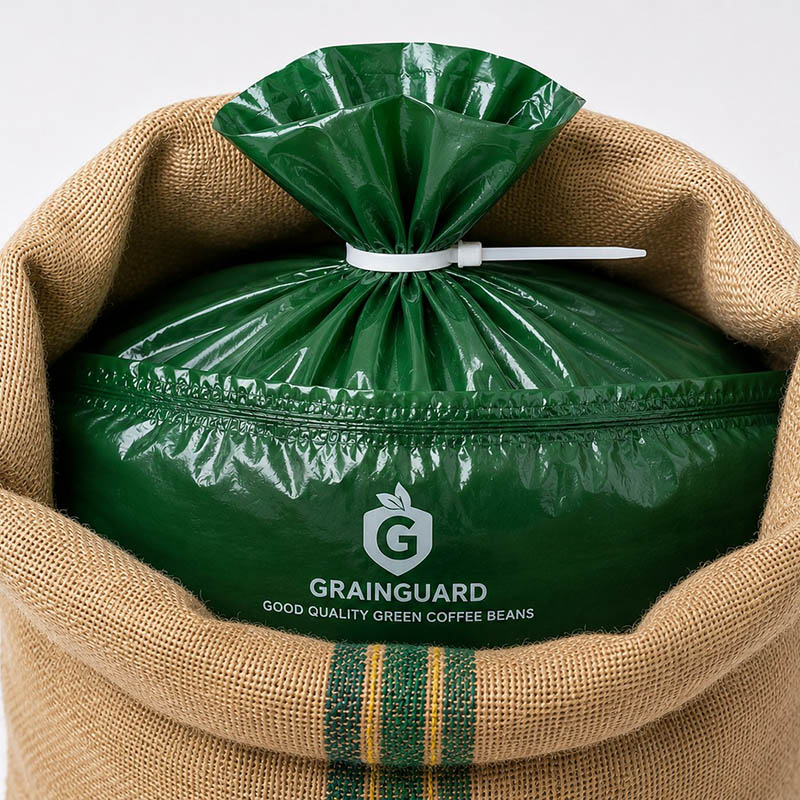
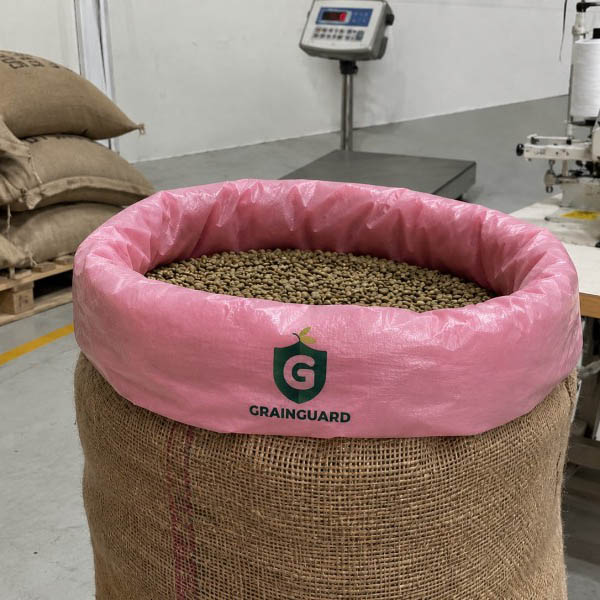
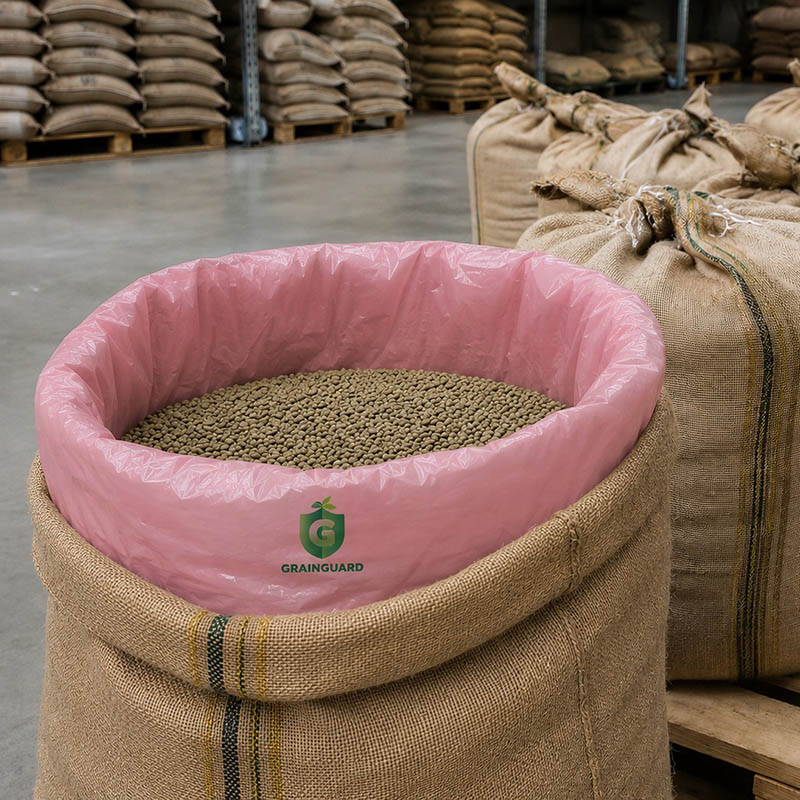
The correct coffee bean hermetic jute liner should be selected from the actual sack, commodity, route, and storage program rather than nominal capacity alone. A physical fit and sealing test is recommended whenever a new jute sack supplier, filling weight, material grade, or closing method is introduced.
1. Measure the outer sack: Provide the usable width and length, seam position, opening style, and internal space of the actual jute sack.
2. Confirm the target net weight: State the commodity, bean density, target capacity, and required headspace for gathering, cable tying, and heat sealing.
3. Choose the size: Use S for approximately 10-20 kg, M for approximately 25-35 kg, or L for approximately 60-70 kg after checking the physical fit.
4. Select the grade: Match Basic, Pro, or Premium to coffee value, storage period, route humidity, climate, buyer specification, and purchasing budget.
5. Validate the closure: Confirm cable-tie position, heat-sealer width, temperature, pressure, dwell time, and operator procedure using production samples.
6. Review handling risks: Check hooks, sharp sack seams, pallet boards, rough floors, compression, abrasion, and container surfaces that could puncture the liner.
7. Approve artwork and packing: Confirm printing, private-label information, labels, “No Hook” stickers, inner-pack quantity, master-carton markings, and mixed-size ratios.
8. Complete a trial pack: Fill, close, stack, palletize, and inspect a sample package before releasing a new configuration for bulk production.
|
Selection Factor |
Recommended Direction |
|
Small or separated lots |
Select S size for approximately 10-20 kg programs, micro-lots, trials, or easier lot separation. |
|
Medium-capacity packing |
Select M size for approximately 25-35 kg sacks and flexible cooperative, importer, or roaster handling. |
|
Standard export sacks |
Select L size for approximately 60-70 kg green coffee or cocoa packing after confirming sack dimensions. |
|
Routine commercial shipment |
Consider Basic grade where practical protection and cost control are the main priorities. |
|
Higher-value or longer handling |
Consider Pro grade where stronger material performance and a balanced barrier are required. |
|
Specialty coffee or demanding routes |
Consider Premium grade for longer storage, humid climates, sensitive lots, and quality-focused buyer programs. |
|
Repeated warehouse handling |
Use clear “No Hook” instructions and protect the liner from sharp edges, abrasion, puncture, and excessive compression. |
|
New sack or sealing equipment |
Complete a physical fit, filling, cable-tie, heat-seal, stacking, and transport trial before bulk production. |
A hermetic jute-liner program must connect the film structure with the real sack dimensions, filling weight, closure method, packing configuration, handling conditions, and export route. GrainGuard supports this process through factory-direct production and practical B2B coordination.
● More than 32 years of packaging experience: GrainGuard operates under Syon Packaging Technology in Qingdao and draws on long-term experience in flexible packaging for food, agricultural, and industrial applications.
● Multilayer film capability: The manufacturing platform includes advanced 10-layer co-extrusion capability, supporting Basic, Pro, Premium, and project-specific barrier structures.
● Complete size and grade program: S, M, and L dimensions and three material grades give buyers a structured starting point for commercial, specialty, and customized coffee programs.
● Factory-direct customization: Dimensions, artwork, logo printing, private labels, labels, closure accessories, inner packs, cartons, and mixed-size order ratios can be coordinated before production.
● Controlled production and inspection: Orders can be checked for material specification, dimensions, film appearance, workmanship, printing position, sealing area, accessories, quantity, and packing configuration.
● Trial and wholesale supply: Samples, fit trials, standard wholesale orders, repeat supply, distributor programs, and contract projects can be discussed according to technical and commercial requirements.
● International export support: The Qingdao team can coordinate technical confirmation, production planning, packing, carton marking, shipment preparation, and international order documentation.
Copyright © 2026 SYON Packaging Technology(Qingdao)Co., Ltd. All rights reserved.