
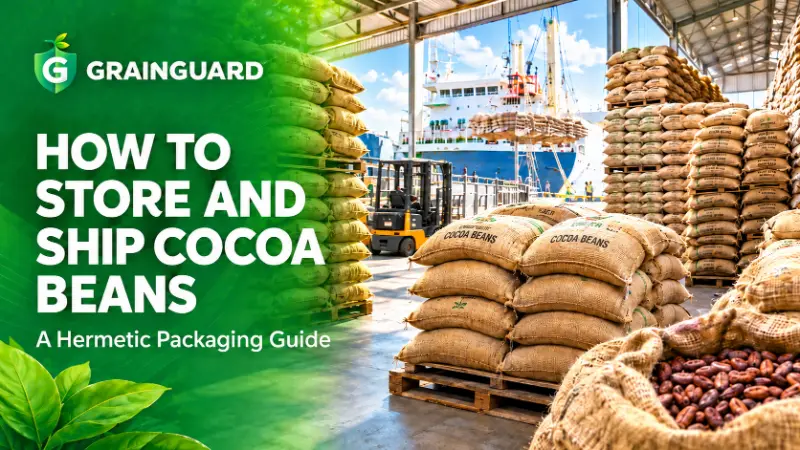
Cocoa quality is not finished when fermentation and drying end. Beans may still pass through collection points, warehouses, trucks, ports and shipping containers before reaching the buyer. During that journey, poor moisture control, contamination, pests and unsuitable transport conditions can reduce the value created at origin. For exporters, cooperatives and traders, storage and shipping should therefore be treated as part of quality management. This guide explains practical steps for storing and transporting cocoa and shows where hermetic packaging can add protection without replacing correct drying, warehouse discipline or container preparation.
Cocoa beans are sensitive to changes in their surrounding environment after drying. If they take up moisture again, the risk of mold, off-flavor and deterioration rises. Cocoa should also remain free from foreign odors and contamination, and stored lots need protection from insects and other pests. European cocoa industry guidance describes good cocoa as well fermented, thoroughly dried, essentially free from live insects and free from odor contamination.
Temperature fluctuations during transport add another challenge. Even well-dried cocoa can experience moisture migration and condensation during a voyage. This is why successful storage and shipping depend on several controls working together rather than on one bag or one piece of equipment.
|
Risk |
What Can Happen |
Main Control |
|
Moisture |
Re-wetting can encourage mold, off-flavor and quality loss |
Correct drying, dry storage and suitable barrier protection |
|
Odor and contamination |
Beans can pick up unwanted taints or contaminants |
Clean food-suitable packaging and separation from strong-smelling cargo |
|
Insects and mites |
Infestation can damage beans and create claims |
Warehouse hygiene, monitoring and suitable pest-control measures |
|
Condensation |
Temperature changes can create local re-wetting during transport |
Container inspection, moisture management and route-appropriate packing |
Storage performance is decided first by the condition of the beans. ICCO guidance identifies about 7.5 percent moisture as appropriate for secure storage for a limited period in tropical conditions. European cocoa industry guidance describes approximately 7 percent as a typical target and 8 percent as an absolute maximum.
The practical objective is not to make cocoa as dry as possible. Beans should be thoroughly and evenly dried without creating excessive brittleness or interfering with flavor development. ICCO also warns that drying too slowly can encourage mold and off-flavor, while excessively rapid drying can affect the reactions that continue after fermentation.
● Use a calibrated moisture meter and test representative samples from different parts of the lot.
● Protect drying cocoa from rain, dew and other sources of re-wetting.
● Do not mix very wet beans with properly dried cocoa.
● Allow beans to reach a stable condition before sealing them into a low-permeability package.
● If a lot has been re-wetted, dry and reassess it before storage or shipment.
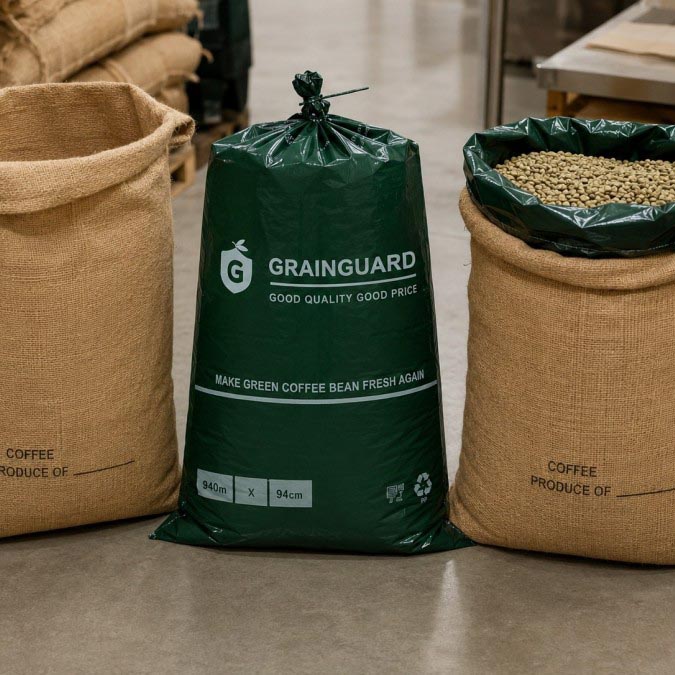
Traditional jute sacks remain widely used because they are strong, stackable and familiar throughout the cocoa trade. They perform the outer handling function well, but woven jute is breathable and does not by itself provide a high-barrier environment around the beans.
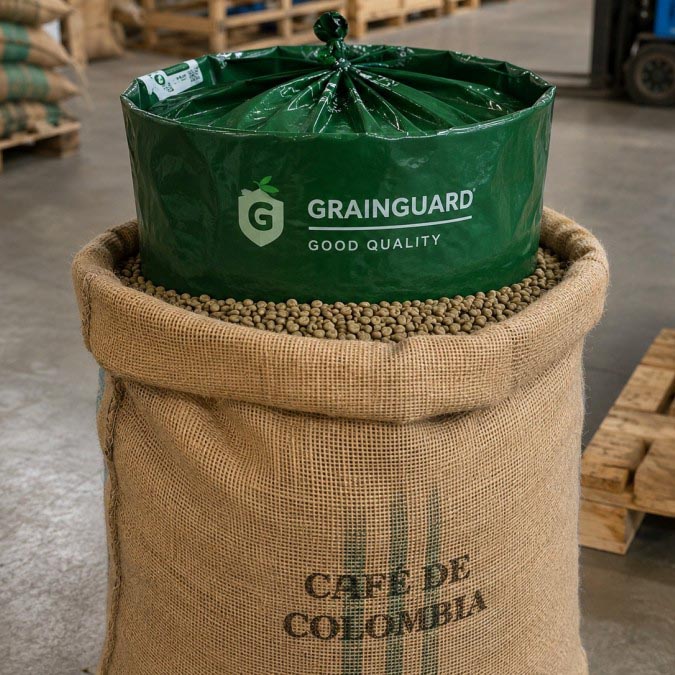
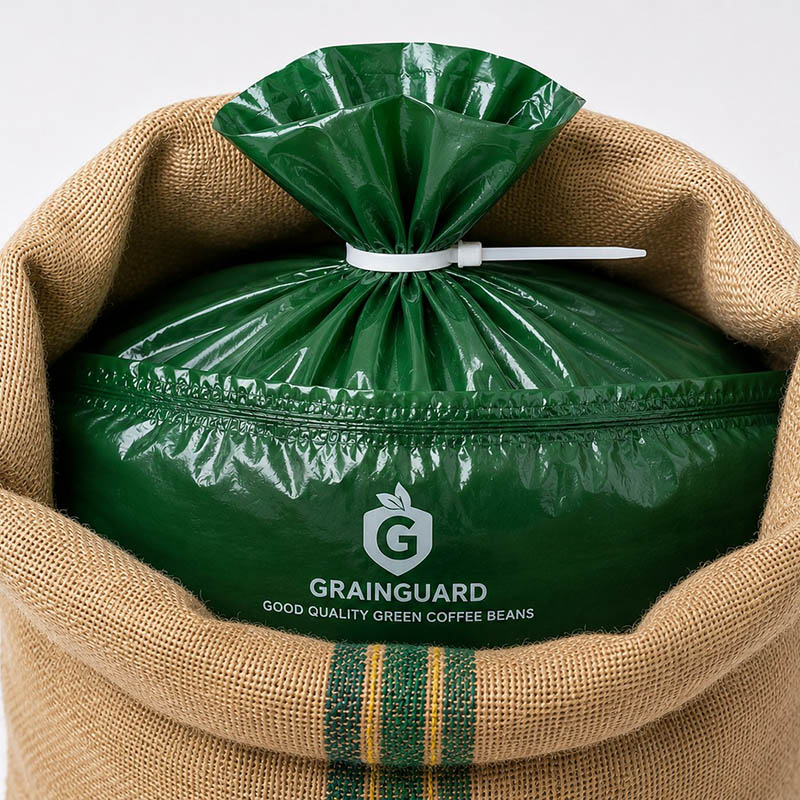
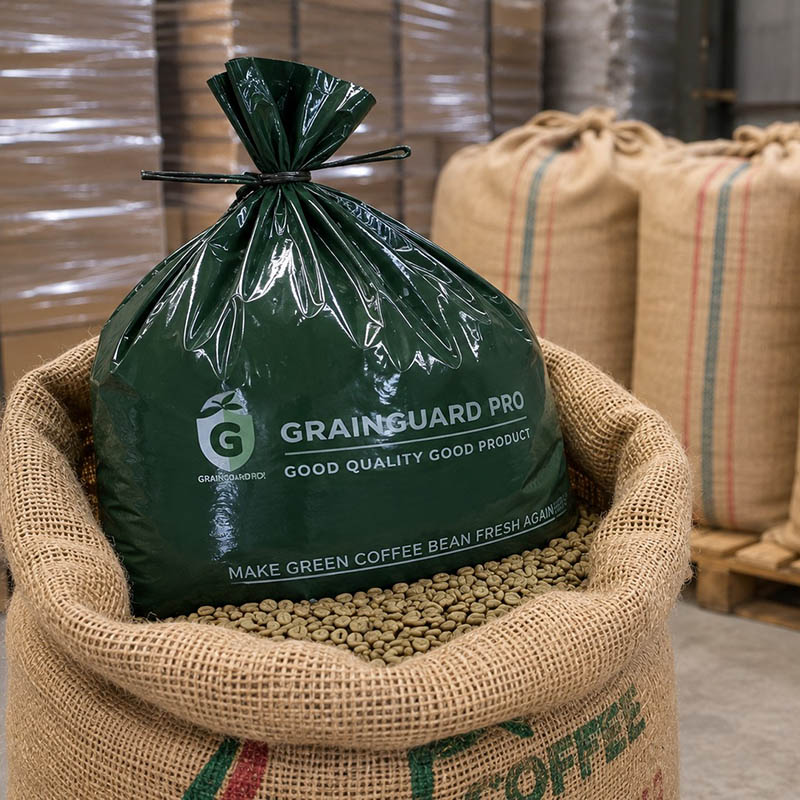
A hermetic inner liner can be placed inside the jute sack to create a separate multilayer barrier around properly dried cocoa. GrainGuard lists its jute liner for both green coffee and cocoa, with S, M and L sizes covering approximately 10 to 70 kg depending on the selected size, sack dimensions and commodity density. Basic, Pro and Premium grades are available for different barrier and commercial requirements.
The correct wording matters. A hermetic liner helps reduce oxygen and moisture-vapor exchange with the surrounding environment. It can support more stable storage conditions when correctly sized, filled, closed and protected from puncture. It should not be presented as making the cargo completely immune to humidity, insects or mold under every condition.
A sound warehouse prevents properly dried cocoa from being damaged before shipment. Codex guidance calls for cocoa to be stored in dry, weatherproof and well-aerated conditions and protected from dampness, contamination and pest activity. For longer storage, relative humidity below 70 percent is recommended.
● Keep bags on clean pallets and away from walls so the stack can be inspected and kept away from ground moisture.
● Repair roof leaks, drainage problems and other sources of water entry immediately.
● Keep cocoa away from fuel, chemicals, smoke and strong-smelling materials.
● Identify stacks by lot and use a disciplined stock-rotation system.
● Monitor for insects, mites, musty odors, damp patches and damaged packaging.
● Record moisture readings and storage observations so each lot has a useful quality history.
Container selection and preparation should happen before the cargo is loaded. European cocoa industry guidance recommends that containers be clean, dry, free from previous cargo residue, free from strong odors and without structural damage that could allow water to enter. Loading and unloading areas should also protect cocoa from rain.
Temperature fluctuations during shipping can create condensation even when the beans were correctly dried. Guidance therefore recommends measures that reduce local re-wetting, including appropriate stacking, keeping ventilation openings clear where relevant, and using absorbent materials or water-absorbing bags when the loading system calls for them.
● Reject containers with water entry, strong odors, residue or visible structural damage.
● Keep cocoa protected from rain while containers are being stuffed or unloaded.
● Avoid sharp edges and rough surfaces that can puncture inner liners.
● Plan the loading pattern so cargo remains stable and the packaging is not crushed or torn.
● Complete sealing promptly according to the approved liner procedure.
● Use desiccants or other moisture-management measures when they are suitable for the packing system and route.
Different shipment sizes can require different packaging formats. The choice should reflect lot size, handling method, storage period, route and buyer requirements rather than applying one solution to every cocoa movement.
|
Shipment Format |
GrainGuard Format to Evaluate |
Potential Use |
|
Individual jute sacks |
Hermetic Jute Liner |
Bagged cocoa for warehouse storage and export |
|
Samples and small lots |
Sample Bag or Vacuum Bag |
Evaluate for samples or smaller quantities where the product format is suitable |
|
FIBC handling |
FIBC Pouch |
Evaluate for semi-bulk storage and transport according to the loading plan |
|
Full container loads |
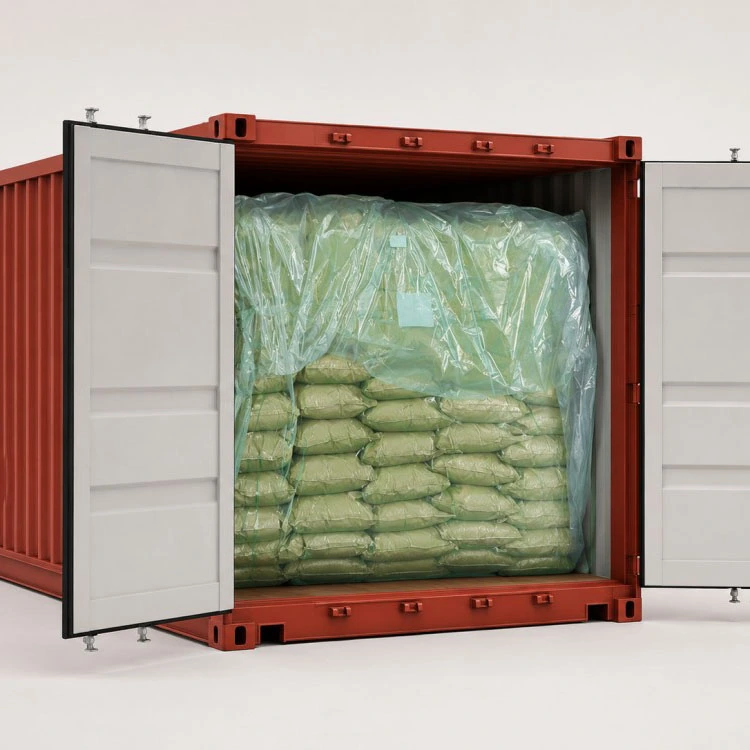
Hermetic Container Liner |
Evaluate for bagged, palletized or FIBC cargo according to the loading method |
|
Larger bagged storage |
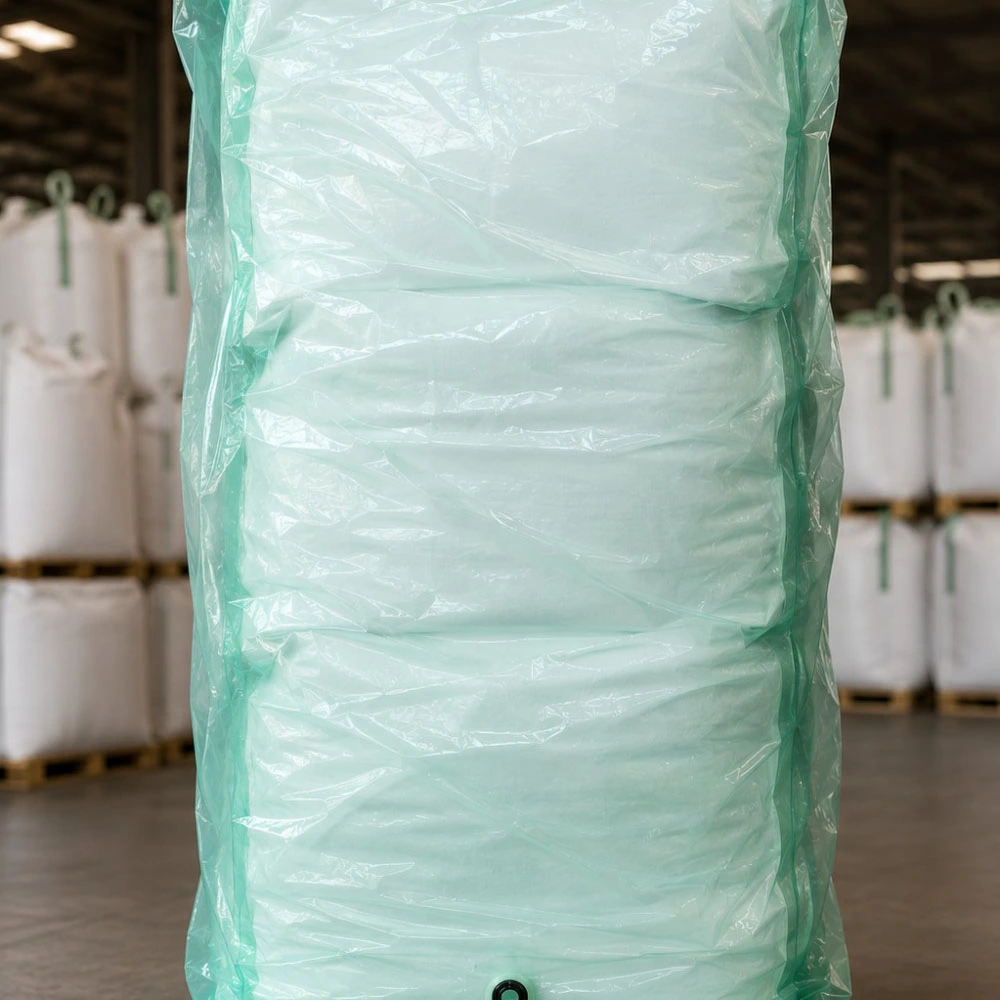
Cocoon or Indoor Cocoon |
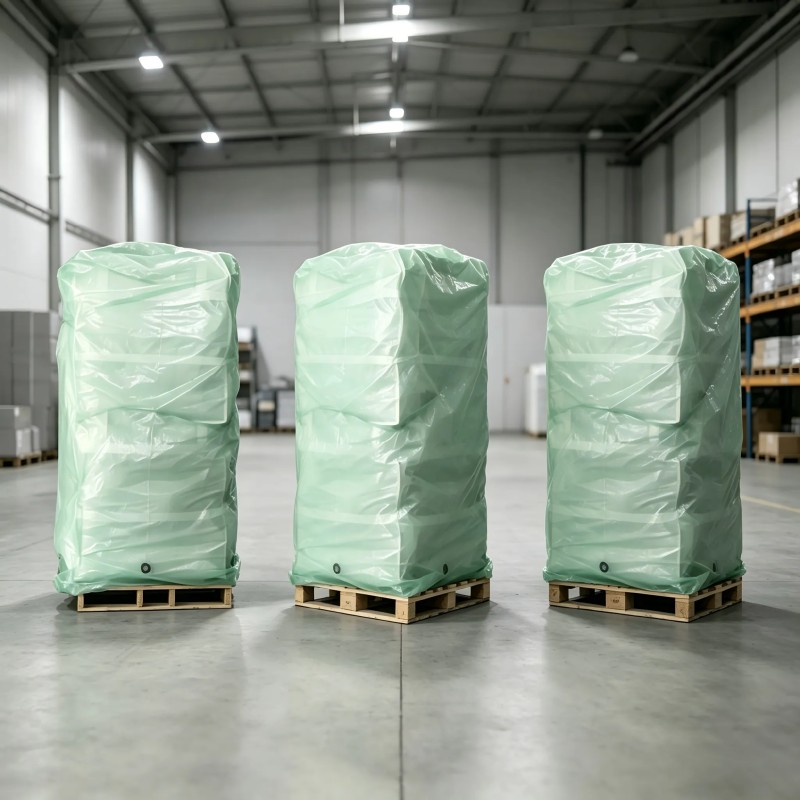
Evaluate for grouped bagged cargo under suitable warehouse conditions |
Exporters handling both cocoa and green coffee will recognize several overlapping concerns, including moisture exchange, insects, external odors and condensation during transport. The protective principles therefore overlap, but the commodities should not be treated as identical.
Cocoa industry guidance commonly targets moisture around 7 to 7.5 percent, while green coffee is usually managed under different moisture specifications. Cocoa contracts and quality programs also have their own defect, odor and infestation requirements. A packaging program should therefore use the same barrier logic where appropriate while keeping commodity-specific specifications separate.
● Reduced exchange between properly dried cocoa and humid external air.
● Additional separation from dust, odors and surrounding warehouse conditions.
● A more stable internal environment when the package remains intact and correctly closed.
● Reduced exposure to external insect entry and support for low-oxygen pest-management approaches when conditions are appropriate.
● Retention of the familiar jute-sack handling format when an inner liner is used.
● Correct fermentation and drying.
● Representative moisture testing.
● Warehouse hygiene and pest monitoring.
● A clean and dry shipping container.
● Careful handling and reliable sealing.
● Buyer-specific quality, food safety and documentation requirements.
GrainGuard is a hermetic packaging brand under SYON Packaging Technology in Qingdao, China. Its current product platform includes jute liners, sample bags, vacuum bags, container liners, FIBC pouches and cocoon storage formats. The company also offers custom dimensions, printing, private-label production and factory-direct supply.
For cocoa, the most useful starting point is to share the actual shipment conditions. These include cocoa type, target filling weight, outer sack dimensions, initial moisture, warehouse period, export route, container method and buyer requirements. This allows the packaging format and barrier grade to be selected around the real risk profile rather than by product name alone.
Trial packing is also a sensible commercial approach. Exporters can verify fit, closure procedure, handling compatibility and arrival condition under their own operating conditions before committing to larger volumes.
Strong cocoa storage and shipping begins with good bean condition and disciplined handling. Dry the cocoa correctly, prevent re-wetting, keep the warehouse clean and dry, inspect the shipping container, and choose packaging that matches the shipment. Hermetic packaging can strengthen that system by reducing environmental exchange around the beans, but it is most effective when the cocoa has already been properly prepared. The goal is not to rely on packaging to correct earlier problems. The goal is to protect the quality already created at origin until the buyer receives it.
|
FOR COCOA EXPORTERS Share your cocoa type, bag size, moisture condition, storage period and export route with GrainGuard to discuss a suitable packaging format. WhatsApp +86 13864240136 Qingdao, China GrainGuard | Make Grains Fresh Again. |
Copyright © 2026 SYON Packaging Technology(Qingdao)Co., Ltd. All rights reserved.