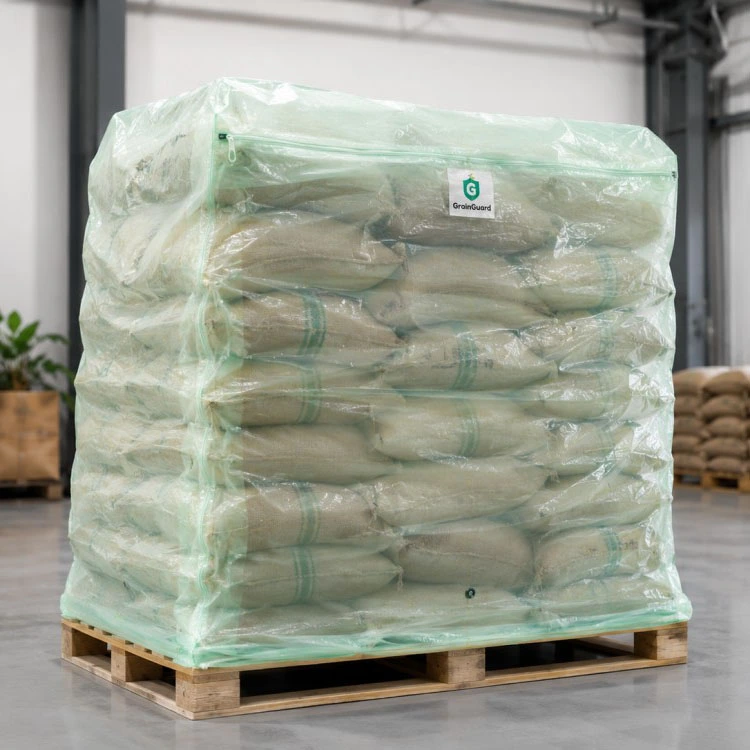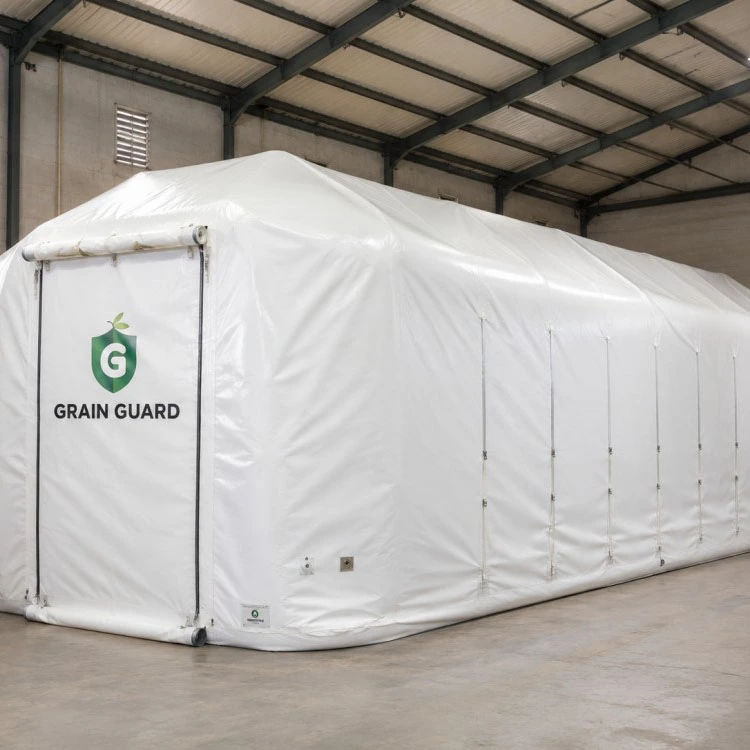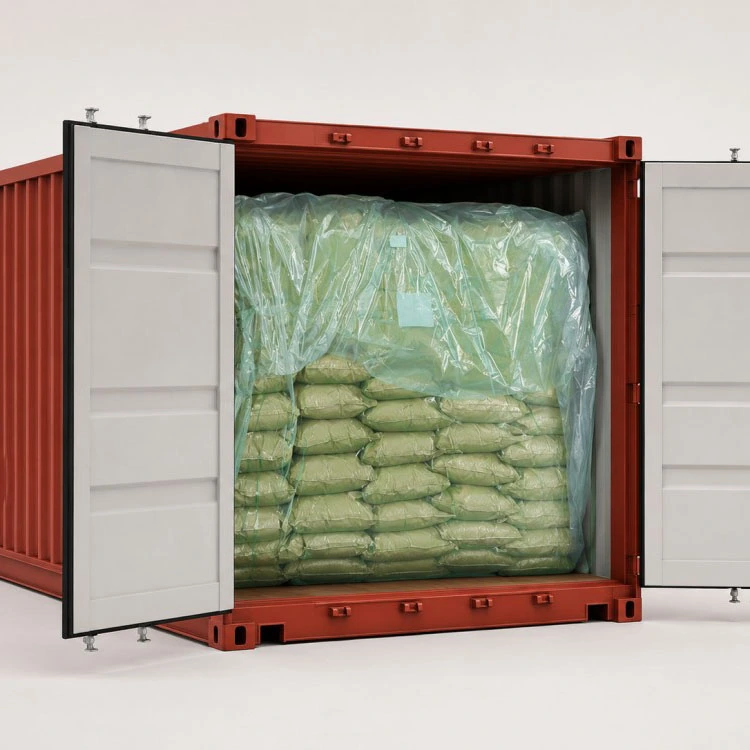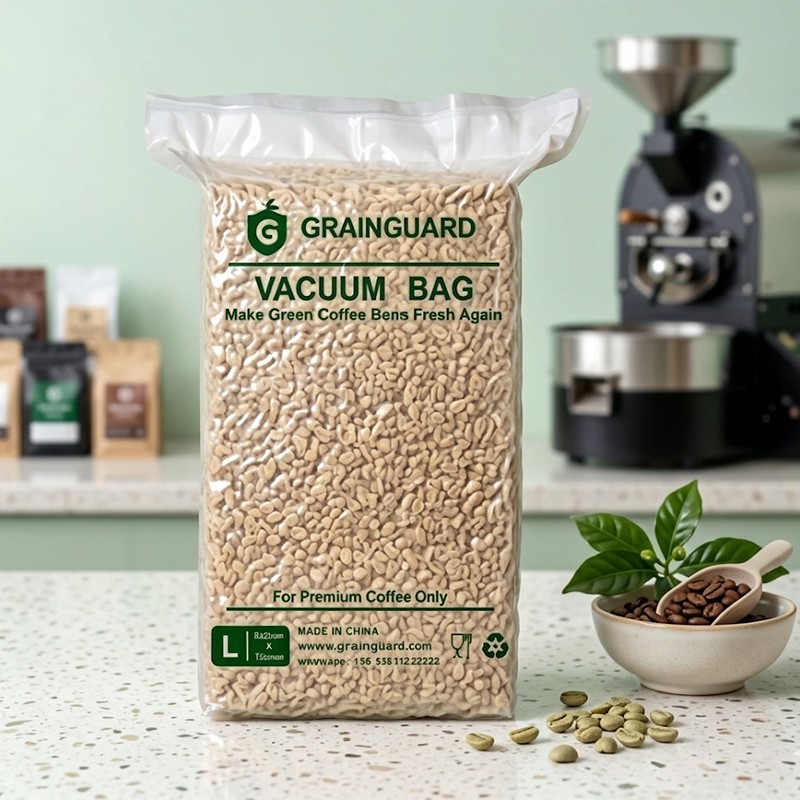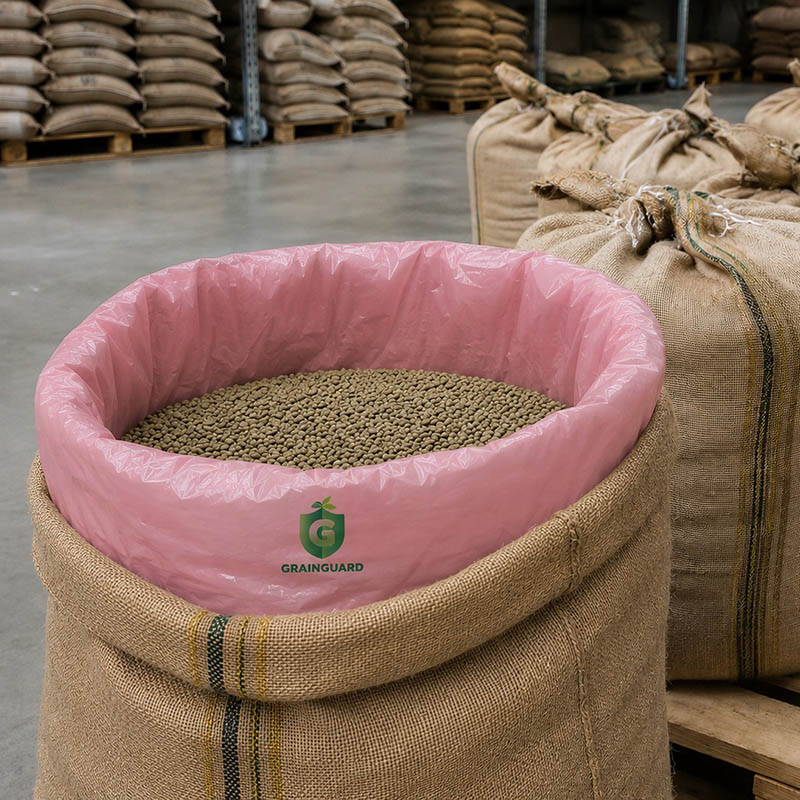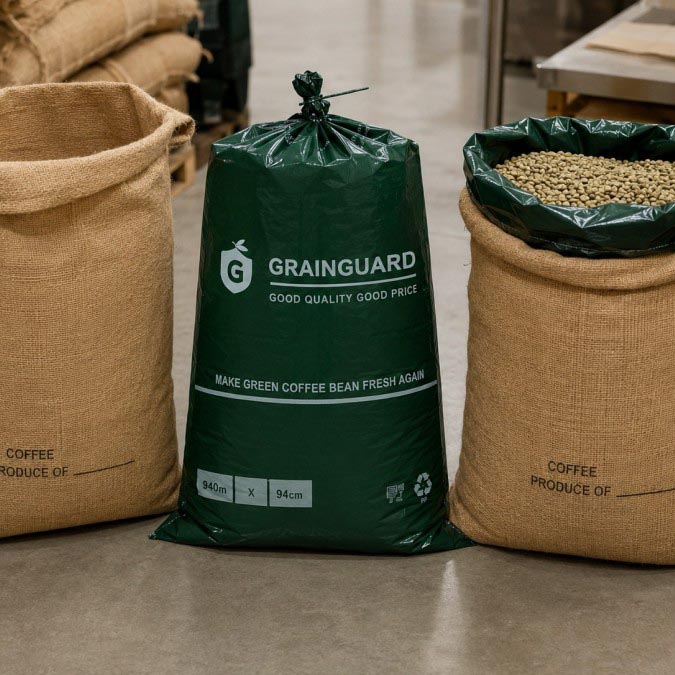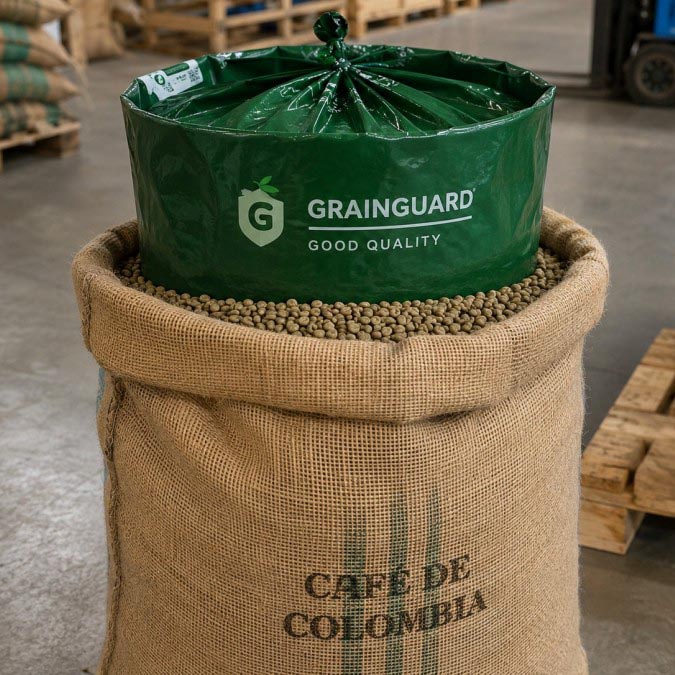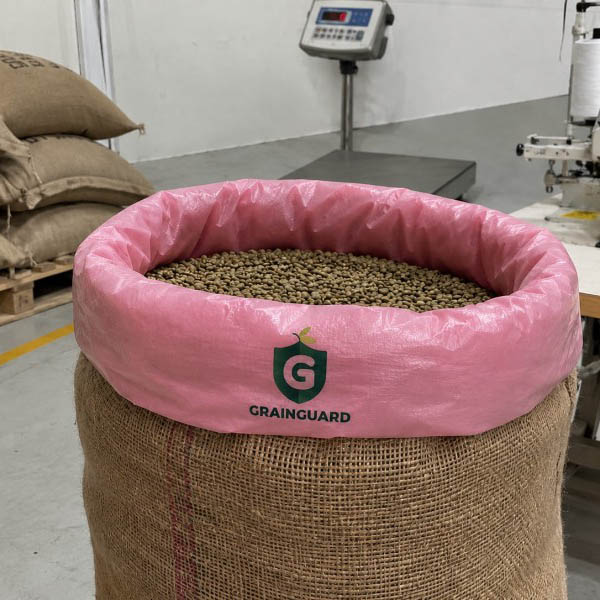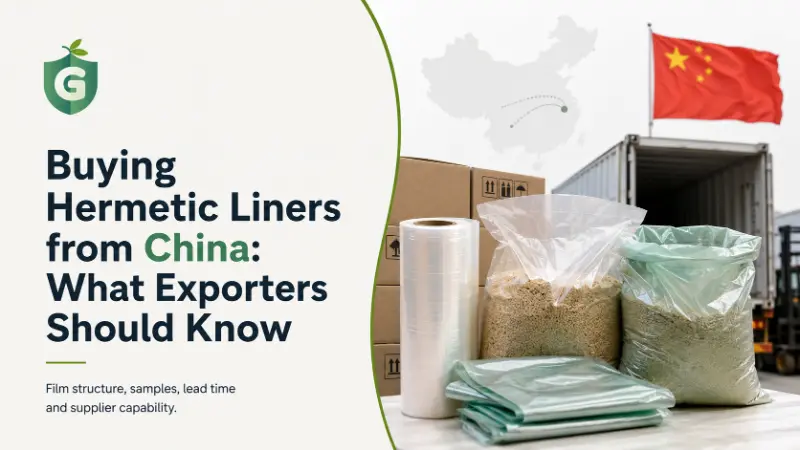

Over the past few years, a quiet change has taken place in the hermetic packaging market. Coffee exporters, cocoa traders, and commodity warehouses that once bought only from established Western or Indian brands are now sourcing hermetic liners, vacuum bags, and container liners directly from Chinese manufacturers. The reason is simple: the film technology has matured, the quality gap has narrowed, and the price difference remains significant.
For an exporter shipping dozens of containers per year, packaging is a real line item. Paying a premium brand price for every liner adds up quickly, and buyers increasingly realize that a hermetic liner is not a logo. It is a piece of engineered barrier film, and the performance of that film can be measured, tested, and compared regardless of where it is made.
That said, buying packaging from China works best when you know how to evaluate a supplier properly. This guide explains what to look for, what to ask, and what to avoid, based on how professional importers actually manage their packaging sourcing.
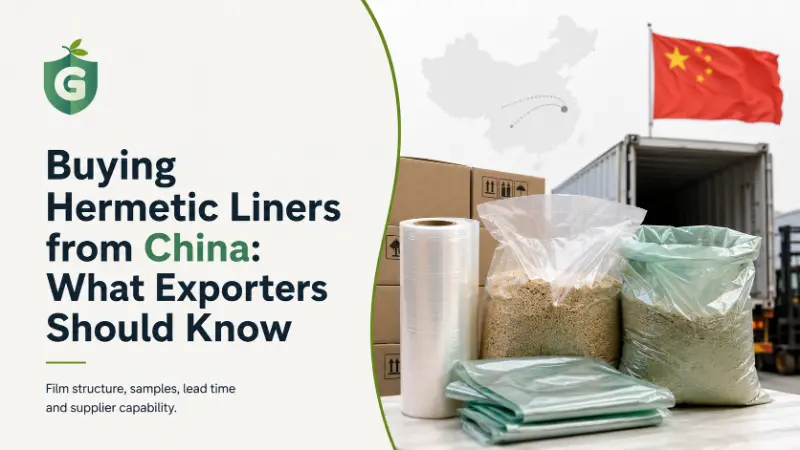
Three forces drive this shift. The first is cost. Chinese factories produce multilayer barrier film at a scale that keeps unit prices well below. The second is flexibility. Manufacturers that control their own extrusion lines can adjust film thickness, layer structure, bag dimensions, and printing without waiting on outside suppliers. The third is the coffee market itself. As purchase contracts increasingly require hermetic protection, exporters need large, reliable volumes of liners at prices that keep margins healthy.
The result is a buyer market that rewards informed sourcing. Exporters who understand what they are buying get premium level protection at a factory direct price. Exporters who do not understand it risk receiving thin, weak film that fails at the worst possible moment, which is inside a container halfway across the ocean.
The performance of a hermetic liner comes from its film, and the film comes from its layers. When you compare suppliers, compare their film structures, not their marketing words.
|
Film Structure |
What It Contains |
Best Use |
|
Multilayer PE |
Polyethylene layers with barrier layer |
Standard commercial shipments, short to medium transit |
|
PE + PA |
Polyethylene plus polyamide for strength |
Rougher handling, longer storage, higher oxygen barrier |
|
PE + PA + EVOH |
Adds EVOH, the premium oxygen barrier material |
High value lots, specialty coffee, extended storage |
PE, or polyethylene, provides strength, flexibility, and moisture resistance. PA, or polyamide, adds puncture resistance and improves the oxygen barrier, which matters when bags are handled roughly or stacked high. EVOH is the premium barrier material that dramatically slows oxygen transmission, and it is the layer that separates top tier liners from standard ones. A serious manufacturer will tell you exactly which structure each product uses and why.
Thickness is the second specification to check. Quality hermetic liners for coffee typically use film around 100 microns. Film that is much thinner may tear at stress points, especially where the liner neck is twisted and tied. Film that is much thicker costs more without adding meaningful protection. Ask for the thickness tolerance as well, because consistent film matters more than a number on a quotation sheet.
Professional buyers run every new packaging supplier through the same set of questions. Use this list before your first order.
1. What is the exact layer structure and thickness of the film you are quoting?
2. Which sealing method do you recommend for my product, cable tie or heat seal, and does the liner support both?
3. What sizes and capacities are standard, and can you produce custom dimensions for my sacks?
4. What is your minimum order quantity, and can I start with a smaller trial order?
5. How long is production lead time, and which trade terms and payment terms do you offer?
6. Can you send physical samples, and can I test them filled before I confirm the bulk order?
A reliable supplier answers all seven questions quickly and specifically.
Understanding typical terms helps you recognize a fair offer. For hermetic liners produced by a Chinese factory, standard minimum orders usually start from a few hundred to a few thousand pieces depending on the product, and many manufacturers accept smaller trial orders for new customers because they expect the relationship to grow. If a supplier refuses any trial quantity, ask why.
Production lead times of two to four weeks after order confirmation are normal, with samples produced within a few days. Trade terms usually start from FOB at the nearest Chinese port, with CIF, CFR, EXW, or delivered terms available for buyers who prefer the supplier to handle more of the logistics.
One practical tip: plan your packaging order around your harvest calendar, not around your shipping date. Ordering liners six to eight weeks before you need them removes pressure from every step that follows and leaves time to resolve any specification questions without rushing.
Any serious supplier will send samples, usually within days. When they arrive, do not just look at them. Test them under real conditions. Fill a liner with actual coffee or grain at the weight you normally ship. Twist and tie the neck exactly as your warehouse team will do it. Lift it, move it, stack something on it, and leave it sealed for a few weeks in your own storage conditions. Check the seal strength by pulling firmly on a sealed edge. Check the thickness with a simple micrometer if you have one. And if you want the highest level of certainty, cup coffee stored in the sample liner against coffee stored in your current packaging after a month or two. Exporters who run this comparison almost always make confident decisions afterward, because the difference, or the lack of one, is right there in the cup.
Hermetic liners are light but bulky, so freight planning matters. A practical approach for a first order is to ship by sea under FOB or CIF terms together with other cargo if you have it, since liners compress well and fit efficiently into shared container space. Air freight makes sense for samples and urgent small quantities, not for bulk orders. Ask your supplier how many units fit in a 20 ft or 40 ft container and how the cartons are packed, because carton dimensions affect both freight cost and warehouse handling at your end. A manufacturer with export experience will have these numbers ready and will help you choose the most economical loading plan.
• Choosing the lowest quotation without comparing film structure and thickness.
• Skipping the filled sample test and discovering weaknesses after the bulk order arrives.
• Ordering too late in the season and paying for air freight to catch the harvest.
• Not asking about custom printing, even though branded liners strengthen an exporter's image at destination warehouses.
• Assuming all suppliers can customize, when only real manufacturers control their production lines.
GrainGuard supplies hermetic jute liners, vacuum bags, sample bags, container liners, thermal liners, FIBC pouches, and storage cocoons directly from its factory in Qingdao, China. The product range covers green coffee, cocoa, cashew, grains, spices, and seeds, with three liner grades, Basic, Pro, and Premium, built on PE, PE/PA, and PE/PA/EVOH film structures to match different protection levels and budgets. For new buyers, the process is straightforward. Samples go out within days. Trial orders below the standard minimum are welcomed because long term partnerships matter more than first order size. Standard production takes two to four weeks, with FOB Qingdao as the usual starting point and other trade terms available on request. OEM printing, private labels, and custom dimensions are all handled in house. If you are comparing hermetic packaging suppliers for the coming season, the GrainGuard team can send specifications, prices, and samples so you can test the film against what you use today. Visit grainguardbags.com or contact the team on WhatsApp at +86 13864240136 to start the conversation.
Copyright © 2026 SYON Packaging Technology(Qingdao)Co., Ltd. All rights reserved.