
Europe is the world's largest importing region for cocoa beans and cocoa products. According to CBI, the EU accounted for 58 percent of global cocoa bean imports in 2024. For exporters in West Africa, Latin America and Asia, Europe remains a major destination with large industrial, trading and specialty buyer networks.
This guide gives a practical overview of the main issues cocoa exporters should understand before shipping to the EU. It is intended as commercial and technical guidance, not legal advice. Final requirements should always be confirmed against the latest EU rules, the destination member state, the importer and the sales contract.
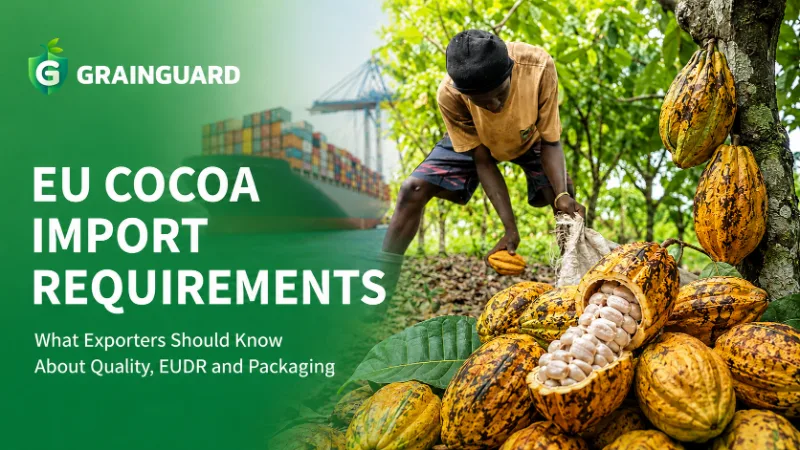
European demand spans industrial grinders, traders, chocolate manufacturers and specialty buyers. The Netherlands, Belgium and Germany are among the most important entry and processing markets, with Amsterdam, Antwerp Bruges, Hamburg and Bremen serving as major cocoa hubs. Europe also remains the largest cocoa grinding region.
For exporters, the commercial opportunity comes with demanding quality, sustainability and documentation expectations. A buyer may value origin, fermentation profile and flavor potential, but the result still depends on whether the cocoa arrives within the agreed specification and whether the supporting information meets the requirements of the buyer and the EU operator.
Buyer specifications come before many regulatory questions. Contract requirements vary by origin, grade and market segment, but common arrival checks include the following.
● Moisture content within the agreed specification. ICCO identifies about 7.5 percent moisture as appropriate for secure storage for a limited period in tropical conditions, while European cocoa-industry guidance commonly treats 8 percent as an upper limit. The exact contractual target should still be confirmed with the buyer.
● Moldy, slaty or insufficiently fermented beans, which can affect flavor, yield and commercial acceptance.
● Foreign matter and contamination, including stones, sticks, fibers, dirt and unwanted odors.
● Bean count, size distribution and physical uniformity where these are part of the contract.
● Evidence of insect activity or other deterioration during storage and transport.
● Flavor and sensory performance, especially for fine flavor and specialty cocoa.
The key commercial point is simple. The buyer evaluates the condition that arrives, not only the condition that left origin. A lot that is properly fermented and dried can still lose value if storage or transport exposes it to unsuitable humidity, odors, pests or condensation.
EU food law applies to cocoa and cocoa products placed on the Union market. Exporters should understand the regulatory areas that can affect their lots and should align testing with the product form, origin, buyer program and destination.
Regulation (EU) 2023/915 sets maximum levels for a range of contaminants in food. For cocoa, an important distinction is that the regulation specifies cadmium limits for chocolate and cocoa powder rather than one universal EU maximum for raw cocoa beans. Because bean cadmium contributes to levels in finished products, European buyers may set their own bean specifications and request testing, particularly for origins associated with higher natural cadmium levels.
EU maximum residue levels apply to pesticides in food and feed. Buyers may request residue testing, and competent authorities can carry out official controls. Exporters should therefore maintain pesticide use records and confirm the buyer's analytical requirements before shipment.
Poor drying or storage can encourage mold growth and create food safety concerns. Regulation (EU) 2023/915 includes an ochratoxin A maximum for cocoa powder. For raw beans, the practical priority is to prevent conditions that support mold and to follow buyer testing requirements rather than assume that a finished-product limit applies directly to every bean shipment.
The EU General Food Law requires traceability within the EU food chain. The legal one step back and one step forward obligation applies to EU food business operators and does not generally operate as an extraterritorial obligation on every third-country exporter. In practice, however, EU importers need reliable supplier, lot and origin information, so exporters should maintain records that allow each shipment to be connected to its suppliers, processing history and buyers.
Cocoa is covered by Regulation (EU) 2023/1115 on deforestation-free products. Under the regulation, relevant cocoa products may only be placed on or exported from the EU market when the applicable conditions are met, including deforestation-free production, compliance with relevant laws in the country of production and the required due diligence process. The current application dates are 30 December 2026 for large and medium operators and 30 June 2027 for micro and small operators.
For cocoa exporters outside the EU, the formal operator obligation often sits with the EU importer or another EU operator. Exporters will nevertheless be expected to provide information needed for due diligence, including country of production, geolocation of relevant production plots, production information, supplier records and evidence supporting legal and deforestation-free production. Due diligence statements are submitted through the EUDR Information System. Packaging does not create EUDR compliance. Its role is different. Traceability protects the documentary identity of the lot, while suitable packaging helps protect the physical condition of the cocoa associated with that traceable lot.
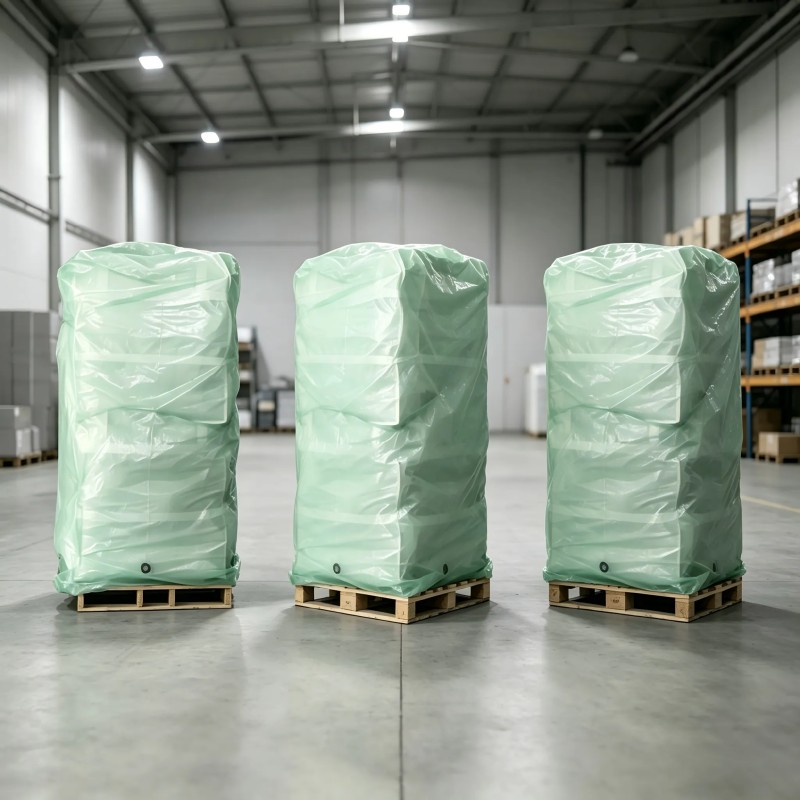
Packaging requirements are shaped by food contact rules, buyer specifications, logistics conditions and increasingly by EU packaging policy. For cocoa beans, buyers commonly expect packaging that is clean, dry, suitable for food use, free from objectionable odors and strong enough for the intended handling route.
● Use packaging and liners suitable for the intended food contact application and obtain the relevant supplier documentation.
● Keep bags, liners and containers clean, dry and free from chemical, fuel or other strong odors.
● Use clear lot identification and shipping marks that match commercial and traceability documents.
● Confirm buyer requirements for origin, lot code, net weight, supplier identification and certification markings.
● Avoid presenting packaging as a substitute for correct drying. A liner cannot remove excess moisture already present in the beans.
The EU Packaging and Packaging Waste Regulation, Regulation (EU) 2025/40, entered into force in February 2025 and has applied since 12 August 2026. It introduces broad requirements intended to improve packaging sustainability and circularity. The exact obligations depend on packaging type and the economic operator involved, so exporters should expect European customers to ask increasingly detailed questions about packaging composition, documentation, recyclability and waste performance.
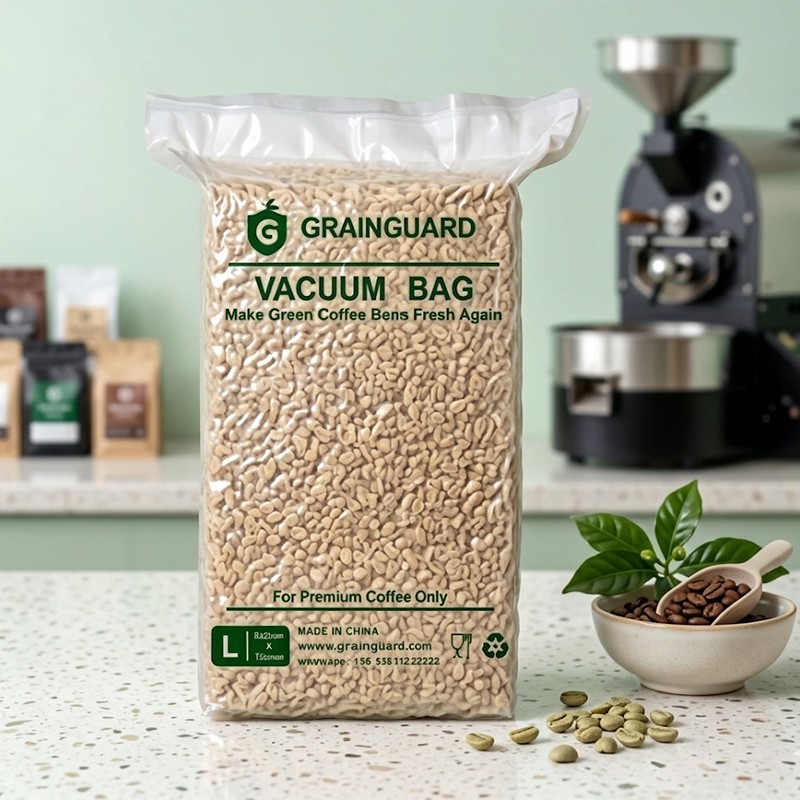
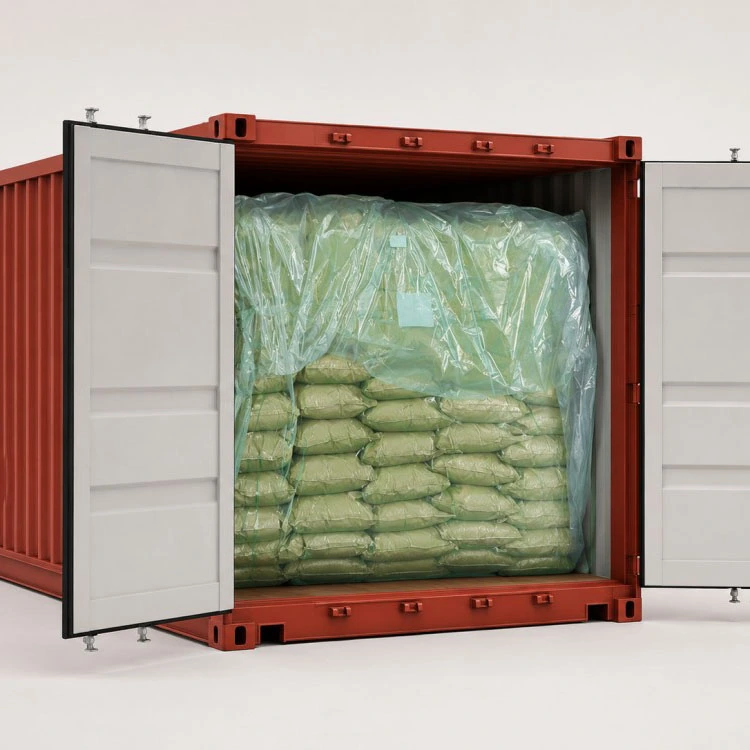
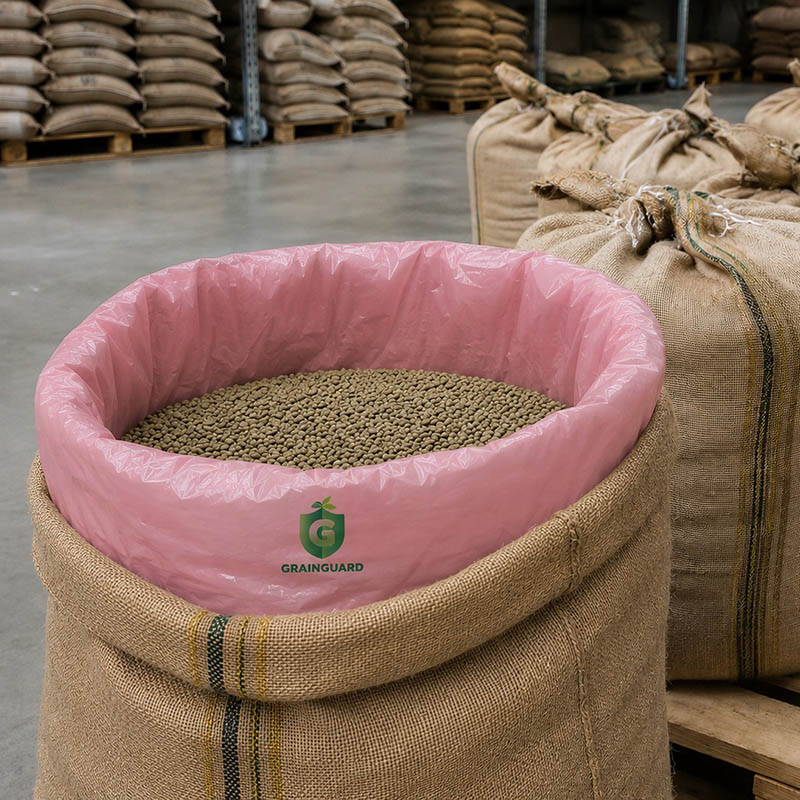
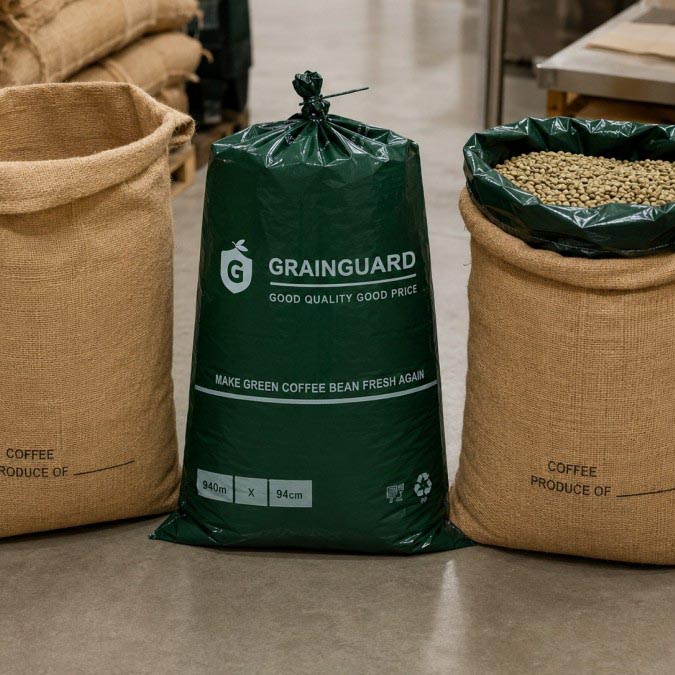
For properly dried cocoa, a well selected and correctly sealed hermetic liner can help reduce exchange with humid ambient air and create an additional barrier against external moisture, odors and insect entry. This can be useful during warehouse storage and long transport routes where surrounding conditions change.
Hermetic packaging should not be described as a cure for wet cocoa or as a guarantee against mold or insects. If beans enter the package with excessive moisture, if seals are poor, if the package is damaged or if the cargo experiences unsuitable temperature conditions, quality can still deteriorate. The correct approach is to combine suitable initial bean condition, good storage practice, sound container preparation and appropriate packaging.
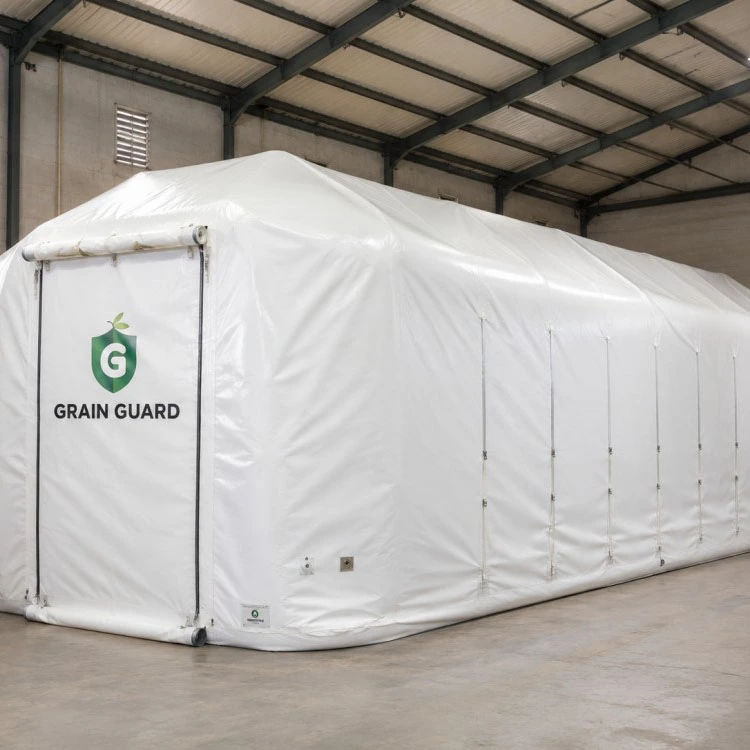
GrainGuard focuses on hermetic and high-barrier packaging solutions for dry agricultural commodities. For cocoa exporters, the relevant role of packaging is to support quality preservation after drying and preparation, especially where bagged cargo may experience long storage periods, humid environments or extended international transport. GrainGuard manufacturing is supported by multilayer film processing and up to 10-layer co-extrusion capability in Qingdao.
GrainGuard can support discussions around liner selection, bag format, shipment conditions and trial requirements. The most useful starting point is not simply asking for the strongest liner. It is sharing the cocoa type, filling weight, outer bag dimensions, initial moisture condition, storage period, route, container method and buyer requirements so the packaging choice can be matched to the real shipment.
For EU-bound cocoa, the commercial message should remain accurate. Hermetic packaging can support physical quality protection, but it does not replace food safety testing, EUDR due diligence, legal traceability, correct drying or buyer-specific compliance requirements.
Successful cocoa exports to Europe depend on three things working together. The cocoa must meet the agreed quality and food safety requirements, the documentation and traceability must support the shipment, and the physical condition of the beans must be protected during storage and transport.
Prepare EUDR information early, because farm mapping and lot-level traceability take time. Confirm contaminant and pesticide expectations with the buyer instead of relying on generic assumptions. Treat packaging as part of quality management, not as a substitute for correct drying or compliance.
GrainGuard works with exporters, processors, cooperatives, traders and packaging partners to evaluate hermetic packaging options for cocoa and other dry agricultural commodities.
|
FOR COCOA EXPORTERS Share your cocoa type, bag size, storage conditions and export route with GrainGuard to discuss a suitable packaging format. WhatsApp +86 13864240136 Qingdao, China GrainGuard | Make Grains Fresh Again. |
Copyright © 2026 SYON Packaging Technology(Qingdao)Co., Ltd. All rights reserved.