
A practical look at where packaging is used, what risks it must manage and how buyers can match protection to the trade channel
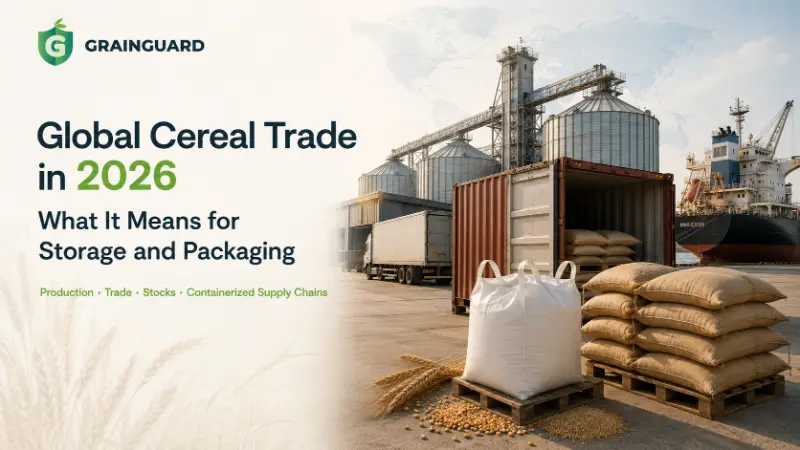
FAO's latest 2026/27 outlook places global cereal production at approximately 2.983 billion tonnes, international cereal trade at 507.2 million tonnes and season-ending stocks at 949.0 million tonnes. These figures describe three different logistics realities: grain that is produced, grain that crosses borders and grain that remains in storage.
Together, they show why storage and transport performance matter, but they do not mean that every tonne requires a bag, liner or flexible bulk container. Most staple cereals continue to move through loose-bulk systems such as silos, trucks, rail wagons, barges, elevators and vessel holds.
Packaging demand is concentrated in the parts of agricultural trade that require smaller lots, containerization, identity preservation, cleaner separation, branding or additional protection from moisture, odors, insects and contamination. Understanding that distinction is essential for packaging buyers and suppliers alike.
Production volume describes the size of the harvest, but not the method used to move it. A large crop may travel through integrated bulk infrastructure with very little individual packaging. International trade volume is a better indicator of cross-border handling, yet even traded grain can move loose in dedicated bulk vessels.
Stocks describe another challenge: the need to preserve grain between harvest and use, often for much longer than the ocean journey itself. The relationship between these figures is what matters. Harvests arrive in concentrated windows, consumption continues throughout the year and import programs respond to changing prices, weather and availability. Storage systems absorb the timing gap. Export terminals, warehouses and packaging suppliers must also be ready for seasonal surges rather than average monthly demand. The United States illustrates why value data should be handled carefully. USDA reports that U.S. agricultural exports totaled USD 176.0 billion in 2024, but the total covers a broad mix that includes grains, meat, tree nuts, dairy products, food preparations and other categories. It demonstrates the scale of agricultural trade, not the size of the grain-packaging market by itself.
The largest flows of wheat, maize, barley, soybeans and other staples often rely on high-throughput bulk systems. Those systems are designed to minimize handling time per tonne and may use no bag or liner between origin storage and discharge at destination.
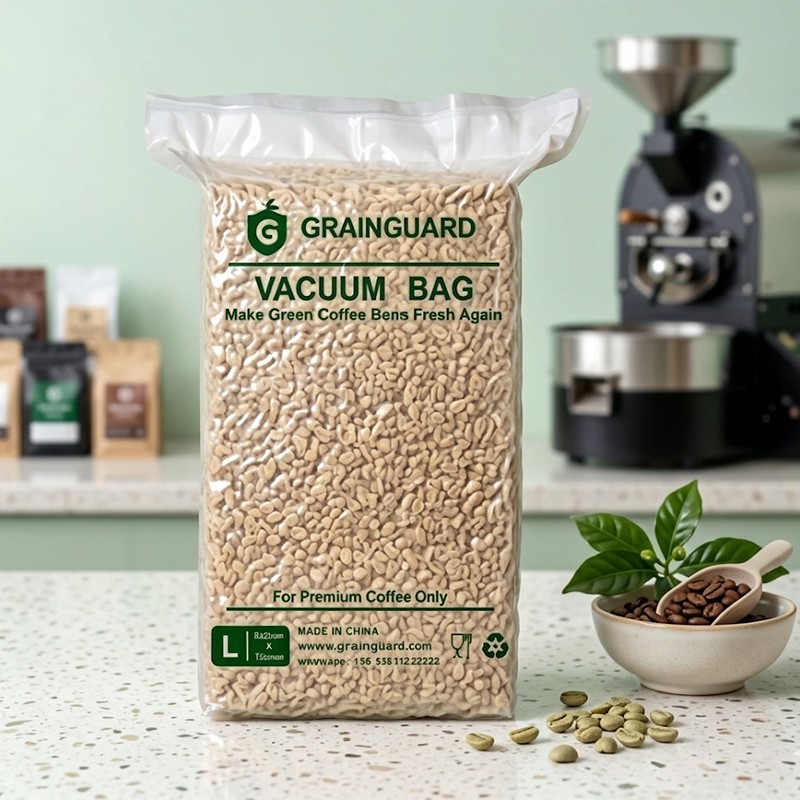
Packaging enters the picture where the trade channel requires a defined unit load or a barrier around the commodity. Relevant segments include containerized grain shipments, bagged distribution, specialty grains, seeds, pulses, milled ingredients, feed ingredients, green coffee, cocoa and cargo that must remain segregated by origin, grade, certification or customer program.
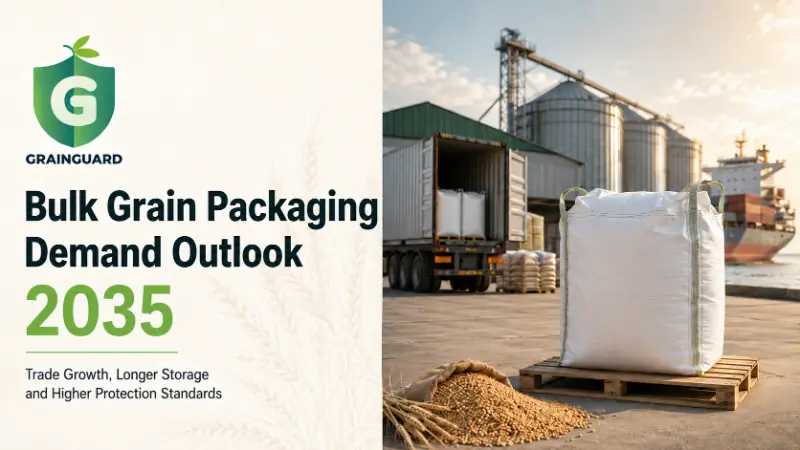
Packaging can also be important when the receiving market lacks dedicated bulk infrastructure or when a buyer needs smaller, traceable lots. This is why rising cereal trade supports packaging demand selectively rather than automatically. The strongest opportunities are created by the way the cargo is handled and protected, not by global tonnage alone.
Packaging performs several jobs beyond containment. It can keep lots separate, reduce direct contact with container surfaces, support mechanical handling, protect product identity and provide a platform for labeling and traceability.
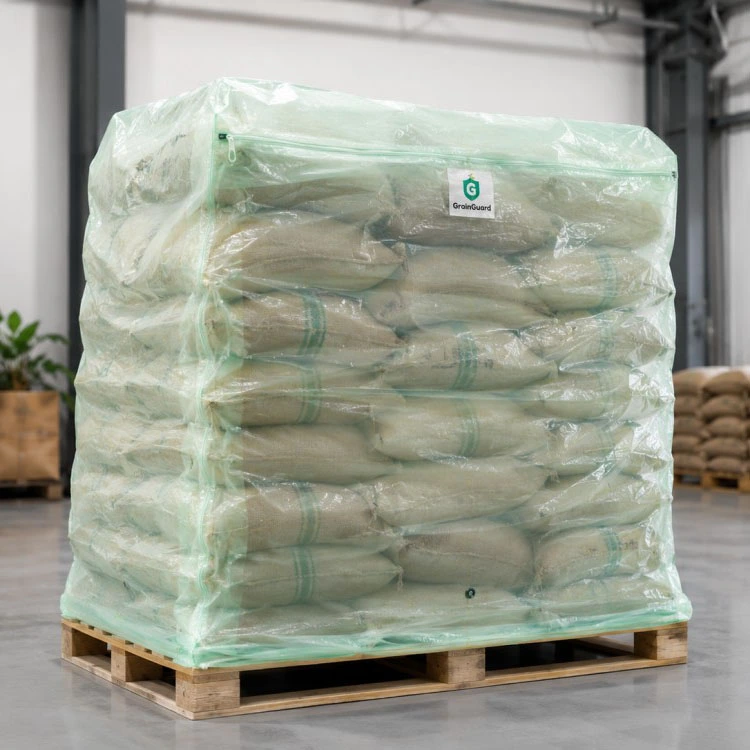
A liner can add a gas or moisture barrier while an outer sack or FIBC provides strength and lifting performance. These benefits become more important on routes with multiple transfers or long dwell times. A shipment may move from an inland warehouse to a truck, rail terminal, port stack, ocean container and destination warehouse before processing.
Each transfer creates opportunities for puncture, seal damage, contamination, odor pickup and moisture exposure. The correct response is not always the highest possible barrier. Packaging should be selected according to the commodity, initial condition, route, storage duration, outer package, handling method and acceptable quality risk. A short, controlled distribution route may need only a conventional sack. A sensitive commodity held through humid port conditions may justify a carefully sealed multilayer liner.
Packaging cannot correct grain that enters storage in unsuitable condition. Initial moisture, cleanliness, temperature and infestation influence the result long before the liner is sealed. Poor drying can create mold and food-safety risks even when the external barrier performs well. Inspection and preparation at origin therefore remain part of the packaging program. Container condition matters as well.
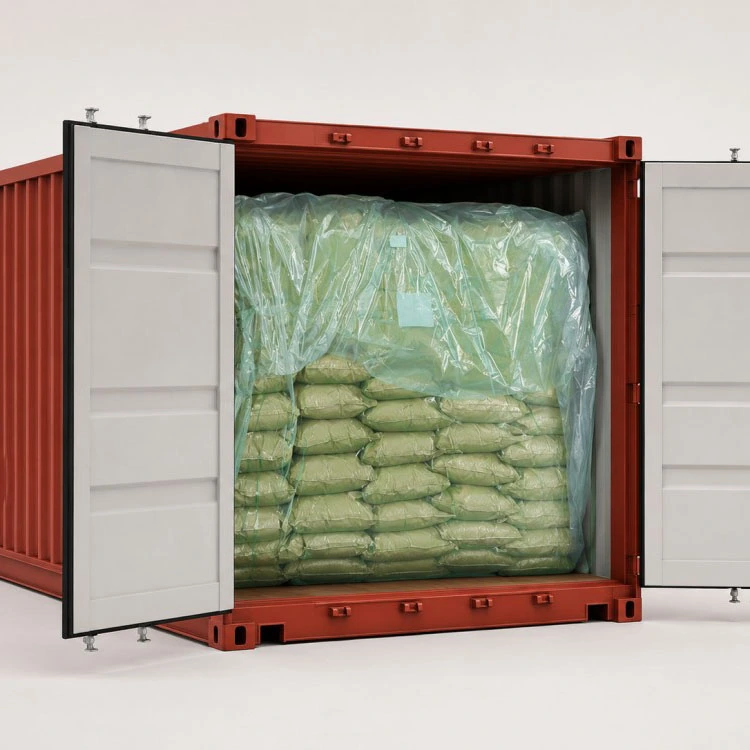
A compliant liner does not make a dirty, damaged or strongly odorous shipping container suitable for food cargo. Buyers should separately check container cleanliness, water tightness, structural condition, previous-cargo risk and protrusions that could puncture the packaging. During transport, temperature cycling can create condensation on container surfaces.
A liner can reduce direct exposure and external moisture exchange, but it does not refrigerate the cargo or actively control temperature. The protection system must be designed around the actual route and storage environment.
Properly sealed hermetic packaging limits the exchange of gases and moisture vapor between the stored commodity and the surrounding environment. Respiration by insects and other living organisms can gradually reduce oxygen and increase carbon dioxide, helping suppress insect activity under suitable conditions. Hermetic should not be treated as a guarantee.
FAO guidance emphasizes that grain must be adequately dried before storage because excessive moisture can support fungi and mold development. Performance also depends on package permeability, seal integrity, initial infestation, temperature, storage duration and the condition of the commodity.
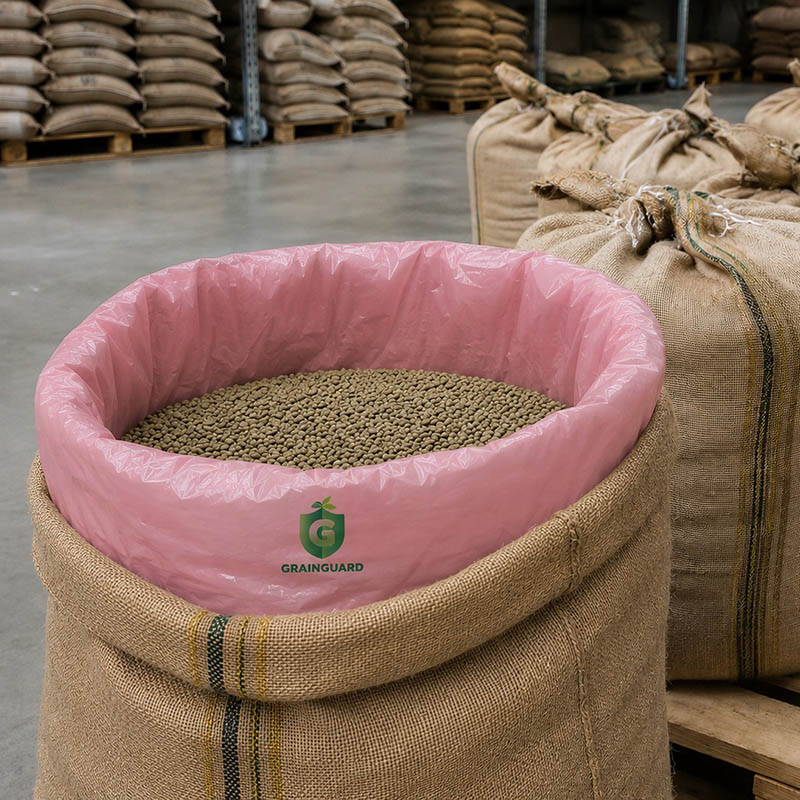
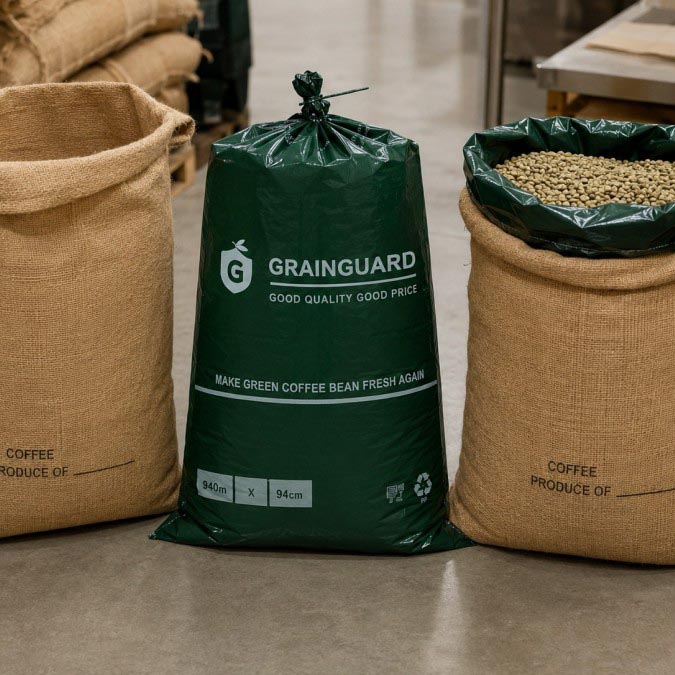
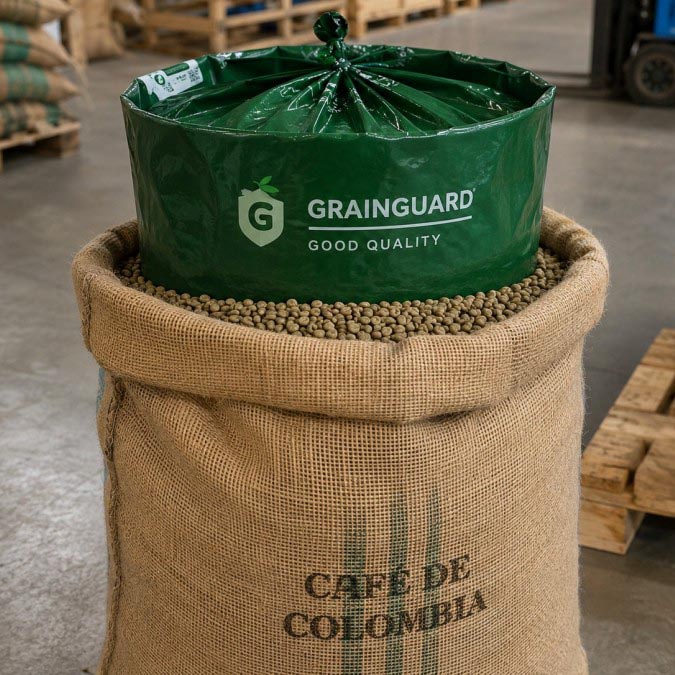
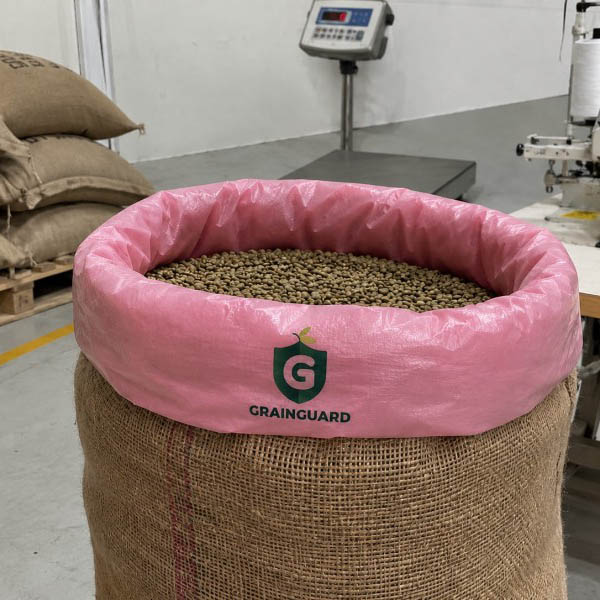
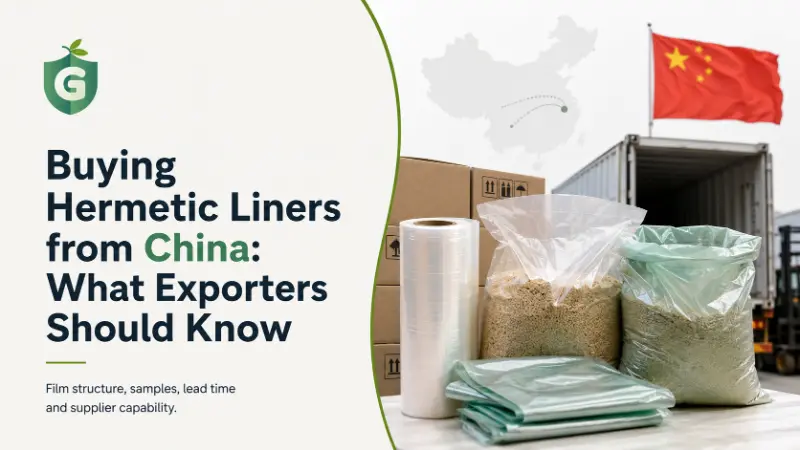
For export cargo, a hermetic liner may be used inside a suitable jute sack, FIBC or other outer package. The outer package carries the mechanical loads; the liner provides the barrier. Buyers should review oxygen transmission, water-vapor transmission, puncture resistance, seal strength, closure instructions and compatibility with the loading process rather than relying on the word hermetic alone.
Food-contact compliance applies to the packaging materials and their intended use. FDA guidance, for example, explains that food-contact substances include packaging components, adhesives, colorants and other materials that may contact food, and that manufacturers must follow the conditions and limitations of the applicable authorization.
Requirements vary by destination market, material and use condition. For international buyers, a useful documentation package may include a technical data sheet, material declaration, relevant food-contact statement, migration or barrier test information, production-lot identification, inspection records and closure guidance.
The exact documents should be agreed before production rather than requested after the shipment is ready. Container suitability requires a separate operational check. Cleanliness, odor, damage, water tightness and previous use affect whether the transport environment is acceptable. Treating packaging compliance and container inspection as two controls prevents a good liner from being blamed for a problem that began with the shipping box itself.
Government reserves and food-security programs add to the need for dependable storage, but they do not automatically create demand for bags or liners. Large reserves are often held in silos and centralized bulk facilities.
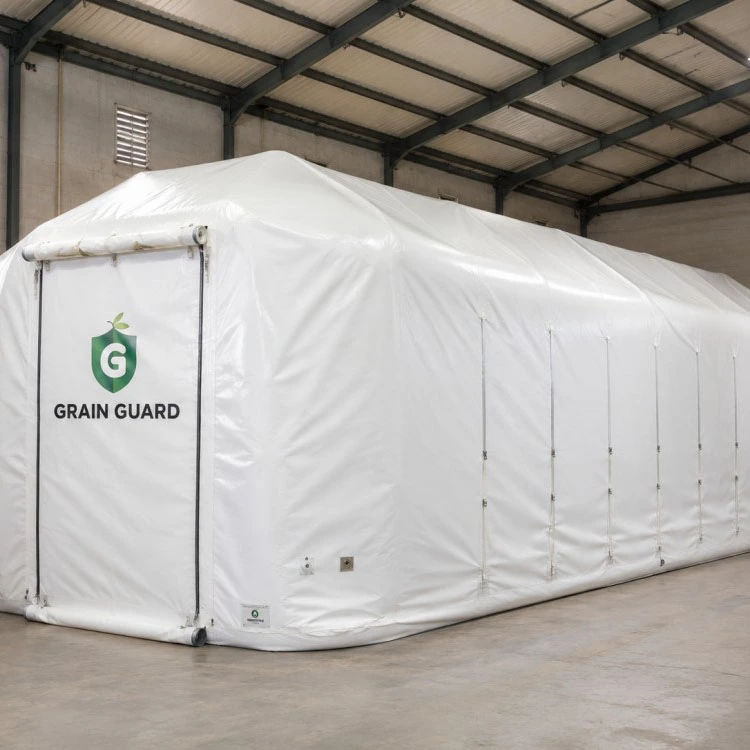
Packaging becomes relevant where stock is decentralized, rotated into distribution, moved in containers, divided into emergency lots or stored where permanent bulk infrastructure is limited. Reserve programs also raise the importance of documentation, traceability and repeatable supply.
When procurement is conducted through tenders, buyers may define materials, dimensions, closure, marking and inspection requirements in advance. Suppliers must be able to reproduce the specification across large orders and peak-season schedules.
Global cereal trade will continue to create substantial storage and handling requirements, but the packaging opportunity is not equal to total production or trade tonnage.
It is concentrated in the channels where a defined package solves a real operational or quality problem: containerization, smaller lots, identity preservation, longer storage, sensitive cargo and routes without dedicated bulk infrastructure. That distinction leads to a more useful conclusion than simply predicting more packaging.
The market will demand better matching between the commodity, the route and the protection system. Conventional sacks, lined jute bags, FIBCs, container liners and high-barrier formats will each remain relevant where their strengths fit the application. For suppliers, the opportunity is to combine scalable production with clear technical data and repeatable quality. For buyers, the priority is to specify the actual risk rather than purchase a package by name alone.
As global cereal flows remain large and storage requirements evolve, that discipline will matter as much as the number of units ordered.
Copyright © 2026 SYON Packaging Technology(Qingdao)Co., Ltd. All rights reserved.