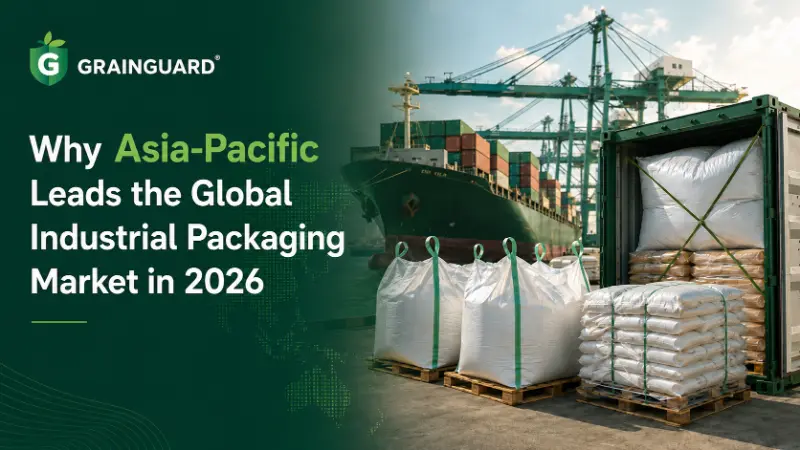

How expanding cereal trade, longer storage cycles and higher quality expectations are reshaping agricultural packaging decisions.
Demand for bulk grain packaging is likely to grow through the next decade, but the market is more complex than a single growth percentage suggests. Broad bulk-packaging studies include chemicals, minerals, liquids and other industrial cargoes, while grain-specific demand depends on how commodities are stored and transported. Large volumes of wheat, maize and soybeans will continue to move through silos, rail systems and dry-bulk vessels without individual packaging.
The strongest packaging opportunity is therefore concentrated in containerized, bagged and quality-sensitive agricultural supply chains. The underlying trade outlook remains supportive. The OECD-FAO Agricultural Outlook 2025-2034 projects global cereal production to reach 3.2 billion tonnes by 2034 and world cereal exports to rise by 14% from the 2022-2024 base period.
As more grain crosses borders and spends time in warehouses, ports and containers, exporters will need packaging formats that match the cargo, route and required level of protection.
Packaging demand will not rise evenly across every grain or trade lane. Commodity value, shipment size, destination requirements and handling infrastructure all influence whether a buyer selects conventional sacks, lined jute bags, flexible intermediate bulk containers (FIBCs), container liners or dedicated bulk-handling systems. Staple grains moving in very large volumes may remain best suited to loose-bulk logistics.
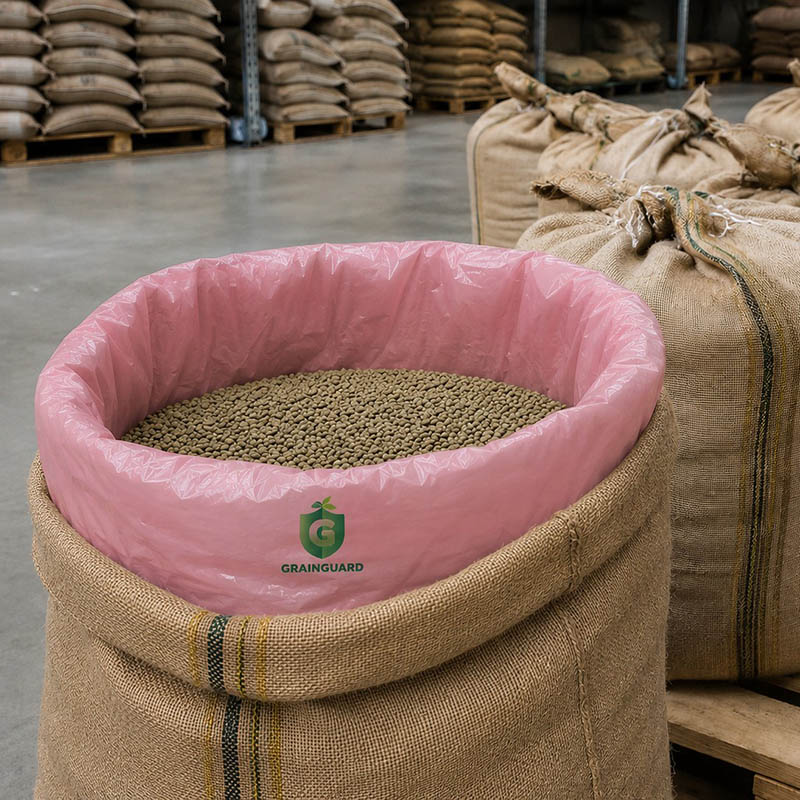
By contrast, specialty grains, seeds, pulses, milled ingredients, feed ingredients, green coffee, cocoa and smaller mixed shipments are more likely to use bags or liners. These products often need identity preservation, easier lot separation, cleaner handling or additional protection from moisture, odors, insects and contamination.
For packaging manufacturers, this means the outlook is not simply about producing more units. It is about serving a wider range of specifications. Standard formats will remain important, while demand for customized dimensions, food-contact documentation, stronger closure systems and measurable barrier performance is likely to expand where the cargo risk justifies the investment.
Harvests are seasonal, but consumption is continuous. Grain and other dry agricultural commodities may be held after harvest, consolidated for export, staged near ports and stored again after arrival. Every additional handling and storage stage creates opportunities for puncture, moisture exchange, infestation, odor pickup and contamination.
The OECD-FAO outlook expects global cereal trade to continue expanding, with the Americas and Europe remaining major suppliers to import-dependent markets in Asia and Africa. This does not translate into a one-to-one increase in packaging, because much of the trade uses dedicated bulk systems. It does, however, support demand for suitable packaging in containerized and bagged segments, particularly where buyers need smaller lots, branded or traceable cargo, or separation from the container interior. Quality expectations are also rising. Importers increasingly evaluate not only whether the shipment arrived, but whether moisture, cleanliness, aroma, germination, color or processing performance remained within specification.
As cargo value and buyer requirements increase, packaging becomes part of the quality-control system rather than a simple transport consumable.
No single package is the industry standard for all grain movement. The correct format depends on load size, handling equipment, storage duration, route and risk profile. A well-designed packaging program may use several formats for different customers or stages of trade.
|
Packaging Format |
Typical Use |
Key Considerations |
|
Conventional sacks |
Local trade, short storage and lower-risk dry commodities |
Strength, stitching, cleanliness and storage environment |
|
Jute sack with inner liner |
Coffee, cocoa, seeds and commodities that retain traditional outer handling |
Fit, sealing allowance, barrier level and closure method |
|
FIBC with or without liner |
Dry, flowable products moved in larger packaged lots |
Safe working load, lifting design, discharge, liner compatibility and food contact |
|
Container liner |
Containerized bulk or bagged cargo requiring separation from container surfaces |
Installation, fixing points, loading method, door closure and final sealing |
|
Sample or small barrier bag |
Quality-control samples, trade samples and high-value small lots |
Seal integrity, labeling, traceability and repeated opening requirements |
FIBCs are an important part of this mix rather than a universal answer. The Flexible Intermediate Bulk Container Association notes that FIBCs are commonly used for dry, flowable materials including grains and seeds. Their appeal comes from efficient mechanical handling and the ability to carry larger packaged loads, but the design must still match the product, lifting conditions and filling or discharge process.
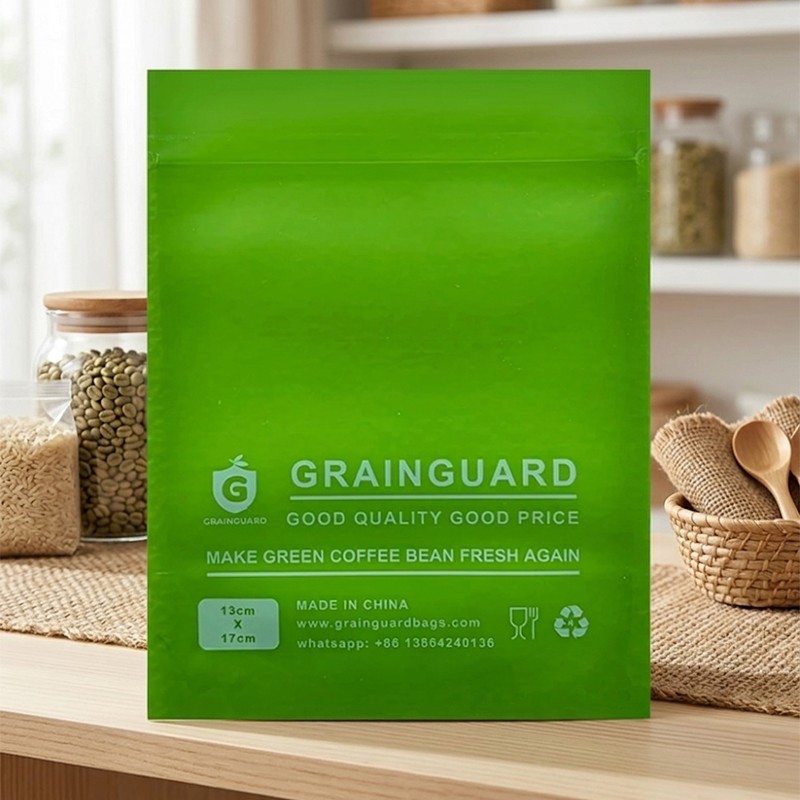
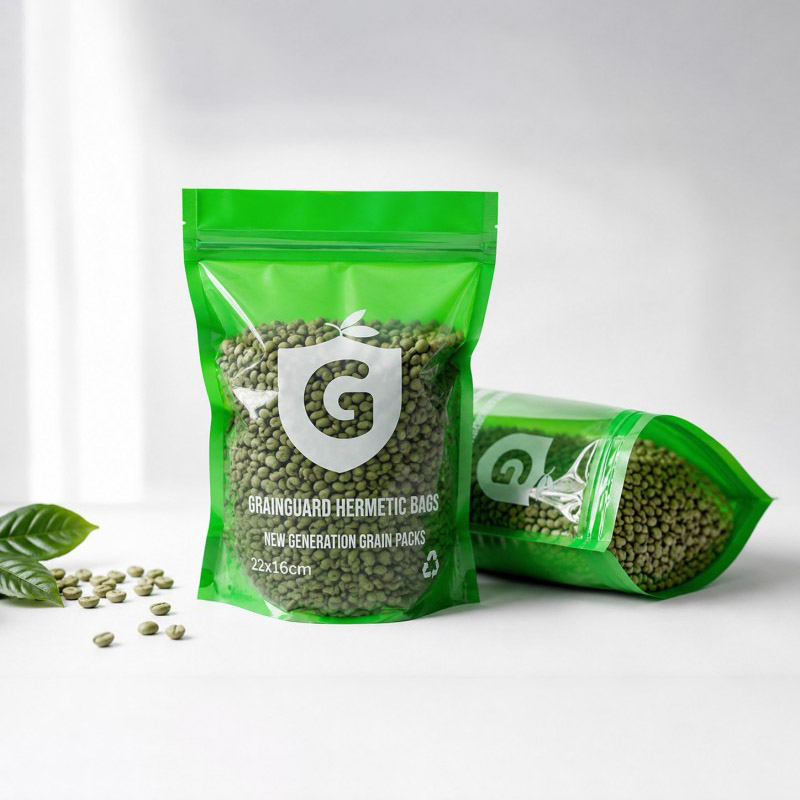
Hermetic packaging is most relevant where prolonged storage, insect pressure or exposure to humid and variable conditions creates a meaningful quality risk. A properly closed, low-permeability package limits the exchange of gases and moisture vapor with the external environment. Biological respiration inside the package can reduce oxygen and increase carbon dioxide, which may suppress insect activity.
The word hermetic should not be interpreted as a guarantee that any cargo will remain safe under any condition. Grain must be clean and adequately dried before sealing. FAO guidance warns that grain placed in hermetic storage with excessive moisture can become moldy and unsafe. Package integrity, initial infestation, temperature, commodity condition and storage duration also influence performance.
Research on triple-layer hermetic bags has demonstrated strong insect-control results under specific smallholder storage conditions.
In one field study, maize stored in PICS bags maintained good air-barrier properties and experienced less than 1% weight loss from insect damage over 35 weeks. Those results support the value of hermetic systems, while also showing why performance claims should be tied to a defined package, commodity and storage process rather than generalized to every application.
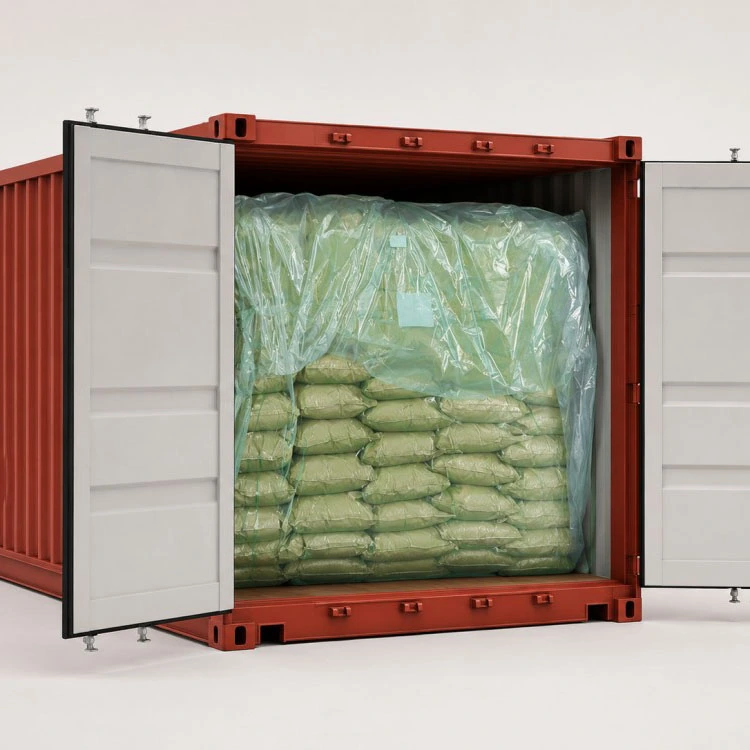
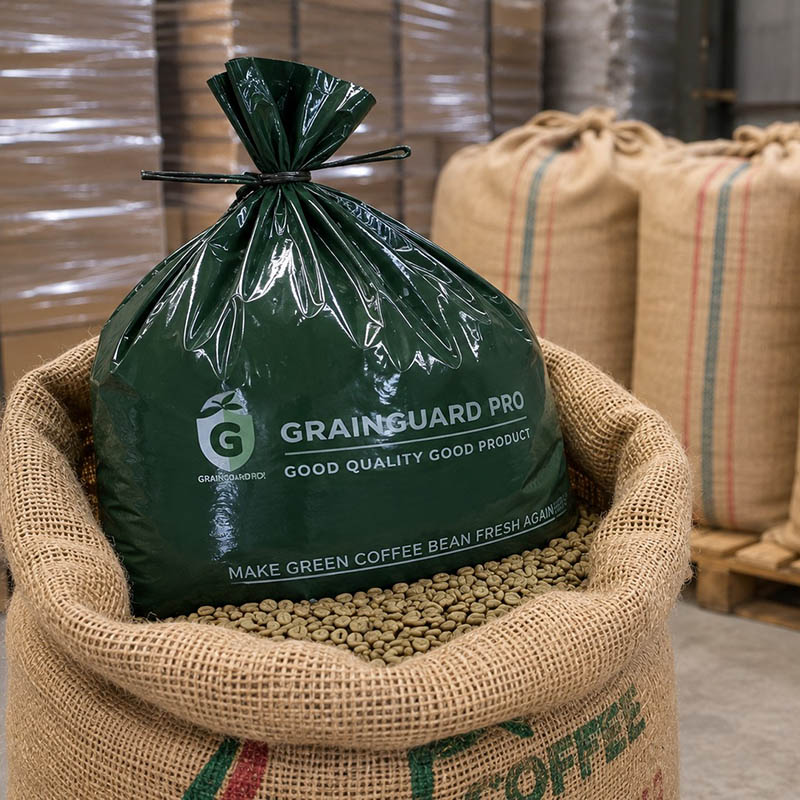
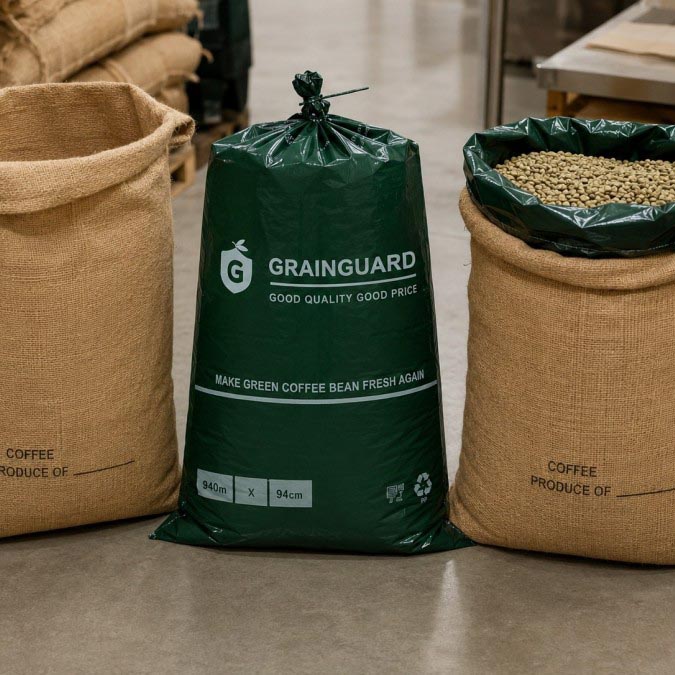
For international trade, hermetic liners can be used inside suitable jute sacks, FIBCs or other outer packages to add a continuous barrier without replacing the mechanical handling function of the outer container. The buyer should evaluate film structure, oxygen and water-vapor transmission, puncture resistance, seal integrity and the practical closure method used during loading.
A shipment may move from an inland warehouse to a truck, rail terminal, port stack, ocean container and destination warehouse before processing. Temperature and humidity can change repeatedly along that route.
Even when grain begins the journey in acceptable condition, poor seals, damaged packaging or direct contact with a dirty container can create avoidable quality problems. This is why demand is shifting from generic descriptions such as heavy duty or moisture proof toward measurable and application-specific requirements.
Buyers increasingly ask for material structures, test reports, closure instructions, food-contact declarations, lot traceability and pre-shipment inspection. The change is gradual, but it favors suppliers that can explain how the package performs rather than relying only on thickness or appearance.
Growing agricultural trade gives buyers a reason to review packaging specifications before peak demand arrives. Coffee, cocoa, seed and grain programs often follow harvest calendars, and customized barrier materials may require more production planning than standard sacks.
Early forecasting helps suppliers reserve raw materials, schedule printing and manage mixed-size orders. The first purchasing question should be the cargo requirement, not the lowest unit price. Buyers should define commodity condition, filling weight, outer package, route, storage period, climate, handling method and acceptable risk.
From there, they can compare mechanical strength, barrier performance, dimensions, closure and documentation on an equal basis. Trial orders are especially useful when introducing a liner or changing material structure. The trial should use the actual cargo, filling process and outer package whenever possible. Fit, loading speed, sealing reliability, puncture risk and handling behavior can then be evaluated before a seasonal or high-volume order is placed.
Through 2035, bulk grain packaging demand is likely to benefit from expanding cereal production and trade, greater use of containerized and packaged channels, and closer attention to post-harvest quality.
The opportunity will be strongest in segments where cargo value, identity preservation, storage duration or environmental exposure makes packaging performance economically important. High-barrier and hermetic solutions will not become mandatory for every grain or every route.
Conventional formats will remain appropriate where storage is short, handling conditions are controlled and the quality risk is low. The market will instead become more technically segmented: buyers will expect the protection level to match the real cargo risk. That is the central outlook for the next decade.
The industry will need more packaging, but it will also need better specifications, better closure practices and better alignment between the package and the supply chain. Suppliers that can combine scalable production with measurable, repeatable performance will be best positioned as agricultural trade continues to grow.
Copyright © 2026 SYON Packaging Technology(Qingdao)Co., Ltd. All rights reserved.