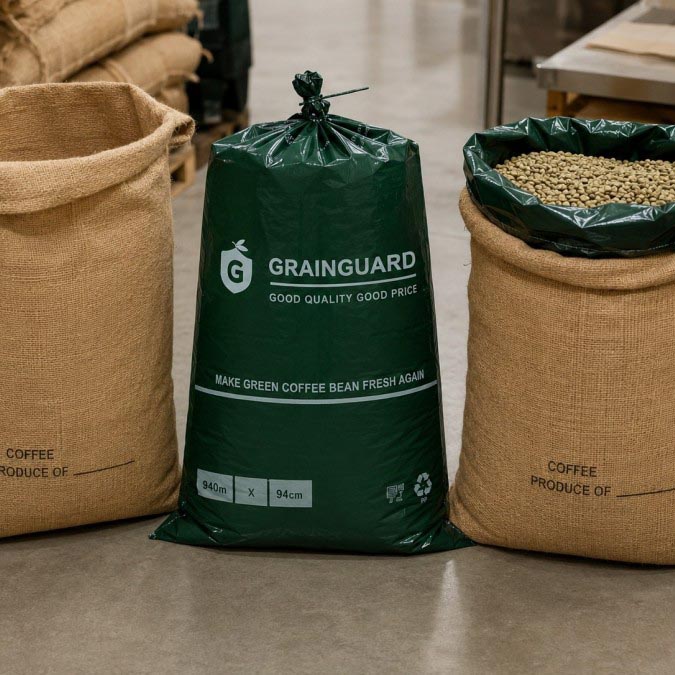

Protecting Quality Along the Journey
Ethiopia is one of the world’s major coffee origins. The quality established at farm and processing level still has a long physical journey ahead before green coffee reaches an international buyer. This journey involves multiple stages where coffee may face risks from moisture, oxygen exposure, handling, and changing environmental conditions. Understanding these challenges helps exporters develop better strategies for protecting coffee quality from origin to destination.
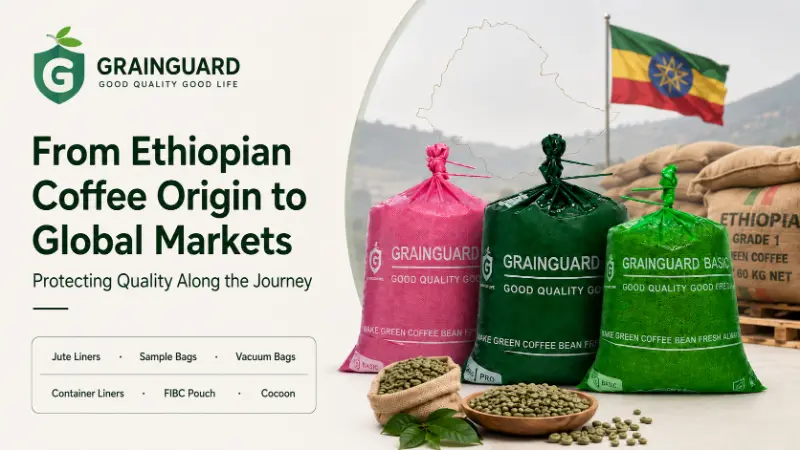
Ethiopia’s coffee sector connects producing regions, processing stations, exporters, warehouses and international buyers. Recent trade figures underline the scale of that chain. According to the International Coffee Organization, Ethiopia exported 7.43 million 60 kg bags during coffee year 2024/25, the first time its annual exports moved beyond the 6 to 7 million bag range. The ICO linked that performance to an estimated 9.91 million bag harvest and strong international prices. [1]
The latest USDA Foreign Agricultural Service outlook also points to substantial volumes ahead. In its May 2026 Coffee Annual, USDA forecasts Ethiopia’s coffee production at 12.10 million 60 kg bags for marketing year 2026/27 and total exports at 7.13 million bags, around 2.4 percent above the revised estimate for 2025/26. [2]
For exporters, those numbers represent more than trade volume. Every bag moving through the supply chain carries quality that has already required significant work at origin. The question is how well that quality is protected during the remaining stages before the buyer receives it.
Once coffee has been harvested and processed, the export journey is far from finished. Green coffee may still pass through drying, sorting and preparation, bagging, warehouse storage, inland transportation, export handling and international shipment. Each stage is different. A drying area is not the same environment as a warehouse. A warehouse is not the same as a truck or a shipping container. Time, handling and surrounding conditions continue to change as the coffee moves from origin toward the final buyer. That is why export preparation should be viewed as part of quality management, not simply as a logistics step.
Processing may be complete, but green coffee can still remain exposed to the environment around it during storage and transport. The practical concerns are straightforward: moisture, ambient air, odors or contamination, and changing storage conditions. These risks do not mean that every shipment requires the same protection method. Coffee type, moisture condition, storage duration, bag format, route, climate and buyer requirements all matter. The useful question is not whether one packaging format is universally “best,” but whether the protection level matches the actual shipment conditions.
For Ethiopian exporters working with traditional coffee sacks, this makes the packaging decision especially important. The outer jute sack performs important handling and trade functions, while an appropriate inner barrier can add another level of protection around the green coffee.
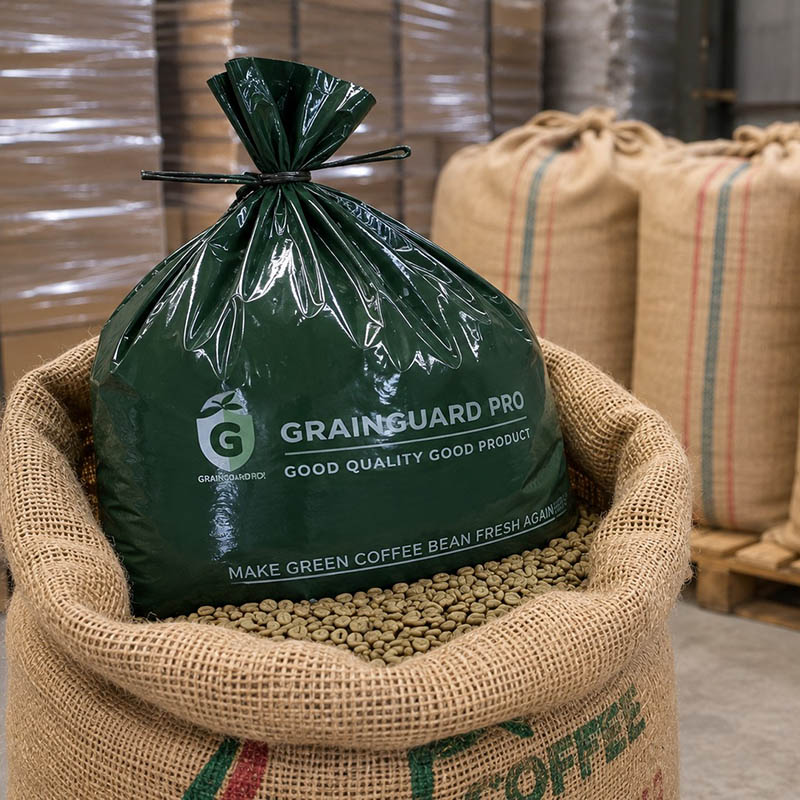
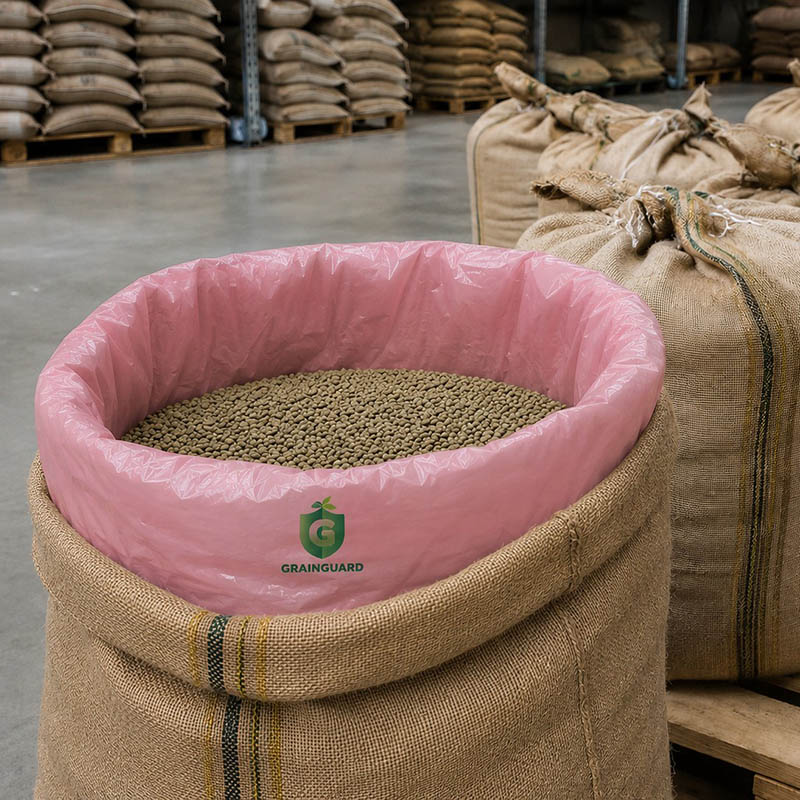
Good coffee quality is created through the combined work of producers, processors, exporters and quality teams. Packaging cannot create quality that is not already there, but suitable packaging can help protect the condition of the coffee during the stages that follow processing. For bagged green coffee, one practical approach is to use a hermetic inner liner inside the traditional jute sack. The goal is to create an additional barrier between the coffee and the surrounding storage or transport environment while preserving the familiar outer sack format used for handling and export.
GrainGuard hermetic Jute Liners are designed for use inside traditional jute sacks. They provide an inner packaging layer intended to help reduce exposure to moisture and ambient air during storage, handling and transportation.
For Ethiopian coffee exporters, this format is particularly relevant because it can be integrated with an existing bagged-coffee workflow rather than replacing the traditional outer sack. The liner becomes the internal protection layer, while the jute sack continues to support handling, stacking and trade presentation.
The appropriate liner specification should still be selected according to the coffee, storage conditions, shipment duration and buyer requirements. Packaging decisions should be based on the actual risk profile of the shipment, not on a one-size-fits-all assumption.
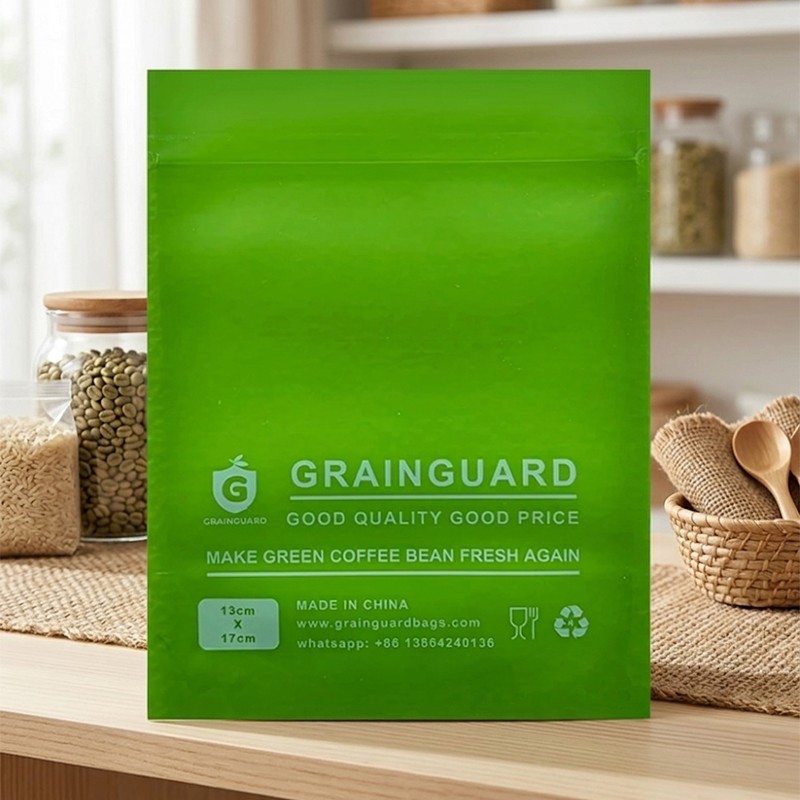
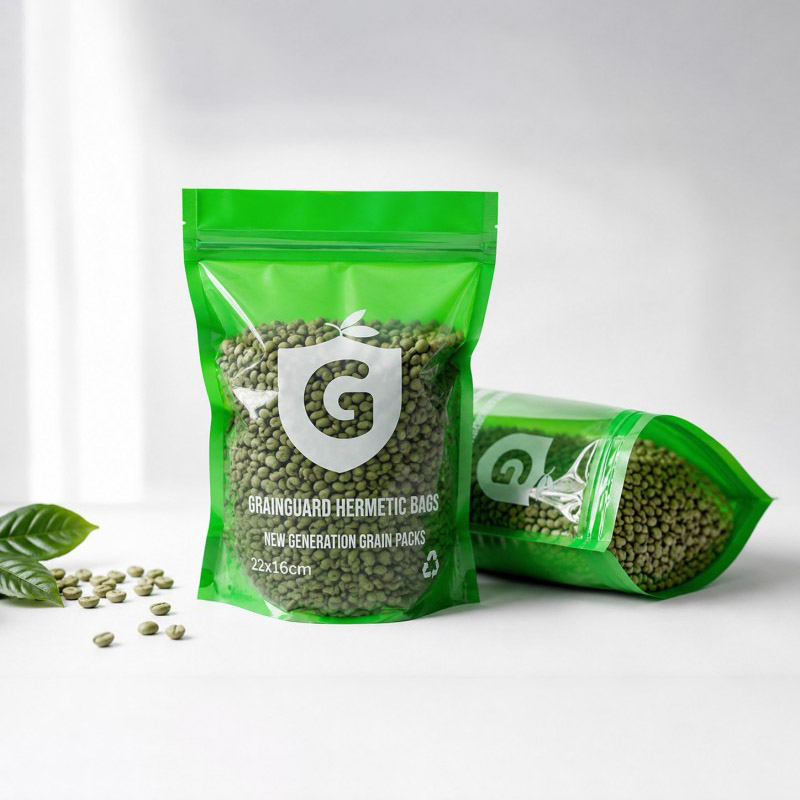
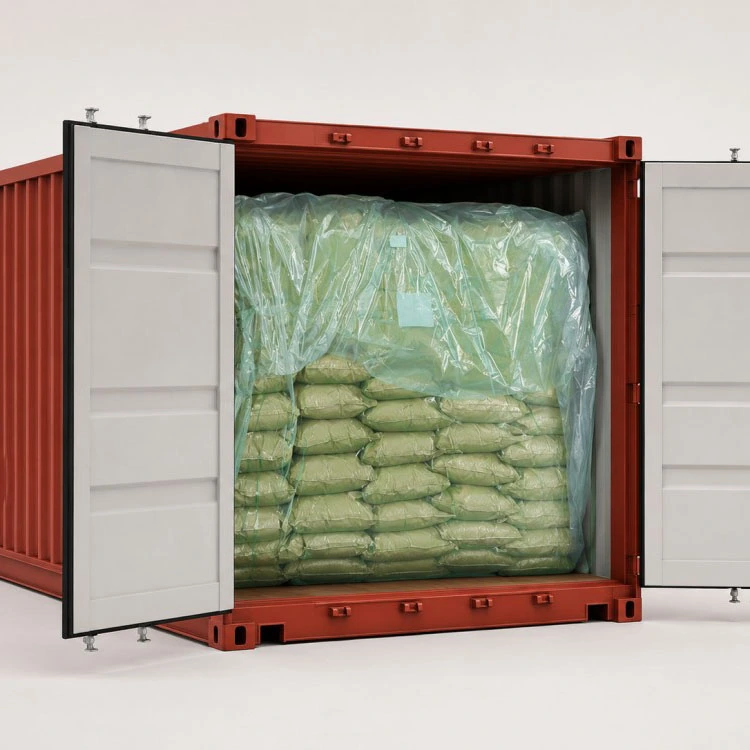
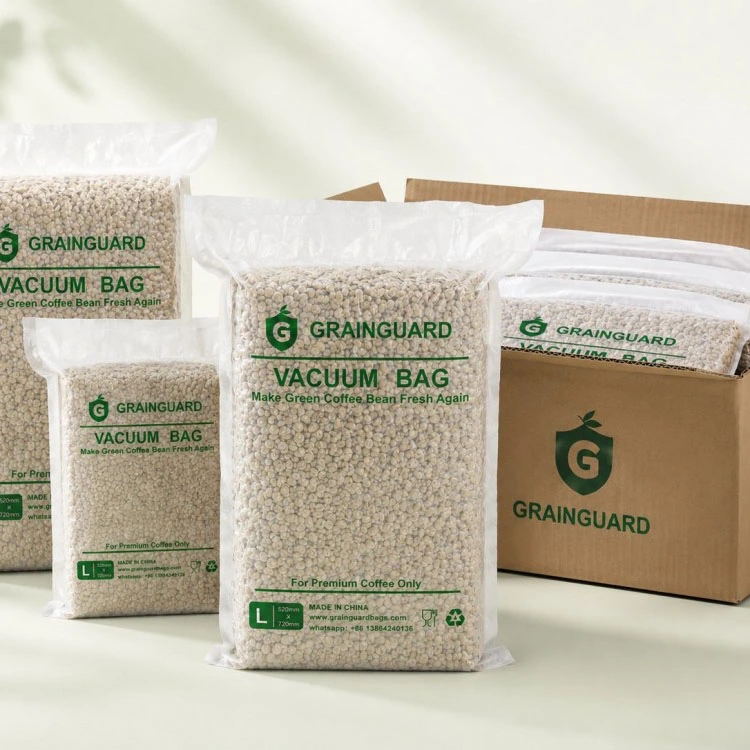
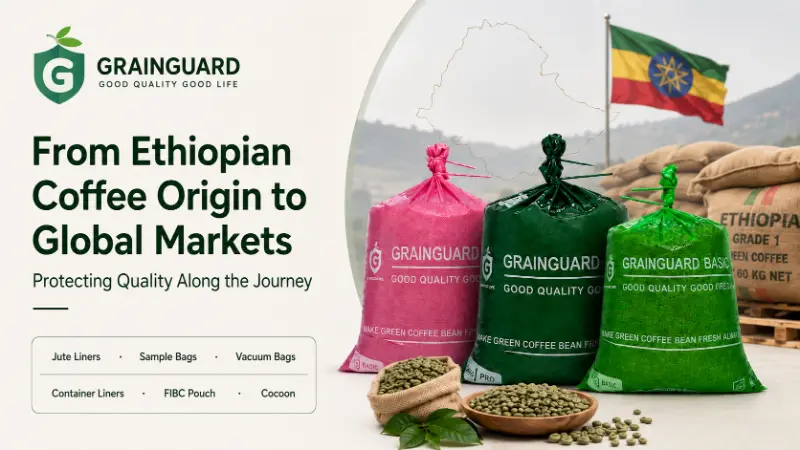
Not every coffee shipment looks the same. An exporter sending green coffee in jute sacks has different packaging needs from a quality team sending samples, or a warehouse managing larger quantities of bagged coffee. For the Ethiopian market, three GrainGuard formats are especially easy to connect to common coffee-export workflows: Jute Liners for individual traditional coffee sacks, Sample Bags for specialty coffee evaluation and trade samples, and Cocoon solutions for larger-scale bagged storage. GrainGuard also offers Vacuum Bags, FIBC Pouches and Container Liners for other storage and shipment formats. The purpose of having multiple formats is not to use more packaging. It is to match the packaging format to the product, volume, storage environment and route.
Ethiopian coffee may travel through many hands and environments before it reaches a roaster or importer. Protecting quality therefore does not stop when processing ends. Storage, handling, transport and packaging all remain part of the export journey. For exporters, cooperatives, processors and green coffee suppliers, the most useful approach is to evaluate the real shipment conditions first: coffee type, bag size, storage duration, warehouse conditions, route and buyer requirements. From there, the packaging format can be selected more rationally.
GrainGuard works with hermetic packaging solutions for green coffee and other dry agricultural commodities, from individual coffee sacks and samples to larger storage and containerized applications.
|
FOR ETHIOPIAN COFFEE EXPORTERS Share your coffee type, bag size, storage conditions and export route with GrainGuard to discuss a suitable packaging format. WhatsApp: +86 13864240136 Qingdao, China GrainGuard | Make Grains Fresh Again. |
Sources for Current Ethiopia Coffee Facts
[1] International Coffee Organization, Coffee Market Report, December 2025. Ethiopia exported 7.43 million 60 kg bags in coffee year 2024/25, with an estimated harvest of 9.91 million bags.
International Coffee Organization source
[2] USDA Foreign Agricultural Service, Ethiopia: Coffee Annual, May 20, 2026. USDA forecasts production of 12.10 million 60 kg bags and exports of 7.13 million bags for MY 2026/27.
USDA Foreign Agricultural Service source
Copyright © 2026 SYON Packaging Technology(Qingdao)Co., Ltd. All rights reserved.