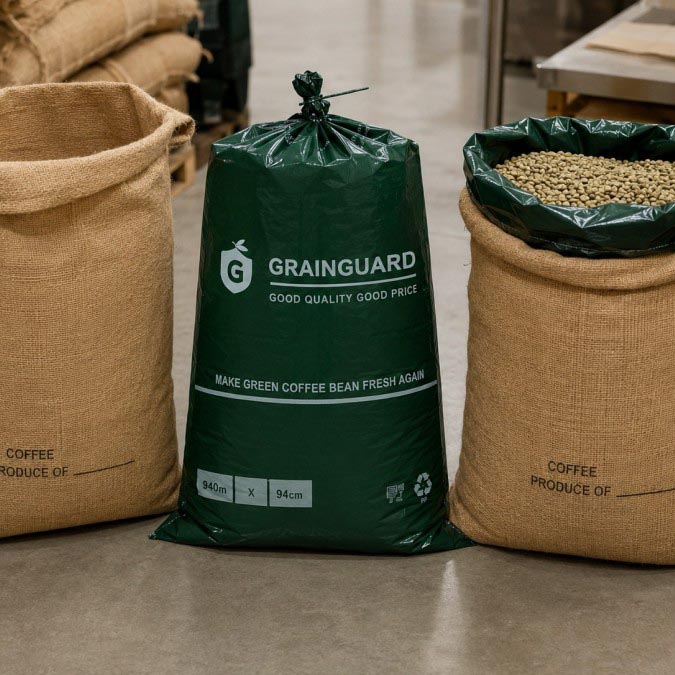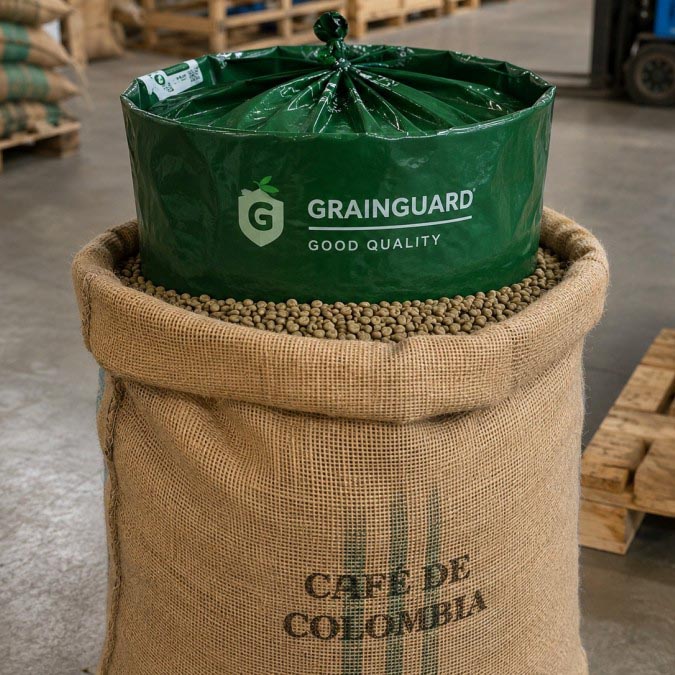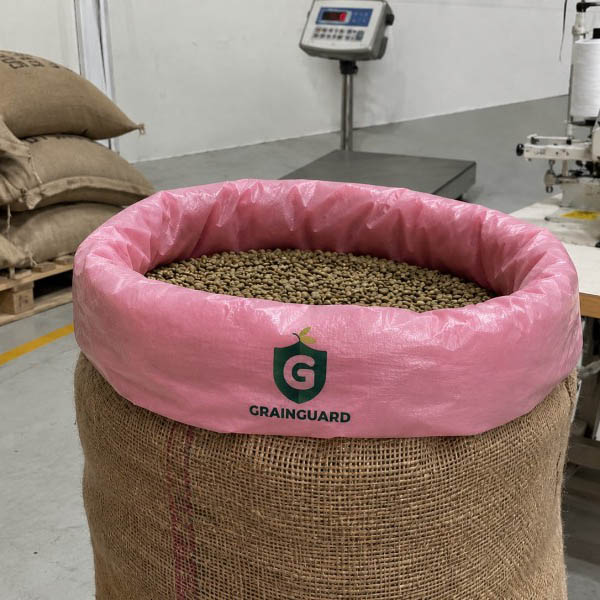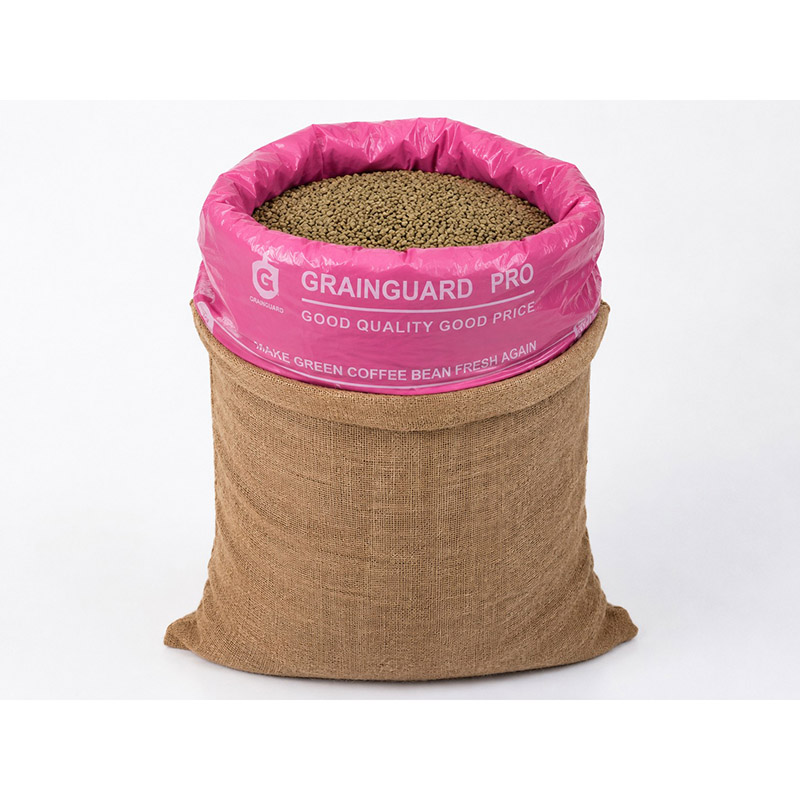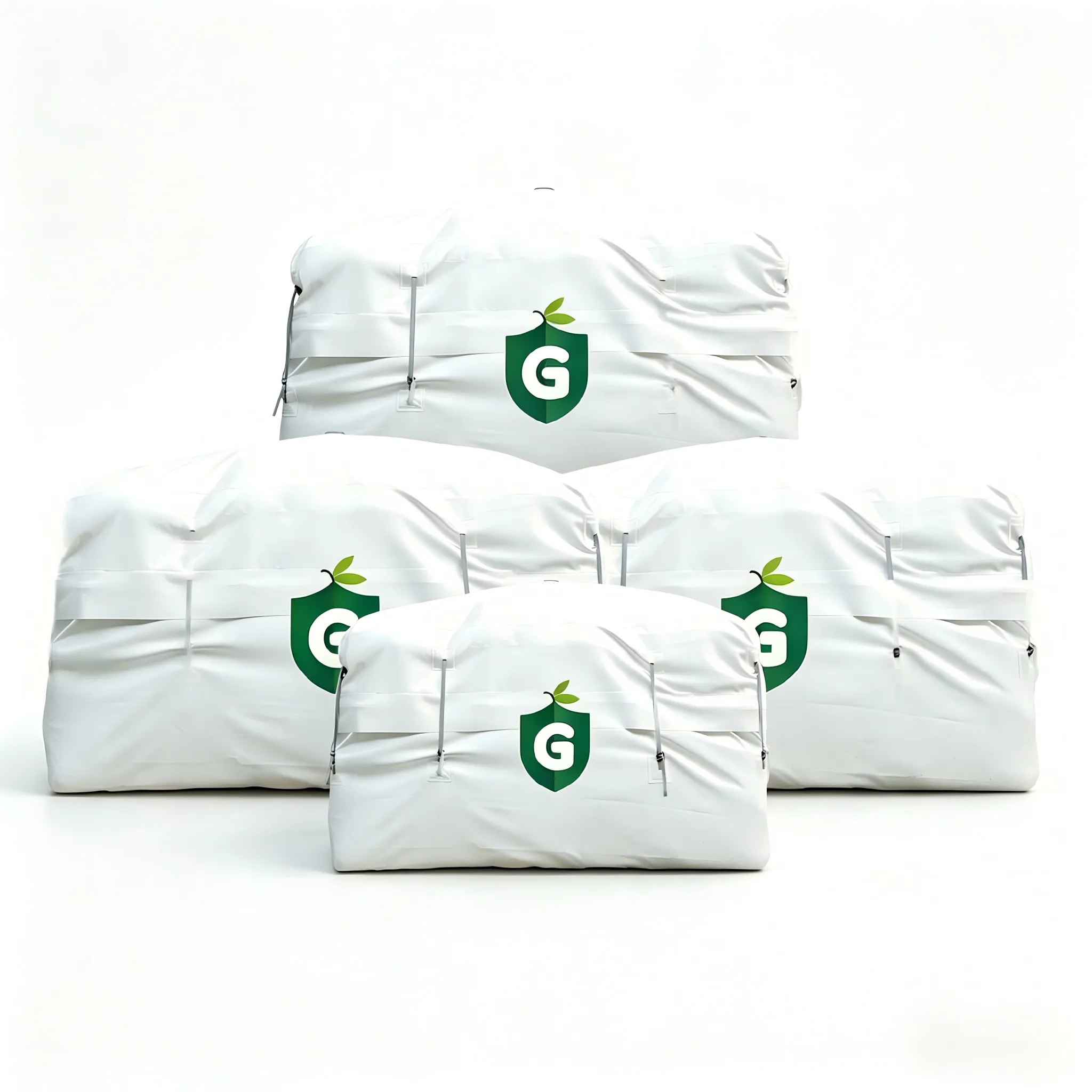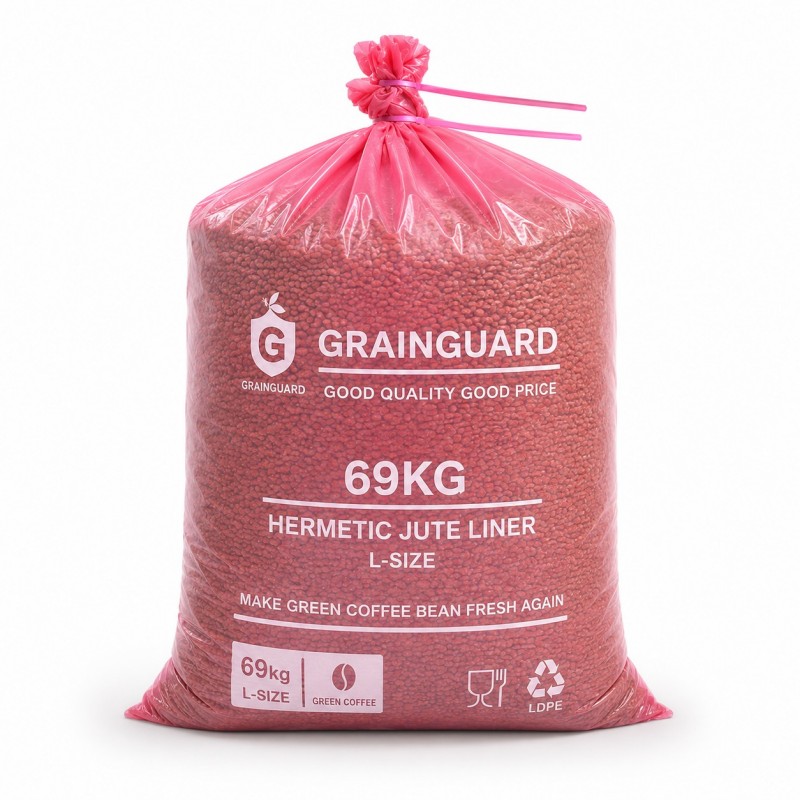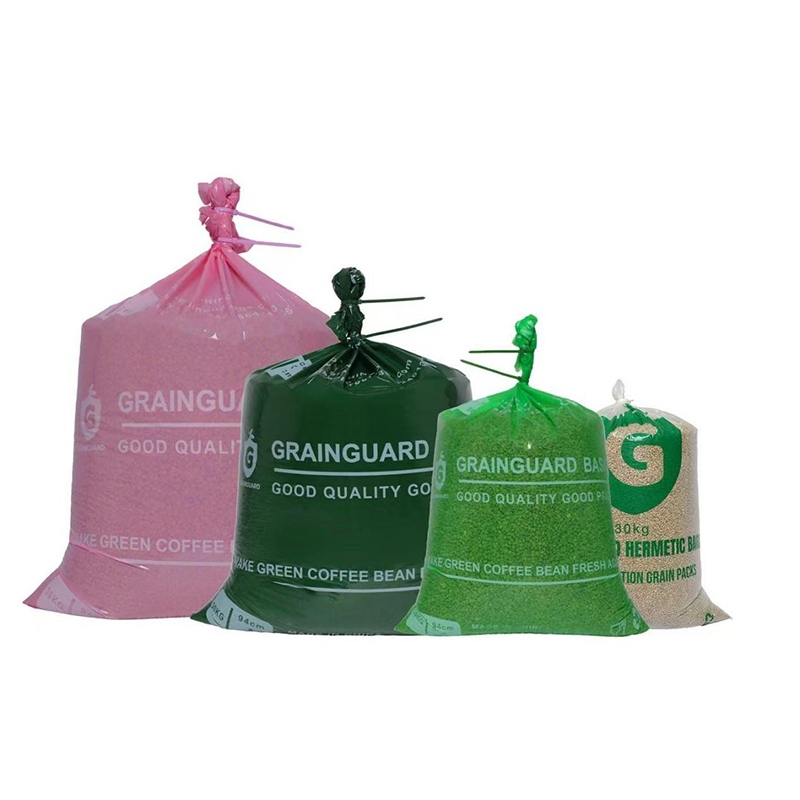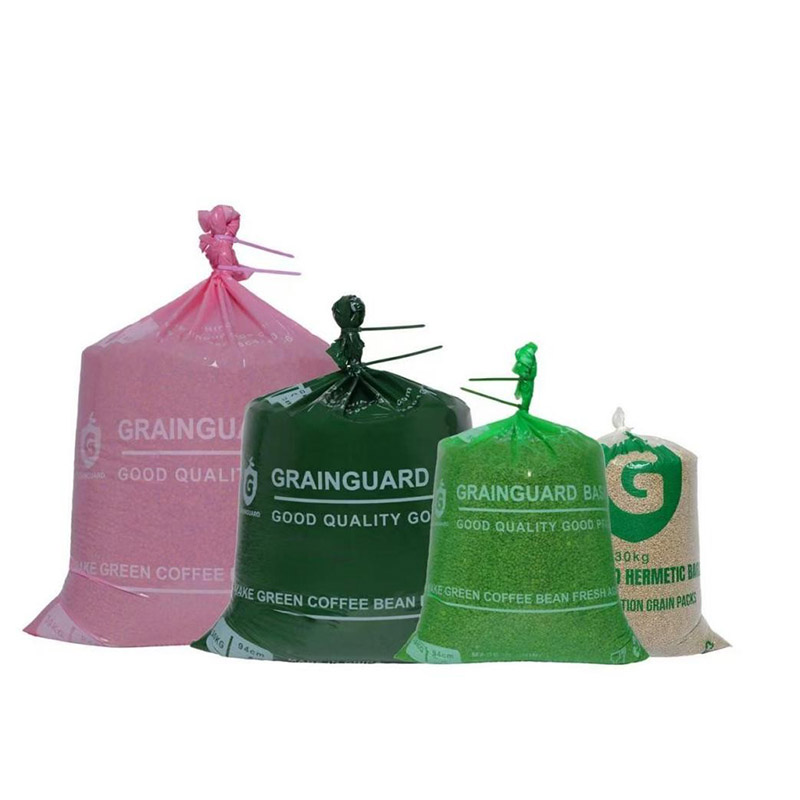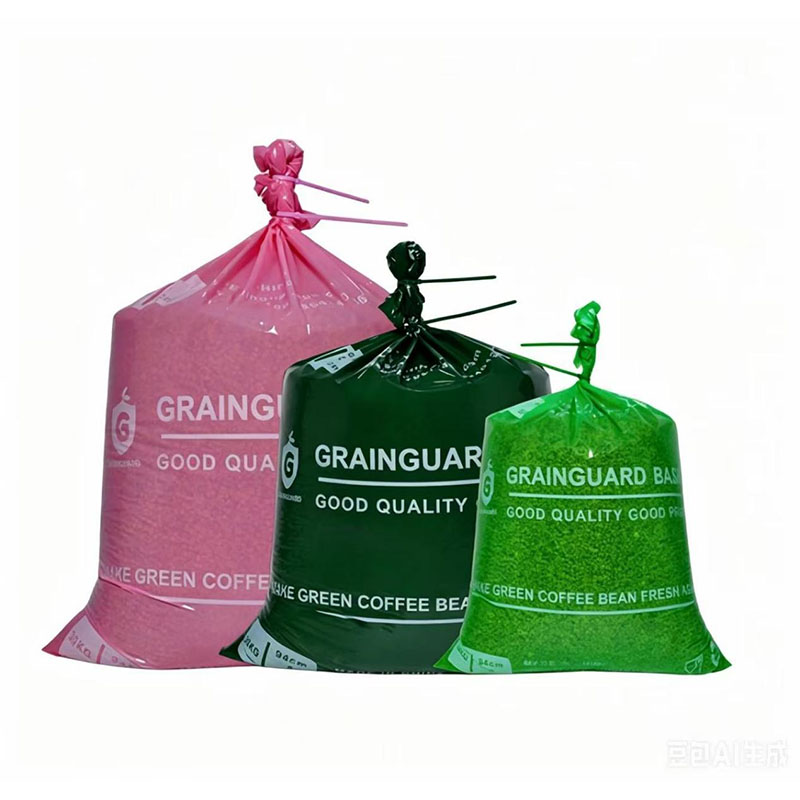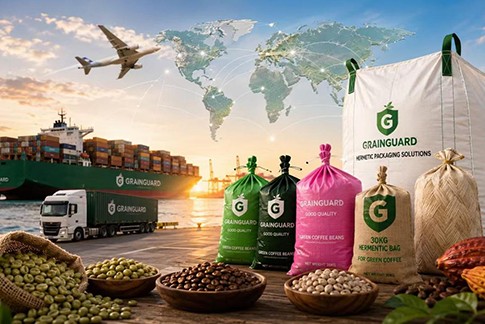

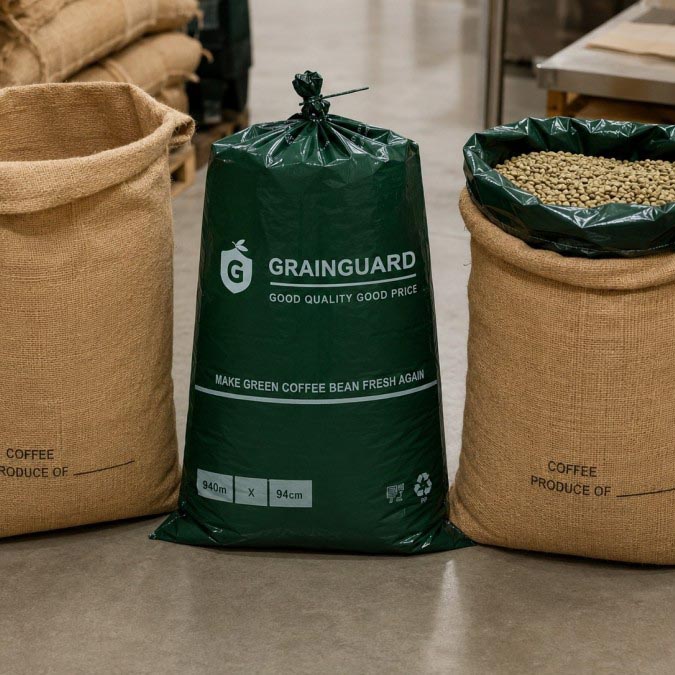
The durable jute liner for green coffee bean packaging is offered by leading China manufacturer GrainGuard. This hermetic jute liner must protect the product while remaining compatible with established work at farms, cooperatives, dry mills, export warehouses, ports, and receiving facilities. Traditional jute sacks are widely accepted because they are robust, stackable, sewable, and easy to identify. Their open structure, however, permits air and moisture movement and leaves the beans more exposed to surrounding warehouse and transport conditions.
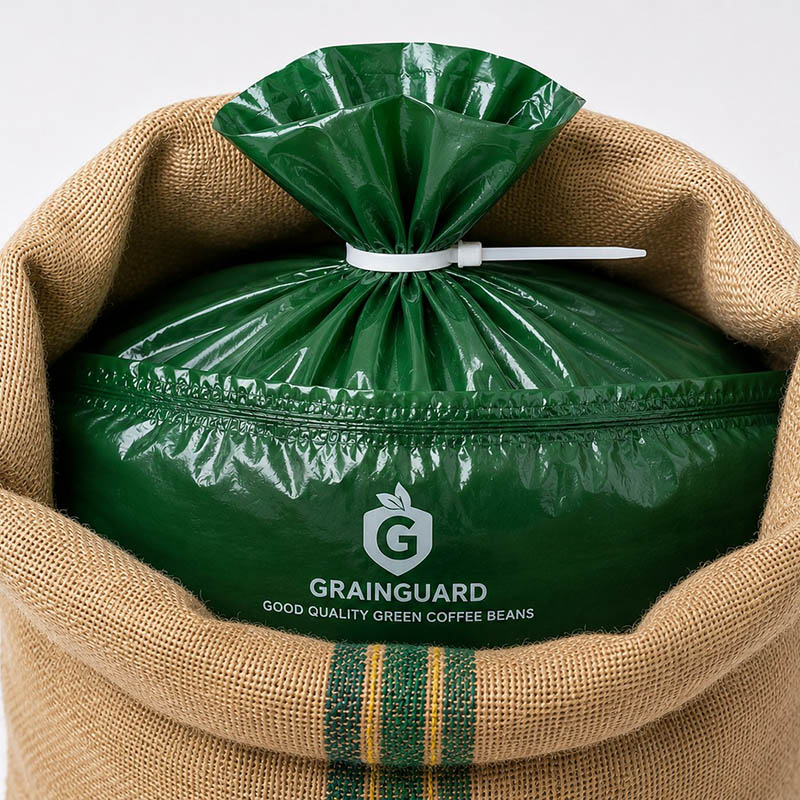
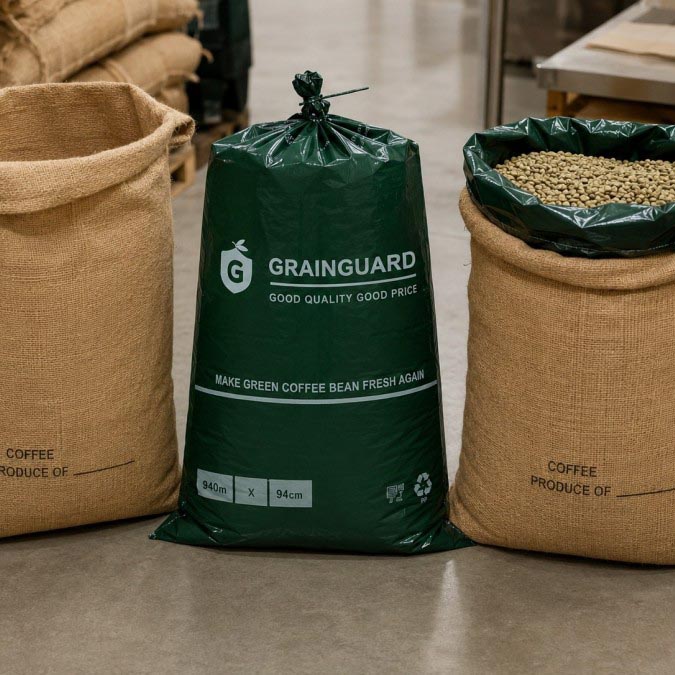
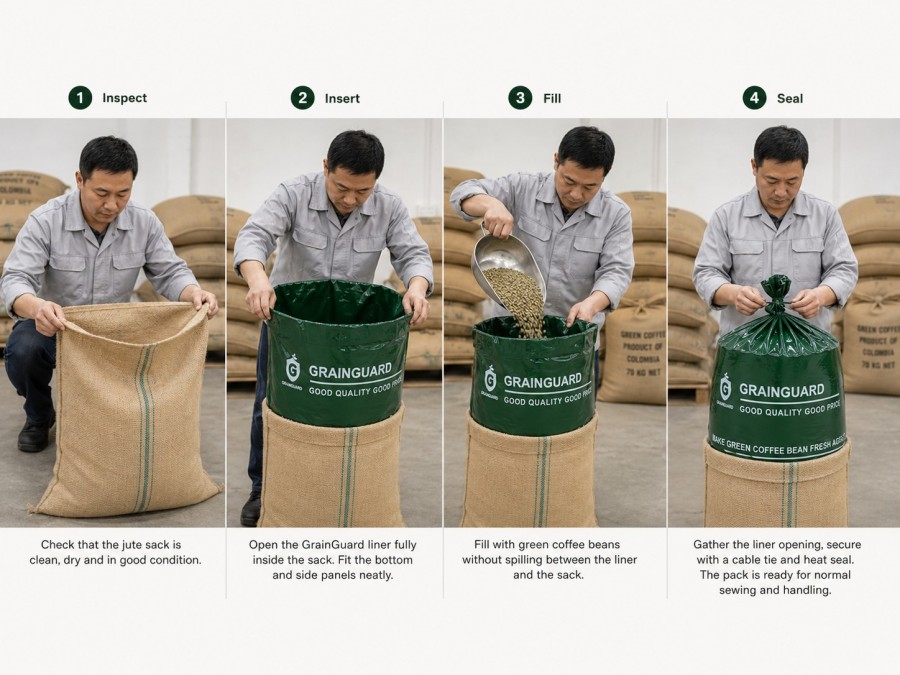
A jute liner for green coffee bean packaging improves this packaging system without requiring buyers to abandon the jute sack. Before filling, the liner is placed inside a clean, dry outer sack and opened fully so that the bottom and side panels sit correctly. Green coffee is loaded directly into the liner, excess air is reduced carefully, and the opening is secured with the specified cable tie and heat-sealing procedure. The outer sack can then be sewn or closed using the buyer’s normal process. Once the coffee is filled and the opening is secured according to the approved procedure, the inner package helps reduce exposure to moisture exchange, oxygen, insects, dust, outside odors, and handling contamination during warehouse storage, export preparation, palletization, container loading, and long-distance transport.
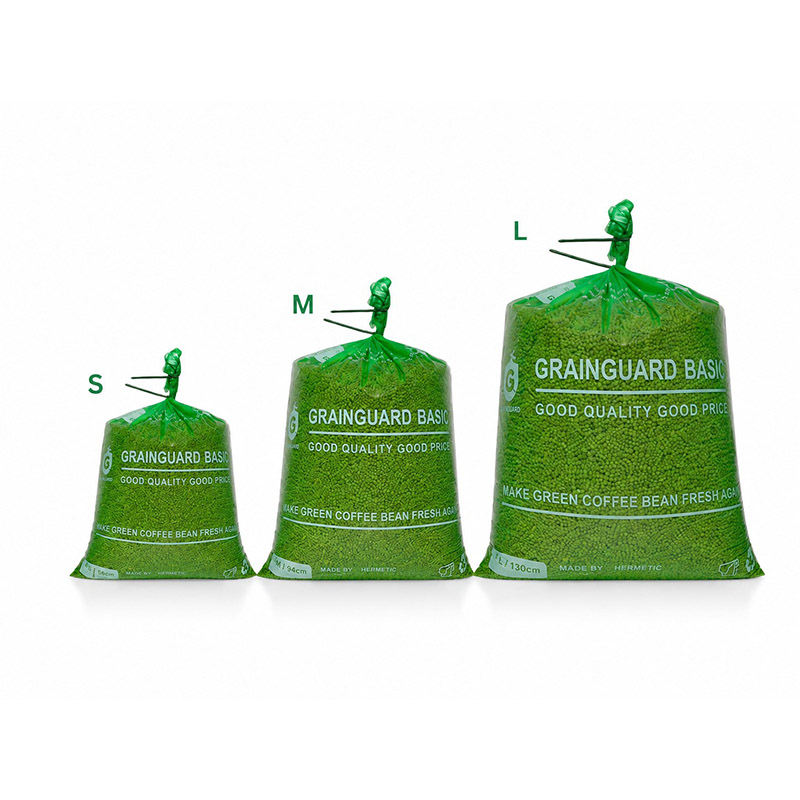
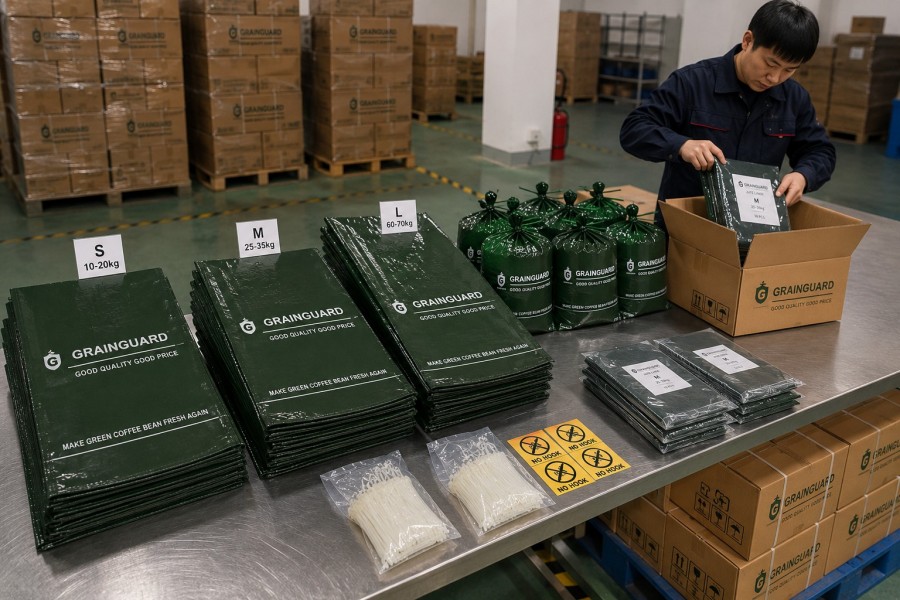
The GrainGuard range is available in S, M, and L sizes for approximately 10-20 kg, 25-35 kg, and 60-70 kg packing programs. Basic, Pro, and Premium constructions allow buyers to select a suitable balance of cost, barrier performance, route conditions, storage period, and coffee value. Custom dimensions, OEM printing, private-label supply, mixed-size orders, carton configuration, and export coordination are available from Qingdao, China.
The correct configuration depends on more than nominal bag capacity. Buyers should confirm the internal dimensions of the outer sack, target filling weight, required headspace for sealing, bean density, closure equipment, handling method, expected storage period, route climate, destination requirements, and the commercial value of the lot. These details help determine whether an S, M, L, or custom size and a Basic, Pro, or Premium film structure is the better choice.
This packaging solution is suitable after dry milling and quality approval, during origin storage, while coffee is waiting for export documentation or container booking, and throughout delivery to importers, distributors, and roasters. It can support commercial lots, certified programs, specialty coffee, micro-lots, cocoa beans, and comparable dry agricultural commodities packed in jute sacks. GrainGuard manufactures the liners under Syon Packaging Technology in Qingdao using controlled multilayer film processing, cutting, conversion, sealing preparation, inspection, and export packing. The production platform is backed by more than 32 years of flexible-packaging experience and supports standard programs as well as customized requirements for international B2B buyers.
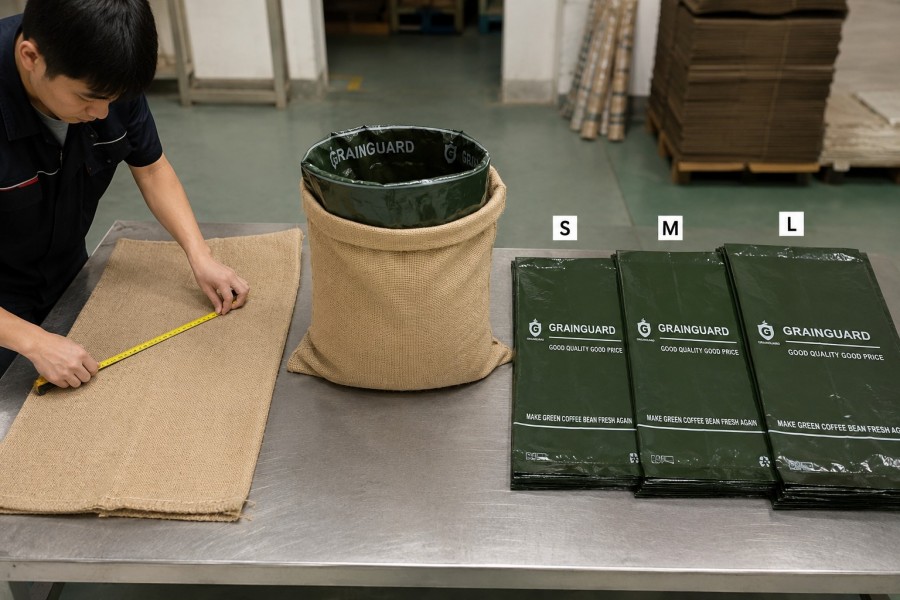
The following data summarizes the standard jute liner for green coffee bean packaging range. Actual fit and filling capacity can vary with sack dimensions, commodity density, filling method, sealing allowance, selected grade, and closure process. Final specifications should therefore be confirmed against the buyer’s physical sack or approved sample before production.
| Item | Specification |
| Product name | Jute Liner for Green Coffee Bean Packaging |
| Brand | GrainGuard |
| Product category | Hermetic inner liner used with traditional jute coffee and cocoa sacks |
| Packaging arrangement | Multilayer liner inside an outer jute sack |
| Available sizes | S / M / L / customized dimensions |
| Suitable filling range | Approximately 10-70 kg, depending on size and commodity density |
| Suitable commodities | Green coffee beans, cocoa beans, and similar dry agricultural products |
| Available grades | Basic / Pro / Premium |
| Material structure | Multilayer liner film; composition depends on the selected grade |
| Barrier function | Grade-dependent oxygen and moisture-vapor barrier intended to reduce external exposure |
| Closure accessories | Cable tie and “No Hook” sticker |
| Closing method | Cable-tie closure with heat sealing after filling, according to the approved packing procedure |
| Outer sack compatibility | Clean, dry traditional jute sacks with confirmed dimensions |
| Customization | Custom size, artwork, private label, inner packing, carton packing, and order configuration |
| Supply model | Factory-direct production, wholesale orders, OEM supply, and contract programs |
| Place of manufacture | Qingdao, China |
| Size | Suitable Capacity | Flat Dimensions (W × L) | Typical Packaging Use |
| S | 10-20 kg / 22-44 lb | 40 cm × 70 cm | Small lots, separated specialty batches, trial programs, and compact jute sacks |
| M | 25-35 kg / 55-77 lb | 56 cm × 94 cm | Medium-capacity sacks, cooperative packing, and roaster or importer storage |
| L | 60-70 kg / 132-154 lb | 75 cm × 130 cm | Standard large export sacks, including common 60-70 kg coffee and cocoa formats |
| Grade | Material Structure | Recommended Packaging Position |
| Basic | Multilayer PE | Cost-controlled choice for routine commercial lots, regular holding periods, and standard export packing. |
| Pro | Multilayer PE + PA barrier structure | Balanced choice for higher-value coffee, longer handling cycles, and routes that require stronger barrier performance. |
| Premium | Advanced multilayer barrier structure | Higher-grade choice for specialty programs, extended storage, demanding climates, and quality-sensitive buyers. |
| Size | Inner Pack | Master Carton | Inner-Pack Dimensions | Master-Carton Dimensions |
| S | 10 pcs | 400 pcs | 59 × 26 × 3 cm | 81 × 47 × 14 cm |
| M | 10 pcs | 300 pcs | 59 × 26 × 3 cm | 61 × 50 × 16 cm |
| L | 10 pcs | 200 pcs | 42 × 34 × 4 cm | 81 × 47 × 14 cm |
Note: Packing quantities, weights, carton dimensions, labels, and loading arrangements are reference values. They can be adjusted to match order volume, destination requirements, mixed-size programs, and private-label specifications.
The GrainGuard jute liner for green coffee bean packaging is designed for coffee businesses that need a more controlled internal package while retaining the established handling benefits of jute. Its main value lies in combining sack compatibility, practical closure, flexible sizing, and barrier selection in one export-ready system.
Compatible two-layer format: The inner liner works together with the outer jute sack, allowing normal filling, sewing, stacking, palletizing, marking, and warehouse routines to continue.
Cleaner product-contact surface: Coffee is filled into the multilayer liner rather than directly against the jute material, supporting cleaner packing and reducing contact with fibers, dust, and surrounding contamination.
Exposure management: The closed inner package helps limit moisture and oxygen exchange and reduces access by insects, external odors, and dirty handling environments during storage and transport.
Flexible lot configuration: Three standard sizes cover small specialty lots, medium programs, and common large export sacks, while custom dimensions can be developed for regional bag formats.
Grade selection by requirement: Basic, Pro, and Premium structures let buyers align the packaging specification with coffee value, storage time, route conditions, and purchasing budget.
Practical closing and identification: Cable ties, heat sealing, and “No Hook” labels support secure closure and clearer handling instructions for warehouse and logistics teams.
Procurement and branding support: OEM artwork, private-label orders, customized cartons, mixed-size supply, samples, and wholesale programs can be coordinated directly with the factory.
Origin packing: Coffee farms, washing stations, cooperatives, and dry mills preparing processed green coffee after sorting, grading, or buyer approval.
Export preparation: Packing stations and origin warehouses holding jute sacks while documentation, quality release, pallet plans, or container bookings are completed.
International logistics: Palletized coffee moving by truck, rail, sea, or intermodal transport through ports, container yards, and distribution facilities.
Receiving-market storage: Importers, traders, distributors, and roasters keeping coffee before resale, blending, sample release, or roasting.
Other jute-packed commodities: Cocoa beans and similar dry agricultural products requiring a separate inner barrier within a conventional sack.
| Step | Packing Action |
| 1 | Confirm that the outer jute sack is clean, dry, undamaged, and compatible with the selected liner dimensions. |
| 2 | Insert the liner and open the bottom and side panels fully so that the material sits evenly inside the sack. |
| 3 | Fill the coffee directly into the liner and prevent beans from falling between the liner and the outer sack. |
| 4 | Leave sufficient material above the product level for gathering, cable tying, and heat sealing. |
| 5 | Reduce excess air carefully without puncturing the film or applying unnecessary pressure to the packed beans. |
| 6 | Secure the opening using the approved cable-tie and heat-sealing method, then apply the “No Hook” label where required. |
| 7 | Close the outer jute sack and store it on clean pallets away from sharp objects, dirty floors, direct sunlight, and contamination sources. |
Start with the actual sack rather than the printed capacity alone. Measure its usable width and length, confirm the target net weight, and reserve enough upper material for the closure. Next, match the grade to the coffee value, expected storage duration, transport route, climate, and buyer specification. A physical fit test is recommended whenever a new sack supplier, filling weight, or closing method is introduced.
| Selection Factor | Recommended Direction |
| Small, separated, or trial lots | Use S size for approximately 10-20 kg programs and easier lot segregation. |
| Medium-capacity packing | Use M size for approximately 25-35 kg sacks and flexible cooperative or roaster handling. |
| Standard export sacks | Use L size for approximately 60-70 kg green coffee or cocoa packing. |
| Routine commercial shipment | Consider Basic grade where standard protection and cost control are the main priorities. |
| Longer handling or higher-value lots | Consider Pro grade for a stronger balance of barrier performance and commercial cost. |
| Specialty coffee or demanding routes | Consider Premium grade when storage duration, climate, or buyer quality requirements are more demanding. |
GrainGuard produces the jute liner for green coffee bean packaging in Qingdao, China through controlled film preparation, optional printing, cutting, bag conversion, sealing-area preparation, inspection, inner packing, and export-carton assembly. Production is organized around the approved dimensions and closure allowance so the finished liner can be integrated into the customer’s intended sack and filling process.
Each order is configured according to the selected Basic, Pro, or Premium material structure, standard or custom size, printing artwork, accessories, packing quantity, labels, and shipment plan. For new sack formats, buyers can provide a physical sample or complete dimensions so the factory can evaluate fit before bulk production.
Review the approved product specification, sack dimensions, target capacity, film grade, artwork, closure method, and packing plan.
2. Prepare the multilayer film under controlled production settings and arrange printing where customized branding is required.
3. Cut and convert the film into the confirmed S, M, L, or custom liner dimensions, including the required sealing allowance.
4. Check the bag opening, side and bottom conversion, sealing area, accessory compatibility, and visible workmanship.
5. Inspect dimensions, material appearance, printing position, quantity, inner-pack arrangement, and master-carton identification.
6. Release finished goods for export packing after the order is matched against the approved specification and shipment requirements.
| Control Point | Confirmation Requirement |
| Outer sack dimensions | Usable width and length, opening style, seam position, and internal space |
| Target filling program | Commodity, net weight, bean density, required headspace, and filling method |
| Liner configuration | Standard or custom size, Basic/Pro/Premium grade, printing, and accessory requirements |
| Closure process | Cable-tie position, heat-seal location, equipment, and operator procedure |
| Handling environment | Palletization, stacking height, loading method, hooks or sharp-edge risks, and transport route |
| Packing and shipment | Inner-pack quantity, carton dimensions, labels, mixed-size ratio, destination, and loading plan |
Dimension development: Custom width, length, sealing allowance, and capacity for regional jute sack formats or buyer-specific packing lines.
Branding programs: OEM printing, private-label artwork, product identification, labels, and customized export cartons.
Flexible order setup: Samples, trial quantities, mixed-size programs, repeat wholesale orders, and contract supply can be discussed according to the project.
Grade consultation: Basic, Pro, and Premium recommendations based on lot value, storage period, transport conditions, and required barrier level.
Export coordination: Factory-direct production planning, packing confirmation, shipping documentation support, and international dispatch from Qingdao.
| Quotation Item | Information to Provide |
| Sack format | Outer sack width and length, target liner size, photos or physical sample, and closure style |
| Product and capacity | Green coffee, cocoa, or other commodity; target net weight and number of bags |
| Protection requirement | Expected storage period, origin and destination, transport mode, climate, and buyer specification |
| Material and closure | Preferred grade, cable-tie requirement, heat-sealing procedure, and “No Hook” label |
| Customization | Logo artwork, printing colors, private-label details, inner packs, cartons, and barcodes if required |
| Commercial details | Trial or bulk quantity, desired delivery time, destination port, and shipping terms |
Address
No. 18, Kongquehe 2nd Road, Qingdao Garment Industrial Zone, Jimo District, Qingdao, Shandong 266200, China
Tel
Copyright © 2026 SYON Packaging Technology(Qingdao)Co., Ltd. All rights reserved.